The Origin of the Name "Dragon Spitting Pearl" Flower and a Detailed Guide to Its Cultivation
[Introduction]The Dragon Spitting Pearl flower is a plant with a very auspicious meaning. From its name alone, you can tell that this flower has a very lofty and elegant character. As a matter of fact, naming flowers is a subject well worth studying, because a good name will increase a flower's value and win it more admirers, and the Dragon Spitting Pearl flower is one of the more typical examples. When cultivating the Dragon Spitting Pearl flower, you must also give it attentive care in terms of soil, water, light and many other aspects.
The Dragon Spitting Pearl flower was originally a vine flower native to Africa. It was introduced to Europe by a British traveler, and only after it entered the Netherlands was the name "Dragon Spitting Pearl" established. The Dragon Spitting Pearl flower has a rather unique flower shape and irreplaceable ornamental value, so extra care is needed when cultivating it.
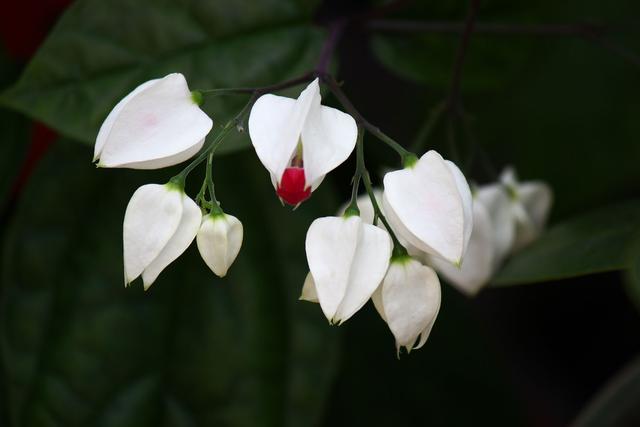
The Origin of the Name "Dragon Spitting Pearl"
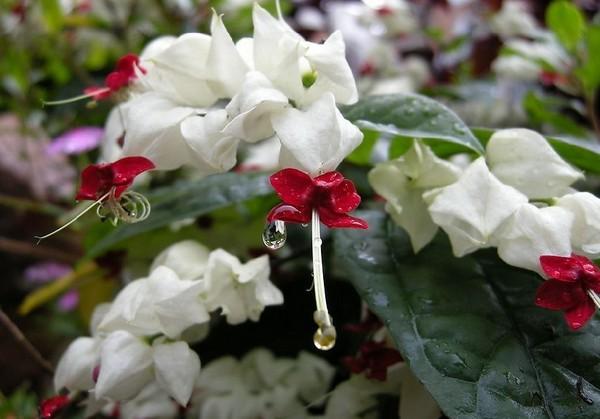
The Dragon Spitting Pearl is a perennial evergreen vine. The plant grows 2-5 m tall and blooms in spring and summer. The flowers are very beautiful: the calyx is relatively large and white, and the upper part of the corolla is deep red. When the flower blooms, the red corolla extends out from the white calyx, just like a dragon spitting a pearl. There is an amusing anecdote about how the name "Dragon Spitting Pearl" came about: in the mid-18th century, the English traveler Cos Thomson went on a journey through Africa, where he accidentally saw many dark-skinned girls using Dragon Spitting Pearl flowers to make necklaces, wearing them on their chests. One black and one white created a strong contrast, which aroused great interest, so he collected seedlings and brought them back to try growing them. At the time, botanists considered him the first discoverer, so they named it after him. By the late 19th century, Mali began dealing in this plant and renamed it "Pearl Treasure Pagoda" on its own, which was indeed one step better than using a person's name. By the early 20th century, the Dragon Spitting Pearl entered the international flower market in the Netherlands. At first, sales were very low. A Chinese overseas worker named Fang Fulin, responding to flower customers' fondness for auspiciousness, suggested changing the flower's name to "Dragon Spitting Pearl" to attract customers, and the boss immediately adopted the idea. As a result, business became extremely prosperous, with sales reaching almost all over the world. Since then, the name Dragon Spitting Pearl has become popular worldwide.
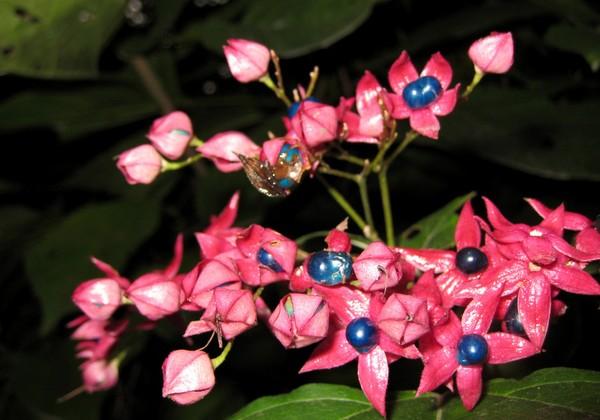
Cultivation Methods for the Dragon Spitting Pearl
Planting: For potted Dragon Spitting Pearl, generally repot once every one or two years, either in early spring or after the flowers fade. First place broken tile pieces over the drainage hole, then add a small amount of bone meal as base fertilizer, and then fill in new potting soil (4 parts leaf mold, 4 parts garden soil, 2 parts sand). Plant the specimen well, leaving 2-3 cm from the rim for fertilizing and watering. After repotting, water thoroughly and place in a shaded spot to recover. After it has recovered, move it to a spot with ample sunlight for care.
Watering: The Dragon Spitting Pearl is relatively sensitive to water. During the stem and leaf growth period, keep the soil moist, but do not overwater. Too much water will cause it to grow only vines without blooming, and may even cause leaves to yellow and drop, and roots to rot and die. In the hot summer season, water fully and provide appropriate shade. In winter, reduce watering to let it go dormant so it can overwinter safely.
Fertilizing: Do not fertilize excessively. During the flowering season, apply diluted, well-rotted cake fertilizer water once every 7-10 days, for 3-4 applications in a row. If yellowing is observed, apply 0.2% ferrous sulfate solution, which will gradually turn the leaves from yellow back to green.
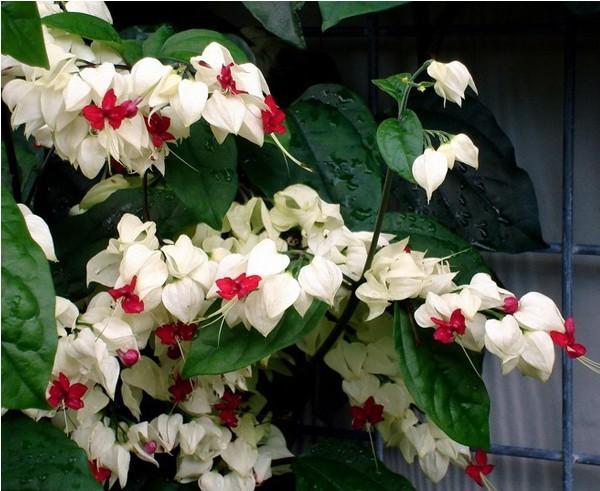
Temperature: The suitable growth temperature for the Dragon Spitting Pearl is 18-24°C; from February to October it is 18-30°C, and from October to the following February it is 13-16°C. In winter, the temperature should not be lower than 8°C; above 5°C, stems and leaves are prone to cold damage, with mild cases causing leaf drop and severe cases causing tender stems to wither. During the vegetative growth period, the temperature can be relatively high; at high temperatures above 30°C, as long as water is supplied adequately, it can still grow normally. For reproductive growth, that is, the flowering period, the temperature should be relatively lower, around 17°C.
Light: In winter, the Dragon Spitting Pearl needs ample light. When the weather is too hot in summer, it should be shaded, otherwise the leaves will turn yellow. When light is insufficient, it will grow vines and fail to bloom. Flower bud differentiation is not affected by photoperiod, but stronger light promotes flower bud differentiation and development. It should not be placed in darkness for too long.
Shaping: To shape an elegant plant form for the Dragon Spitting Pearl, when cutting-grown or seed-grown plants in pots have grown to 15 cm, cut the branches 10 cm above the pot rim to encourage the growth of sturdy new shoots. During the growth period, strictly control the height of the branches and pay attention to pinching and topping so that the branches are neat and future flowering is dense. Half a month after pinching, apply daminozide or chlormequat to control height, achieving a short plant, lush leaves and abundant flowers. When repotting in spring, prune and shorten the upper branches so that the plant is round and neat, with more branches and more flowers.
Well, that is all for the introduction to the Dragon Spitting Pearl flower. It seems that how to name a flower is just like how to cultivate a flower: both are subjects requiring a great deal of study. Just look at that boss in the story. Was it not because he adopted the name "Dragon Spitting Pearl" that from then on wealth rolled in?
Follow WeChat ID: xiaobency, shared every day around 9 o'clock, listened to by ten thousand people