There's a method to candling eggs in poultry farming, and the practical techniques are worth explaining clearly
Candling is extremely important throughout the entire incubation process. If candling is done accurately, it can greatly improve the effective utilization rate of incubation equipment. Spot candling also requires attention to method and regularity; in short, it is also a kind of method.
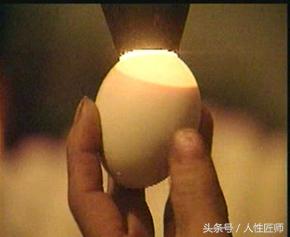
Here I would like to offer a suggestion to the people at the farms. Two years ago, our farm did not have a dedicated candling room. At that time it was very inconvenient and tiring. Later we built a candling room, and the work went much more smoothly. So here I suggest that you also build a dedicated candling room; it does not need to be large, 30 to 40 sq m is enough. Now I will explain the candling method.
The embryonic development time patterns for common egg types: chicken embryos generally incubate for about 18 days, duck embryos generally incubate for about 25 days, and goose embryos generally incubate for a full month.
The first candling, that is, light candling: chicken embryos at about 5-6 days, duck embryos at one week, goose embryos at about 8-9 days. The purpose of the first candling is to check which are infertile eggs, dead embryo eggs, and cracked eggs. Normally developing embryos have an obvious blood vessel network, and the blood vessel network distribution covers four-fifths of the individual. This is the inspection standard.
The second candling is the follow-up inspection of embryonic incubation, with the same schedule as the first candling. Its significance lies in a more comprehensive inspection.
Notes on candling: the time for taking out embryo eggs must not exceed 20 minutes, and too many eggs must not be taken out at one time. At the second candling, the eggshells are prone to breaking, so be careful and attentive.
This is roughly the method for candling eggs: it is all about regularity and carefulness.