Ostrich breeding eggs have particular storage requirements, and the specialty poultry market is growing markedly
The length of the storage period and the quality of management during storage have a great impact on the hatchability rate. After breeding eggs are laid, they should be collected promptly and must not be exposed to the sun for long periods, because sun exposure will raise the temperature of the eggs and kill the embryos. The breeding eggs must also not be rained on, and even more so must not be allowed to freeze. If the collected breeding eggs carry a little soil, the soil can be wiped off with a soft cloth or brush. If they are not too dirty, it is best not to wash them before incubation, because washing the eggs destroys the protective membrane of the egg, and bacteria can easily multiply and enter the egg through the pores. If the breeding eggs are seriously contaminated, they can be wiped with a clean soft cloth dipped in 0.1% potassium permanganate solution (do not soak the breeding eggs in water); after the breeding eggs are wiped clean, use a soft cloth to wipe the water dry. For disinfection of breeding eggs, it is best not to spray directly, so as to avoid irritating the breeding eggs. During the storage period, the following points should be noted for breeding eggs:
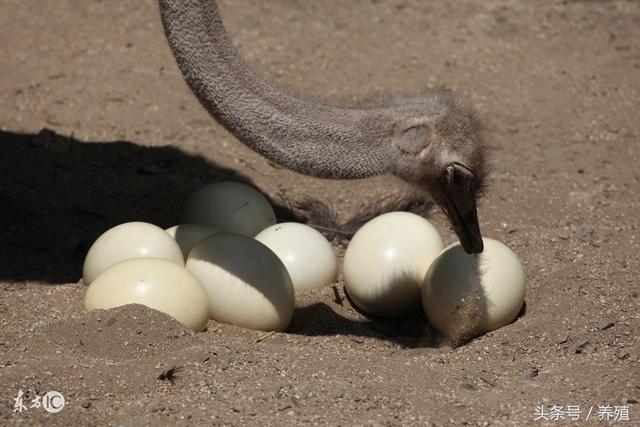
Ostrich breeding eggs
Ostrich: Ostrich farming builds a road to wealth
I. Temperature, humidity and storage time
The ambient temperature for storing breeding eggs is required to remain within a certain range; too high or too low will affect embryonic development. After the breeding eggs are laid, when the storage ambient temperature is on the high side but has not reached the suitable temperature for embryonic development of 35°C-37°C, the embryos will still develop, which easily causes embryo death. When the ambient temperature remains low for a long time, below 4°C, although embryonic development is at a standstill, embryo vitality drops severely, or the embryos even die. According to reports, the critical temperature for ostrich embryonic development is 23°C, that is, when the ambient temperature is below the critical temperature for embryonic development, the embryos enter a dormant state. Generally in production, the temperature for storing breeding eggs should be lower than the critical temperature, and the suitable temperature for embryo storage should be about 13°C. If the storage time is short, within 4 days, 16°C-18°C can be used; if it exceeds 4 days, the lower limit temperature should be used.
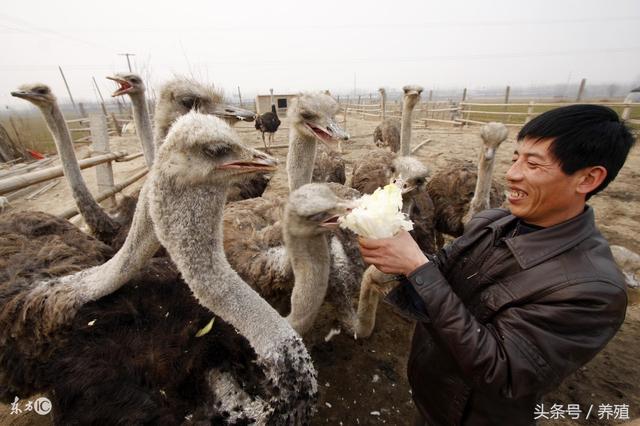
Ostrich farming
Newly laid breeding eggs should be weighed immediately, and the breeding ostrich number and laying date written on them in pencil. Then the temperature should be gradually lowered to the storage temperature; a sudden temperature drop affects embryonic development. A cooling time of 12-14 hours is appropriate. Placing newly laid breeding eggs in a cardboard box with good air permeability is relatively ideal for cooling the breeding eggs. The breeding eggs must not be left open at an airy draft, to prevent too-rapid cooling from affecting the hatchability rate. During storage of breeding eggs, the moisture inside the egg continuously evaporates; its evaporation rate is inversely proportional to shell thickness and also inversely proportional to the ambient humidity of the stored eggs. Breeding eggs are generally incubated at low humidity, because when incubation humidity exceeds 30%, the hatched ostriches all show varying degrees of edema, so the ambient humidity for storing breeding eggs should preferably be 60%. If the humidity is too low, it will speed up evaporation of moisture inside the egg, which is unfavorable for incubation; if the humidity is too high, it can create opportunities for mold growth. The storage time of breeding eggs generally should not exceed 7 days, and at most should not exceed 10 days, otherwise the hatchability rate will be greatly reduced.
Ostrich: Feeding and management of ostriches during the growing period
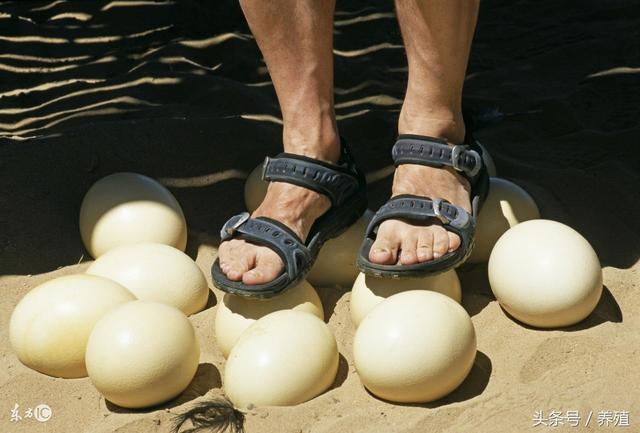
Ostrich eggs
II. Storage methods for breeding eggs
Ostrich breeding eggs During storage of breeding eggs, they can be placed vertically with the large end up or placed at an angle; if the storage period does not exceed 7 days, turning the eggs is not necessary. If there is no egg storage room for storing breeding eggs, a constant-temperature cabinet can be used, or an egg cabinet can be made: set layers of egg storage trays in the upper part of the cabinet, place ice blocks in the lower part of the cabinet, and seal the ice tightly with plastic sheeting; remember that the breeding eggs must not come into contact with water. The temperature and humidity inside the cabinet must be well controlled, and attention should also be paid to ventilation of the egg storage cabinet.
Friends interested in farming can follow: Farming, with wonderful farming information and technical articles shared every day. Submission email: [email protected].