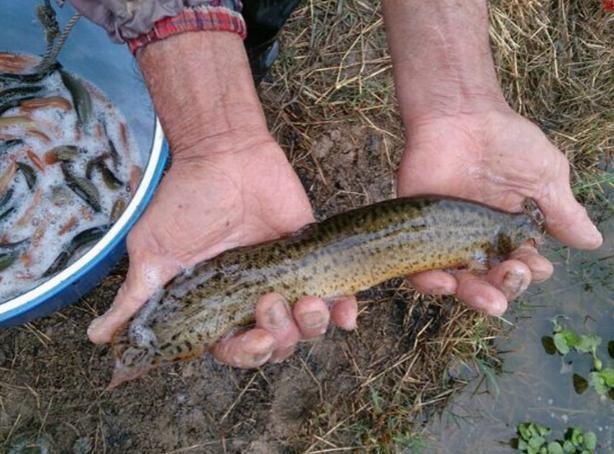
Introduction to Taiwan loach and detailed explanation of high-yield and efficient breeding technology
Introduction to Taiwan loach and detailed explanation of high-yield and efficient breeding technology
1 Introduction to Taiwan loach
Taiwan loach is a fish of the loach family, and has the reputation of "ginseng of the water" and "king of loaches". It is large in size, grows quickly, and has extremely strong adaptability. Tainan County in Taiwan, China is the place of origin of Taiwan loach. In ancient times, Taiwan was still connected to the mainland. Under the action of crustal movement, the connected part gradually sank into the sea, forming a strait and giving rise to the island of Taiwan. Precisely because of the separation by the strait, different varieties were formed. Under this kind of environment, through slow evolution, the Taiwan loach came into being. Compared with ordinary loach, the Taiwan loach is 3 to 4 times larger in form, and its length can reach 16 to 20 cm. In the body of the Taiwan loach, small scales exist under the skin; the color is blue-black, and it has 5 pairs of barbels, with small, round scales. Taiwan loach has very rich nutritional value and contains a relatively high protein level, while its fat level is relatively low, and it can lower blood lipids and blood pressure. According to testing, in every 100 g of Taiwan loach meat, there are 22.6 g protein, 2.9 g fat, 2.5 g carbohydrates, 1.6 g ash, 51 mg calcium, 154 mg phosphorus, 3 mg iron, 0.08 mg thiamine, 0.16 mg riboflavin, 5 mg nicotinic acid, and it also contains multiple vitamins.
2 High-yield and efficient breeding technology for Taiwan loach
2.1 Construction and selection of the site
For Taiwan loach, the selected breeding site must have sufficient water sources and good water quality, while also being free of pollution and in line with fishery water standards. Usually, a pond is a suitable breeding site. When building the pond, the shape should be rectangular, with the length running east-west and the width running north-south. Inlet and outlet pipes are set on both sides, and the pipes are made of PVC material. Double-layer silk gauze nets are used to tightly tie the inlet pipe opening and the outlet pipe opening, so as to prevent harmful organisms and eggs from entering the pond through the inlet pipe opening, and also to prevent the Taiwan loach from escaping from the outlet pipe opening. The optimal depth of the pond is 1 to 1.5 m, and the area is 1.3 to 2 hm2. After the pond is built, it must be exposed to the sun for 30 d, and it is best to sun it until it cracks. If the pond is old, the excess sludge at the bottom layer must be thoroughly removed, and then water about 10 cm deep should be left at the bottom of the pond. Quicklime is used for pond clearing, with an amount of 80 to 100 kg/667 sq m. After 3 to 7 d of pond clearing, new water is injected into the pond to a depth of 30 cm. Apply fully fermented farmyard manure at an amount of 200 to 250 kg/667 sq m, for the purpose of cultivating plankton in the water, ensuring that the Taiwan loach has food to eat after entering the pond, and promoting a reduction in breeding costs. In addition, in order to prevent the Taiwan loach from escaping, the bottom of the pond must be tamped solid, and clay should be spread on the bottom and side slopes of the pond at a thickness of 15 to 20 cm. It must be spread evenly, and after completion, tamped solid again. At the same time, the surroundings of the pond must be reinforced and raised, with the water surface as the reference, being 30 to 40 cm higher.
2.2 Stocking of fry and fingerlings
In the process of purchasing loach fry and fingerlings, special attention must be paid to their germplasm and specifications. Taiwan loach also has this kind of problem. Not only are its growth speed and survival ability directly affected by the quality of the germplasm, but the breeding yield and economic benefits are also restricted. Therefore, farmers can first purchase Taiwan loach original stock, with individuals that should be above 150 g, then carry out parent reproduction, and afterward select high-quality fry and fingerlings from them. Usually, the optimal fry and fingerling body length is about 4 cm, 600 to 750 fish/kg, and they have uniform size and relatively strong rheotaxis. After the fry and fingerlings are selected, they can be stocked. Since stocking density affects both the breeding yield and the time for commercial loach to reach the market, the stocking density must be determined scientifically. Usually, multiple factors such as pond conditions, fry and fingerling specifications, and growth cycle should be comprehensively considered to ensure that the stocking density is compatible with one's own breeding conditions[2]. Under monoculture of Taiwan loach, the optimal density is 30,000 to 50,000 inch fry per 667 sq m. Fry are released from late May to early June, and the time to market is about the Mid-Autumn Festival and National Day. When stocking inch-sized fry, soaking disinfection can be carried out using conventional drugs and methods to prevent infection and avoid bringing in bacteria. During the process of entering the pond, the water temperature difference must be strictly controlled to ensure the difference is within 2 degC.
2.3 Feeding management
In the early stage of stocking, a safe and comfortable breeding environment must be created. Measures can include pond clearing and pest removal, and water quality cultivation. At the same time, it must be ensured that there are no enemy organisms, especially at about 10 d after fry release, when attention should be paid to preventing the breeding of enemies such as water centipedes. In addition, the pond water quality must meet the relevant requirements, and the water must contain abundant palatable natural food organisms. In the early stage of fry, they can feed on small plankton in the water, but if they rely only on natural food, their needs cannot be met, and artificial feed must also be supplementarily added. In the early stage, eel powder can be used for initial feeding, and the daily feeding amount must be strictly controlled. Usually, 50 to 100 g can feed 100,000 fish, and the feeding amount should be gradually increased. For inch-sized fry, palatable compound feed can be added. Based on the total amount, about 3%is the suitable daily feeding amount. The water in the pond should be fertile, and the optimal transparencyis about 30 cm. In daily water quality regulation, microbial preparations and decomposed manure can be appropriately applied according to changes in water quality and transparency, and at the same time, new water should be appropriately supplemented. Microbial preparations can often use probiotics, photosynthetic bacteria, etc., to promote the improvement of the substrate and regulate water quality, ensure water quality stability, and reduce the amount of drugs used. The feed to be fed should be of high quality and contain about 40% crude protein, so as to increase the growth speed of Taiwan loach and ensure its physiological health. At the same time, high-quality feed can also reduce the production of waste and lessen the negative impact on water quality. According to the specifications of Taiwan loach, daily feeding is divided into three or four times. If conditions permit, the method of feeding small amounts multiple times should be adopted. Both sinking pellets and floating pellets can be used as bait, but no matter which type is chosen, palatability must be ensured. In hot seasons, bait is not suitable for feeding during the day. After inch-sized fry and fry are cultured for 1 month and 2 months respectively, due to the existence of uneven feeding, individual differences in Taiwan loach begin to appear. At this time, separate culture should be carried out once a month to increase yield. In the later stage, the small ones are left and the large ones are caught. Partial harvesting is carried out once every 2 weeks to achieve balanced marketing.
2.4 Daily management
Pond inspection work is carried out 3 times a day, once each in the morning, noon, and evening, carefully observing the feeding situation of the Taiwan loach, changes in water quality, and the activity of the Taiwan loach, and effectively carrying out anti-escape work; the pond water quality should be maintained in a fertile and active state, with yellow-green water being optimal; regularly splash drugs to prevent fish diseases, frequently clean the feeding platform, and regularly disinfect. After diseases occur, timely treatment should be carried out; frequently check the anti-escape facilities and inlet and outlet openings. If damage appears, repair or replace immediately; under severe weather conditions, closely observe the floating-head situation of the Taiwan loach. If severe floating head occurs, timely replace and inject new water; keep accurate and comprehensive breeding records.
2.5 Disease prevention
Regularly splash bleaching powder and quicklime over the entire pond to improve water quality while preventing the occurrence of diseases; after discovering that enemy organisms such as snake eggs and mouse eggs appear in the pond, remove them immediately; when dead loach are found in the pond, remove them promptly to avoid other loach being infected, and at the same time promptly find and analyze the cause of loach death, and implement symptomatic treatment.