Detailed Explanation of 6 Farming Models for Freshwater Crayfish, for Farmers' Reference
Several farming models for crayfish are summarized, organized and introduced below, for farmers' reference.
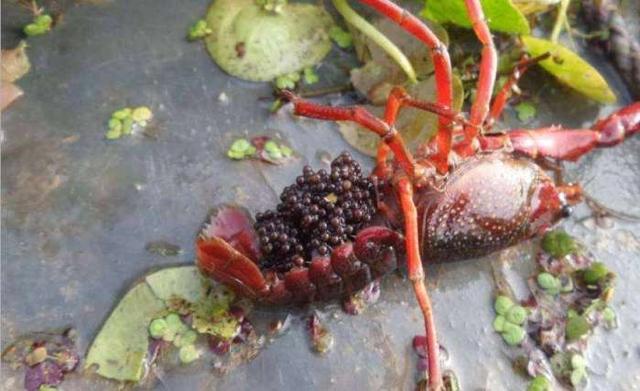
The crayfish-dominated farming model refers to mainly farming crayfish in ponds, with reasonable supplementary stocking of some large-size silver carp and bighead carp fingerlings to regulate water quality and increase comprehensive farming benefits. There are 2 stocking models for crayfish: one is stocking crayfish breeders in autumn. The stocking size is 20-30 individuals/kg, the female-to-male ratio is 3:1, the density is 25-30 kg/667 sq m, and the time is in August-September.
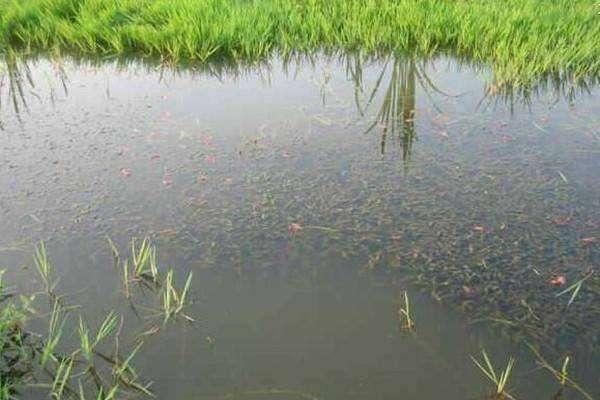
In March-May of the following year, promptly harvest and sell the breeders that have already reproduced, and keep the fry in the pond for grow-out crayfish farming; the other is stocking crayfish fry in spring. The stocking size is 200-300 individuals/kg, the density is 30-40 kg/667 sq m, and the time is in March-April. The stocking size of silver carp and bighead carp fingerlings is 4-6 individuals/kg, the density is 200 individuals/667 sq m, and the time is in May. Crayfish begin to be harvested in June, taking the large and leaving the small. Silver carp and bighead carp are harvested together when the pond is drained at the end of crayfish farming. This model can yield an average of 150-200 kg of crayfish and 250-300 kg of silver carp and bighead carp per 667 sq m.
Mixed Farming Model of Crayfish and River Crab
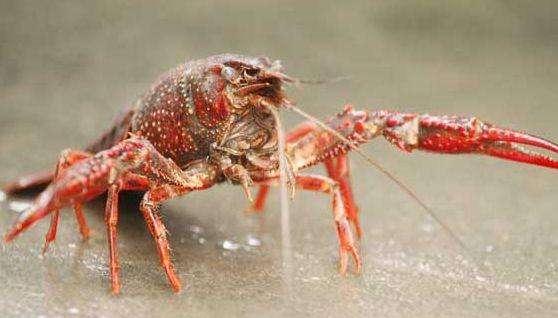
Crayfish and river crab both belong to crustaceans, have similar feeding habits, and also have the characteristic of cannibalism, so composite aquatic plants should be planted in the farming pond, and the aquatic plant coverage should reach more than 60%. Aquatic plants can not only serve as plant-based feed for crabs and crayfish, but also serve as habitats, molting sites and hiding places for them.
There are 2 farming methods: the first is a stocking method with crayfish as the main farmed species, and farming management focuses on crayfish. The stocking size of crayfish fry is 200-300 individuals/kg, the density is 30-40 kg/667 sq m, and the time is in February-March; the stocking size of crab seed is 60-100 individuals/kg (large-size crab seed intensively cultivated in small ponds or specially designated areas), the density is 200-300 individuals/667 sq m, and the time is in May.
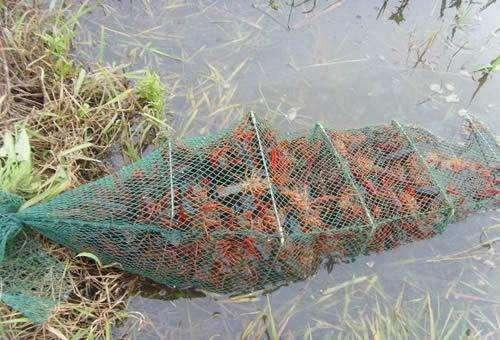
This method can yield an average of 150-200 kg of crayfish and 25-30 kg of river crab per 667 sq m; the second is a stocking method with river crab as the main farmed species, and farming management focuses on river crab. The stocking size of river crab is 150-200 individuals/kg, the density is 600-800 individuals/667 sq m, and the time is in February-March; the stocking size of crayfish fry is 200-300 individuals/kg, the density is 2000 individuals/667 sq m, and the time is from late April to early May. This method can yield an average of about 80 kg of river crab and 40-50 kg of crayfish per 667 sq m.
Mixed Farming Model of Crayfish and Adult Fish
Per 667 sq m, stock 1200-1500 crucian carp fingerlings of 20 individuals/kg, 500-600 bream fingerlings of 15-20 individuals/kg, and 100-200 silver carp and bighead carp fingerlings of 4-6 individuals/kg, with stocking time in March-April; crayfish fry are stocked at a size of about 3 cm, with a density of 4000-5000 individuals/667 sq m, and the time is from the end of April to early May. In this model, farming management focuses on adult fish, and crayfish are harvested starting from mid-to-late June using shrimp cages and ground cages, taking the large and leaving the small. Adult fish are harvested from the pond around the end of the year according to market conditions. This model can yield an average of 1000-1200 kg of adult fish and 80-100 kg of crayfish per 667 sq m.
Mixed Farming Model of Crayfish and Fingerlings
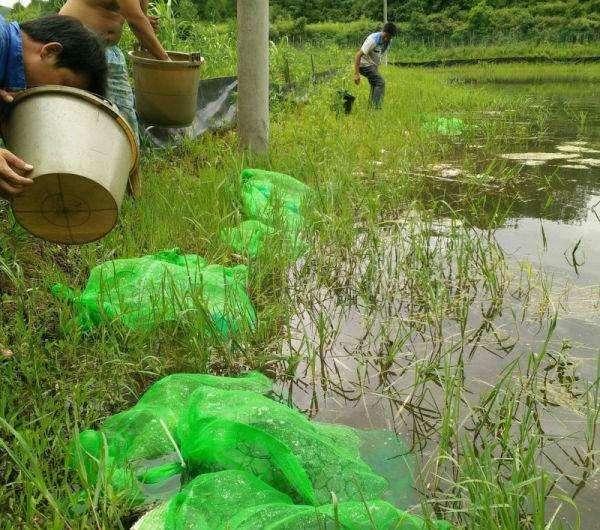
The mixed farming model of crayfish and fingerlings focuses on fingerling cultivation. Crayfish fry are stocked at a size of 200 individuals/kg, with a density of 2500 individuals/667 sq m, and the time is at the end of March or early April. In June, summer fry are stocked, and the main stocked species are silver carp, bighead carp and crucian carp. The stocking density of silver carp summer fry is 12000-15000 individuals/667 sq m, the stocking density of bighead carp summer fry is 2000-3000 individuals/667 sq m, and the stocking density of crucian carp summer fry is about 2000 individuals/667 sq m.
Before the summer fry enter the pond, crayfish farming is the main focus, and crayfish compound feed is fed; after the summer fry enter the pond, fingerling cultivation is the main focus, and fingerling compound feed is fed. Crayfish can begin to be harvested from June, taking the large and leaving the small, and basically all pond crayfish can be harvested within 2-3 months. Fingerlings are harvested and sold at the end of the year or transferred to ponds for overwintering. This model can yield an average of 50-60 kg of crayfish and about 1000 kg of fingerlings per 667 sq m.
Model of Raising Crayfish in Lotus Root Ponds
Raising crayfish in lotus root ponds is a new production model in which the planting industry and the farming industry mutually utilize and complement each other. Select lotus root seed with short and thin leaves and stems, rapid growth, well-developed branches, crisp and tender flesh, and high quality and high yield, with a planting density of 600-700 plants/667 sq m, and the time is in mid-to-late April; crayfish are stocked at a size of 200 individuals/kg, with a density of 3000-4000 individuals/667 sq m, and the time should be late rather than early. Stocking crayfish fry too early easily causes damage to lotus root buds, so it is generally controlled to late May. This model can yield an average of 1000-1300 kg of lotus root and about 80 kg of crayfish per 667 sq m.
Raising Crayfish in Rice Fields
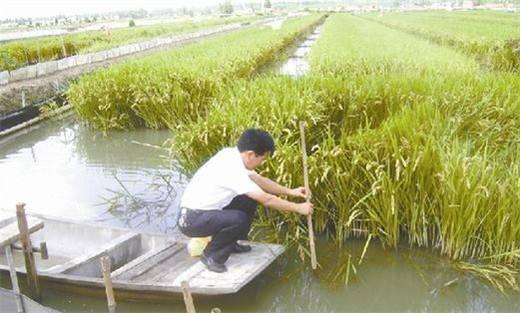
For raising crayfish in rice fields, ring ditches are excavated around the rice fields, and the shallow-water environment of the rice fields is used to both grow rice and farm crayfish. It is an ecological planting and farming model that improves the comprehensive benefit per unit area.
Rice is sown and seedlings are raised from late April to early May, and rice seedlings begin to be transplanted from the end of May to early June, using shallow-water, wide-row and dense-plant transplanting methods, and appropriately increasing the transplanting density on both sides of the ring ditch inside the field ridge to give play to marginal advantages. Crayfish are stocked at a size of 200-300 individuals/kg, with a density of 3000-4000 individuals/667 sq m, and the time is in April-May. This model can yield an average of 500-550 kg of rice and about 80 kg of crayfish per 667 sq m.