How to Grow a Money Tree Plant? A Detailed Guide to Money Tree Plant Care
The money tree plant (Portulacaria afra, also known as elephant bush) is a perennial evergreen herbaceous plant in the family Portulacaceae, genus Portulacaria, and is easily confused in name with the money tree (Zamioculcas zamiifolia), a perennial evergreen herbaceous plant in the family Araceae, genus Zamioculcas. Although both contain the words "money tree" and are both foliage plants, they are two completely different plants. This article focuses on introducing its care and management methods, for the reference and learning of gardening enthusiasts.
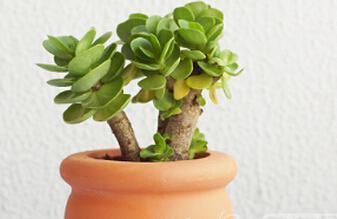
The money tree plant (Portulacaria afra) prefers a warm, humid, semi-shaded environment. It is drought-tolerant, intolerant of harsh sun exposure, slightly shade-tolerant, and afraid of cold and waterlogged soil. It is suitable for growing at 20°C to 32°C. Since the money tree plant is drought-tolerant, it should not be placed in a damp, dark environment, and water should be prevented from accumulating in the pot, otherwise the tuberous stem will rot. When watering, in spring and autumn you can water a normal amount, about three times a month; you can wait until the soil is dry before watering, and water thoroughly each time. In summer and winter, the amount of water needs to be controlled and reduced as appropriate. In northern China, heated greenhouses in winter are relatively dry, so appropriate misting is fine. In northern regions, because of indoor heating in winter, the air is dry, so you need to mist the plant frequently to increase air humidity.
The money tree plant is not strict about light and can be kept indoors for long-term viewing, but when new leaves are emerging it must not be too dark, otherwise the newly sprouted tender leaves will be slender and the internodes will be sparse, affecting its ornamental value. In summer, keep it in a place without direct light to prevent the newly sprouted tender leaves from being scorched by strong light. During the growing season, apply a once-monthly dilute decomposed liquid fertilizer, with a small amount of ferrous sulfate added, to prevent leaf yellowing. In winter, move it to a bright indoor spot, water less, do not fertilize, and maintain a room temperature of about 10°C.
The money tree plant should be repotted every two years, in late spring and early summer. The potting soil should be a free-draining, breathable, slightly acidic soil; you can use peat, coarse sand or perlite, and furnace slag with a small amount of garden soil and slow-release fertilizer. Because its tuberous stem is large and its root system is well developed, it is suitable for planting in a deeper flower pot, with plenty of stones, tile pieces, and similar materials placed at the bottom of the pot to aid drainage. When planting, part of the tuberous stem can be exposed above the soil surface, and a layer of expanded clay pellets or small stones can be spread on the pot surface to enhance the ornamental effect.
The money tree plant can be propagated by cuttings or sowing, with the former used more often; seed propagation is basically rarely used. For cuttings of the money tree plant, you can use branches from side shoots, or obtain them by cutting off the top. Before cutting, the wound should be dried in advance to prevent rot. The cutting medium is similar to that for other succulents; perlite, plain sand, and so on are all fine.
Summary: The above is an introduction to the care methods for the money tree plant. We hope it is helpful to gardening enthusiasts growing money tree plants.
---------------------------------------
Gardening Knowledge
WeChat: yanghua29
Gardening knowledge, questions and answers, solving your gardening problems!