Detailed Guide to Crab Claw Cactus (Schlumbergera) Care Management and Shaping/Grafting Methods
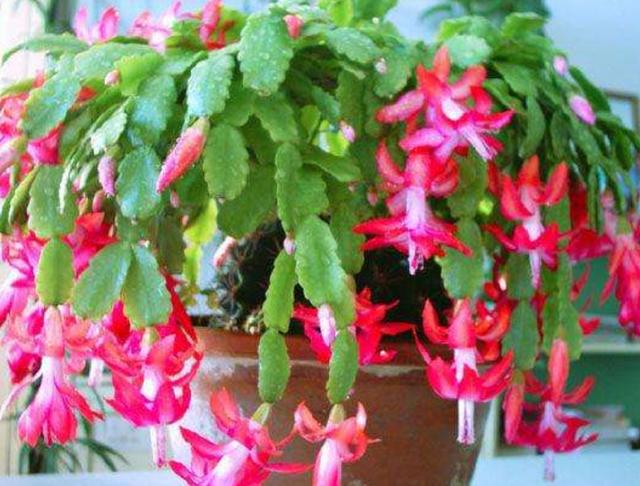 The crab claw cactus (Schlumbergera), native to Brazil. It prefers a warm, humid, well-ventilated, semi-shaded environment. The most suitable temperature for growth is 18-25°C. It is not cold-tolerant; when indoor cultivation temperatures drop below 10°C, it easily drops flowers and buds. In summer, shading is needed, and direct sunlight should be avoided; when temperatures exceed 32°C, it enters a dormant state. It prefers loose, fertile, well-draining, organic-rich acidic sandy soil.
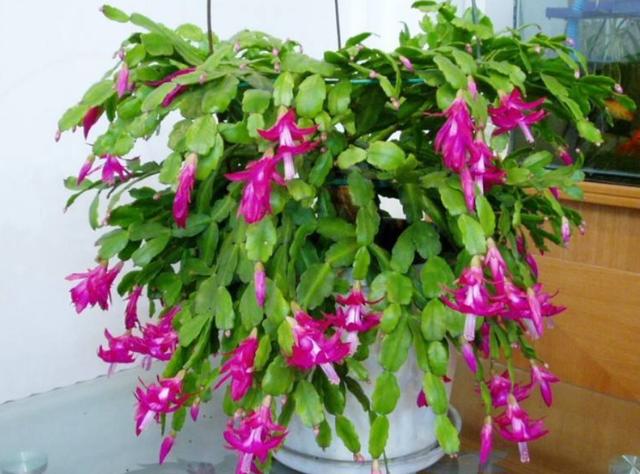 The flowering period of the crab claw cactus can last from October to February of the following year. Flowers grow at the tips of the stem segments. Common varieties have pink, purplish-red, and rose-red flowers. For indoor cultivation of the crab claw cactus, under the premise of maintaining a room temperature of around 15°C, provide 8 hours of light per day (cover with a black plastic bag for the remaining time), and flower buds will form and bloom in about one month.
The crab claw cactus belongs to the Cactaceae family and is drought-tolerant; waterlogging in the pot must be avoided. Especially during the flowering period, excessive water easily causes flower and bud drop, so generally keeping the potting soil moist is sufficient. The crab claw cactus loves fertilizer; during the autumn flower bud differentiation stage, more decomposed organic fertilizer (such as chicken manure fertilizer) should be applied, and a 1:1000 potassium dihydrogen phosphate solution can also be sprayed once a week to ensure sufficient energy supply during the flowering period. However, after flower buds form, try not to apply fertilizer anymore, to avoid the plant being unable to absorb it and causing flower and bud drop!
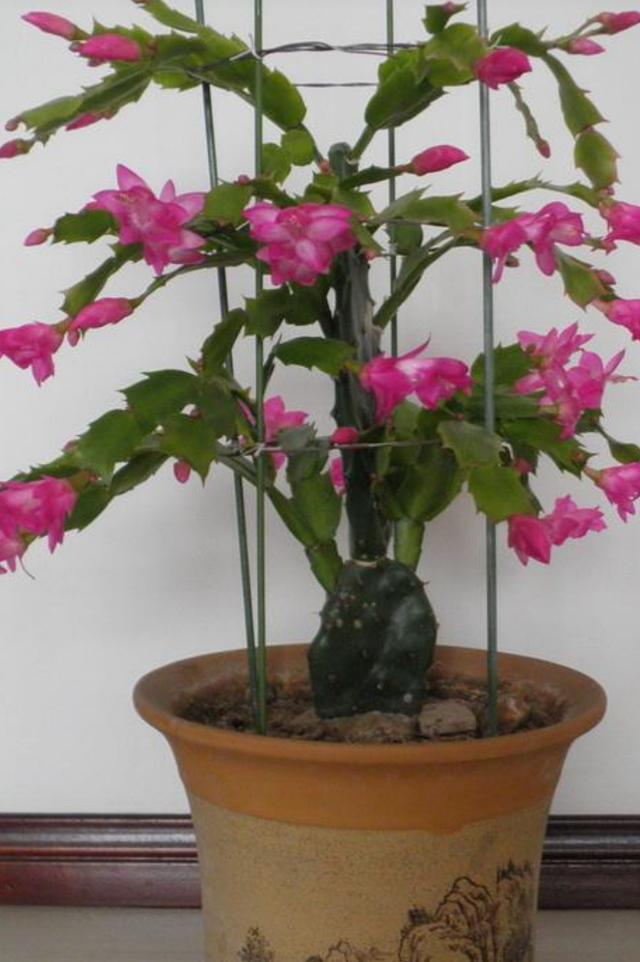 After the spring flowering period ends, spent flowers and some old stems and overly dense stem segments should be pruned in time to facilitate better ventilation and care. If the stem segments of a mature crab claw cactus are too long, 3-4 thick iron wires can be used as supports, inserted into the soil along the pot wall. The upper ends can be tied into 2-3 layers of circular supports, and the branches and segments of the crab claw cactus can be tied to the supports, making the plant appear radial, which is more beneficial for aesthetics and photosynthesis!
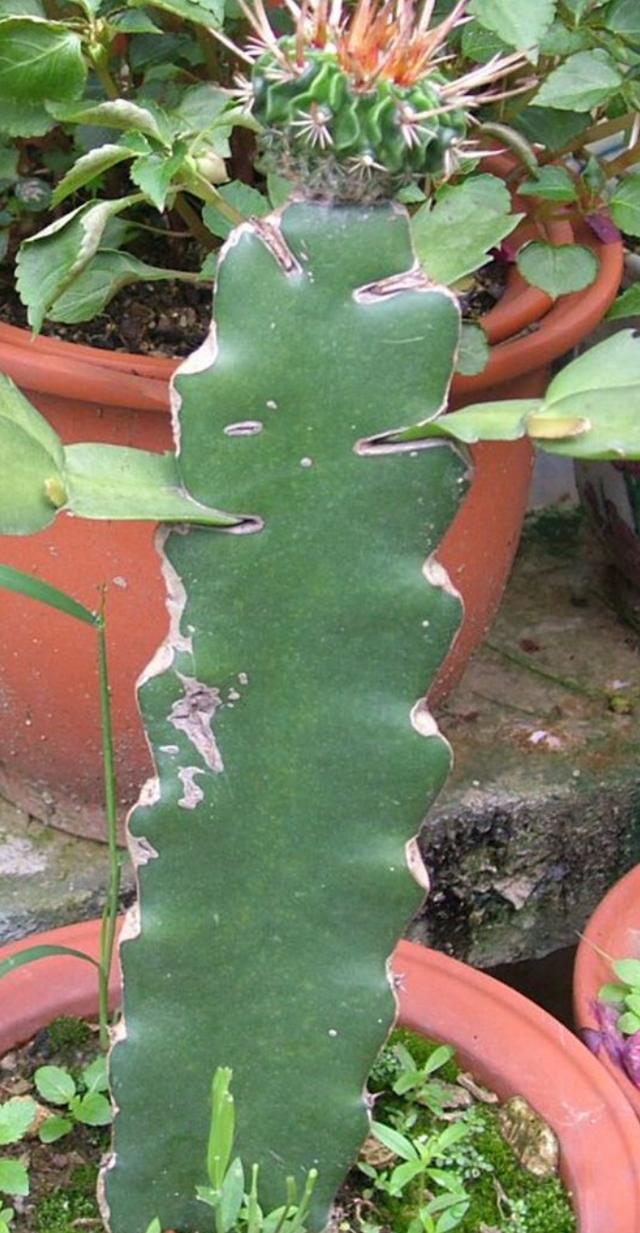 The crab claw cactus is an epiphytic succulent plant. Its original living environment is epiphytic on large tree trunks or in dark, moist rock crevices. Because of its bright flower colors and easy-to-root-from-cuttings habit, it is often grafted by people onto plants such as cacti or cactus balls.
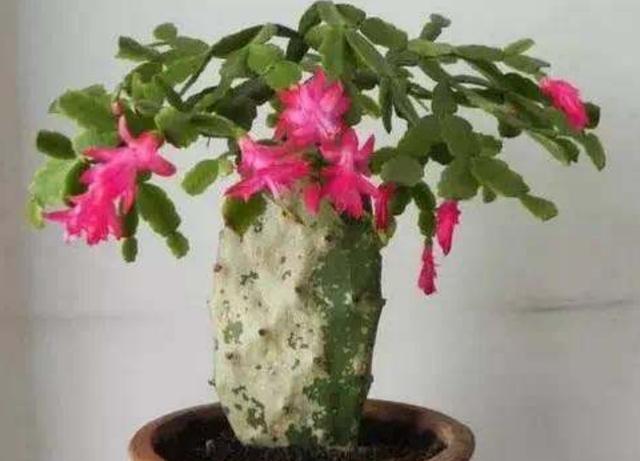 The best grafting times are from late March to mid-June and from mid-September to mid-October. Choose a robust mature cactus, use a sterilized blade to cut both sides of the upper segment of the base into a duck-bill shape, with a length of about 1.5-2.5 cm, then make a vertical cut at the top, insert the selected 2-3 segments of crab claw cactus scion into the cut, fix both ends of the cactus with toothpicks or clips, place the grafted plant in a cool place, and it will survive in about one month.