How to grow Frithia pulchra? Detailed guide to cultivation methods and precautions
Spring is a season full of hope, with floral fragrance everywhere, and people's faces beaming with happy smiles, incomparably radiant. Spring drives away the bitter cold of winter and eliminates the scorching heat of summer, with threads of coolness drifting through the air. Many very resilient little lives are also welcoming the arrival of spring, and the small, adorable Frithia pulchra is among them. Today I will take you all to learn about Frithia pulchra.
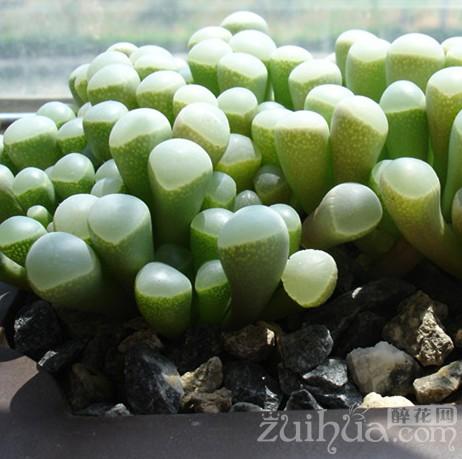
Cultivation methods
1. Soil
Frithia pulchra potted soil is mostly a mix of peat, vermiculite and perlite, which has good aeration and drainage.
2. Light
Although Frithia pulchra is a plant that loves light, it cannot be exposed to sunlight for long periods. Taking spring, autumn and winter as examples, during the growing seasons of these three seasons, it only needs 3-4 hours of light per day. Too much light will scorch the leaf surface. In summer, the temperature is too high, so its environment must be kept well ventilated, otherwise it will rot at the core and die.
3. Watering
The watering frequency for Frithia pulchra is rather difficult to master; too much or too little will cause it to wilt. Generally, the soaking method can be used for watering, that is, watering from the bottom of the pot, with the water level lower than two-thirds of the pot's area. The watering method for Frithia pulchra is rather special; it is best to supply water from the bottom of the pot. The pot can be placed in a basin of water so that the water seeps into the soil, generally for no more than 15 seconds. The timing of watering also matters; generally, you can water when the leaf surface begins to shrivel. In summer, the amount of watering should be reduced even more, and the method of misting the leaf surface can be adopted.
4. Fertilizing
Fertilizing also uses the soaking method and can be done at the same time as watering. Dissolve about 10 granules of compound fertilizer in the water, then water with it. The frequency of fertilizing should not be too high; generally 5-6 times a year is enough.
5. Propagation
Frithia pulchra is mostly propagated by sowing; for large plants, division propagation can also be used, separating the mature plant with a sharp tool, letting the wound dry, and then transplanting.
Precautions
1. In summer, do not water from above; when the heat is continuously muggy, try to use the soaking method. Clay pots can be soaked through, but pots with poor aeration are best soaked half-wet. Avoid misting the plant when not necessary.
2. Do not let it get rained on. If muggy weather or the early stage of a rainstorm occurs, because the air humidity is very high, it is best not to give water.
3. Sun exposure of 5 hours per day is enough. Without sun, the color will be unattractive and the plant will not be sturdy.
4. In winter in the north, if there is heating at home, you can water at the appropriate time.
5. When wrinkles appear on the leaves, you can water after another 2-3 days. The place where the plant is usually placed is best primarily ventilated.
The above is my compilation of the growth habits, cultivation methods and precautions of Frithia pulchra. I hope it can be helpful to everyone. Please continue to follow Zuihua Network to learn more about flower care knowledge.
Original address: http://www.zuihua.com/article-31299-1.html