How to grow potted water lilies? A detailed guide to cultivation methods and the reasons they fail to bloom
Water lily, also known as Ziwu flower and water celery flower, is a perennial aquatic flower of the genus Nymphaea in the family Nymphaeaceae. Its underground part has horizontal or upright tuberous rhizomes that grow in the mud. The leaves are clustered and float on the water surface, round or ovate, with wavy, entire or toothed edges, and slender petioles. The flowers are borne singly at the tip of slender stalks, and the petals are mostly white, pink, yellow, purplish red, and light blue, etc. A single flower blooms for 3~4 days, mostly opening during the day and closing at night. Water lily cultivation methods: the flowering period is in summer and autumn. Water lily flowers are large and beautiful, and fragrant, with both flowers and leaves being attractive, making it a very good aquatic ornamental plant. Common species include dwarf water lily, fragrant water lily, yellow water lily, European white water lily, etc. The cold-hardy varieties are currently the most widely cultivated in China.
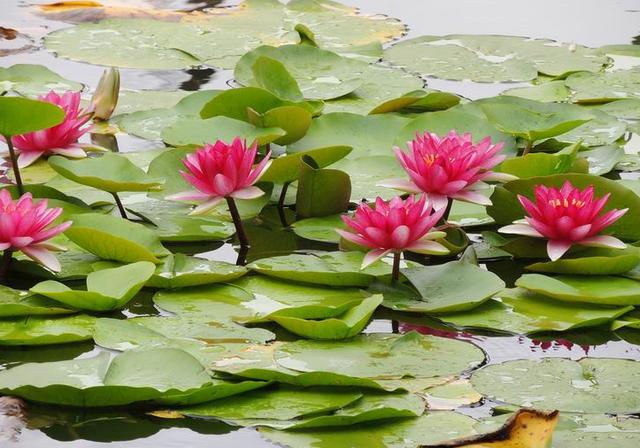
Water lily is native to Asia, America and Europe. Although water lily is fairly cold-hardy, its rhizome overwintering temperature must not be lower than 0°C. Although water lily grows in water, it is a light-loving plant, and growth and flowering are poor in places with insufficient light. It prefers high temperatures, humid air and a well-ventilated environment. It grows well in clayey soil rich in humus.
Potted water lilies need a large pot with a diameter of 25~27 cm or more. The potting soil should be river mud, pond mud or paddy field soil rich in humus. First dry the potting soil in the sun and crush it. When potting, place cake fertilizer and bone meal etc. at the bottom of the pot as base fertilizer, or mix already decomposed fertilizer into the potting soil. After planting the rhizome, place the pot into the water body. At first the water surface can only be slightly higher than the soil surface; wait until the petioles keep elongating, then gradually increase the water depth. During the growing period, maintain a water depth of 30~40 cm. In October to November the stems and leaves wither. Because the water lily's underground stem must overwinter in the mud, in northern regions the potted water lily can be taken out together with the pot and placed indoors to overwinter.
For cold-hardy varieties, the overwintering room temperature must be above 3°C, and for non-cold-hardy varieties it should be above 15°C. In southern regions and for cold-hardy varieties, they can also overwinter outdoors. The water lily sprouts and grows leaves again in March to April of the following spring. Before sinking it into the water in early spring, apply cake fertilizer or fish meal fertilizer, and topdress once every 30~40 days. The usual fertilizing method is to first mix the fertilizer with mud in a 1:1 ratio into mud balls, then evenly put them into the water lily pot. During the growing period, also frequently cut off withered leaves and spent flowers. After planting, water lilies can generally be dug out again and divided for replanting after 2~3 years.
In gardens, water lilies are often used to decorate medium and small water surfaces, or combined with aquatic plants such as lotus, spatterdock, cattail, purple loosestrife, and yellow iris to form garden waterscapes. Water lily is also an ideal beautifying material for fountains. Its flowering period is long, its leaf shape is beautiful, and it does not rise above the water surface, so it will not obstruct the direction of the water jet, nor will it affect the landscape of the decorations in the pool, and it is often used for water surface arrangements in modern formal gardens.
Why do water lilies fail to bloom?
Whether potted or pond-grown, water lilies often fail to bloom. Flower growers only need to carry out corresponding management according to the specific situation, and the situation of water lilies not blooming much can quickly be reversed. Generally speaking, the main reasons for water lilies blooming less are as follows:
Too deep in water: if the water layer above the plant is too thick, the nutrients needed for the leaves and flower buds to float to the water surface are also greater. Under normal circumstances, a water layer about 15 cm thick above the water lily's terminal bud is enough, so as to ensure the plant blooms normally.
Insufficient fertilizer: for water lilies, which are heavy feeders, if sufficient base fertilizer is not applied at planting time or sufficient topdressing is not used during the vigorous growing season, it is especially easy to cause the phenomenon of gradually fewer flowers or no flowers blooming at all. Therefore, in order to make water lilies bloom abundantly, timely use of sufficient fertilizer is very necessary.
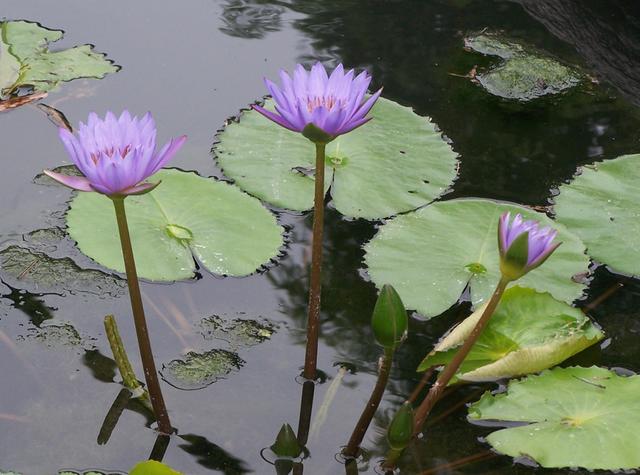
Shaded environment: water lilies can only grow well in strong sunlight. If the cultivation site is shaded, the plants cannot synthesize the large amount of nutrients needed for normal flowering, so the situation of not blooming much often occurs. It should be remembered that to make water lilies bloom more, they should receive no less than 4 hours of direct sunlight every day.
Low temperature: after the plant enters autumn, as the temperature drops, the number of flowers will also decrease day by day. If you want water lilies to continue blooming, you can try to raise the temperature of the small environment. For example, measures such as covering with plastic film can be used to raise the local temperature of the cultivation environment. In this way, the plant can be effectively prompted to bloom normally, thereby increasing the ornamental value of the water lily itself.
Water lily green plant flower potted set free shipping
The following articles are also great
How should anthurium be grown? Notes on anthurium, teach you one trick to easily get a full pot
Using oxytetracycline on clivia to "prevent" "rust spots", the effect is incredibly good