Tips for growing flowers indoors with hydroponics: clean and hygienic, easy to manage
Compared with soil-grown plants, hydroponic plants are cleaner and more hygienic, more complicated to handle, more ornamental, and suffer fewer diseases. Today the editor will share with flower lovers some tips on hydroponic plant care.
I. Planting steps
1. Remove from soil and wash the roots: take the selected plant out of the soil, gently shake and pat it, then soak it in clean water for 15-20 minutes, then gently wash the roots by hand, changing the water and brushing 2-3 times, until the roots are completely free of soil. When brushing the roots, it is best to use running water to reduce damage to the roots and make them easier to clean thoroughly.
2. Choose a container: according to the type, shape, size and color of the hydroponic plant material, choose a round glass jar, glass bottle, glass basin or similar container.
3. Put it in water: place the washed plant, roots and all, into the chosen container and fix the roots in place. You can choose colorful stones or rain flower pebbles, which are simple and attractive. Pour in tap water that covers 2/3 to 1/2 of the root system. At first, change the clean water once a day, and brush the roots and container at the same time; after a week, reduce the frequency of water changes. Once the plant being grown has grown new roots in the water, it shows it has adapted to the hydroponic environment, and you can change the water every 7-10 days, or even less often.
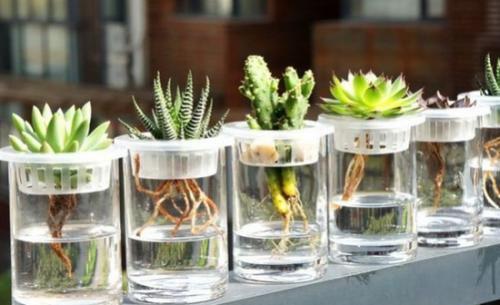
II. Care
1. Nutrient solution: for plants that have just been switched to hydroponics, it is not suitable to add nutrient solution immediately. They should be grown in clean water for 10-15 days, and only after the plant has adapted to the hydroponic environment should a special hydroponic nutrient solution be added.
2. Changing water: under normal conditions, change the water once every 5-10 days in spring and autumn; once every 5 days or so in summer; and once every 10-15 days in winter. Note that when changing the water, please expose half or one third of the plant's roots.
3. Cleaning and hygiene: every time you change the water, rinse the plant's roots and container with clean water, and remove dead flowers, withered leaves and rotten roots, so as not to pollute the hydroponic environment.
4. Moisturizing and keeping warm: when the weather is dry, spray the leaves with clean water to maintain humidity; you can use a small spray bottle, preferably twice a day. When the indoor temperature is below 5°C, be sure to keep the plant warm.
III. Points to note
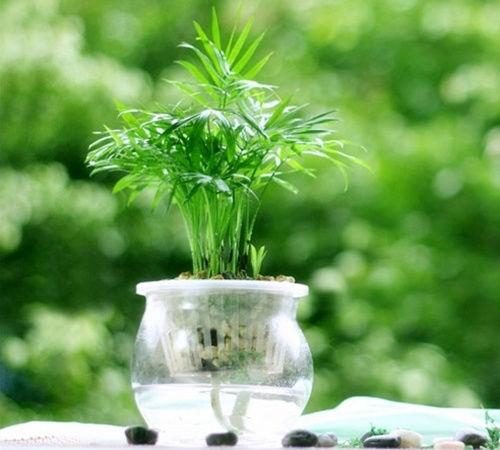
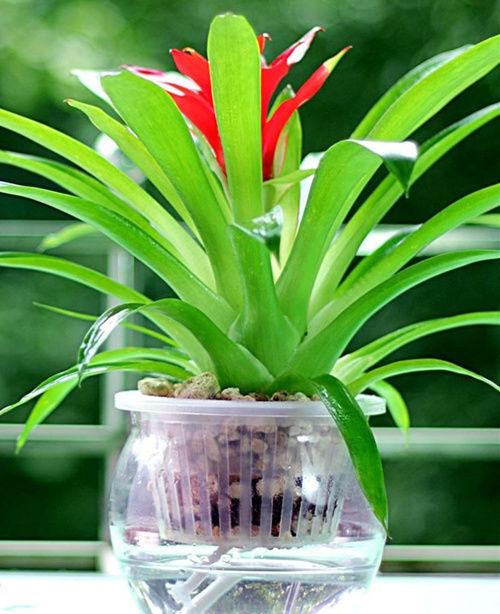
1. For water, you can choose purified water or tap water. Do not use too much water in the container; a certain portion of the roots needs to remain in the air, and it is best for 70% of the root length to be in the water. Be careful to protect the root system and try to straighten it out so that most of the roots can soak in the water.
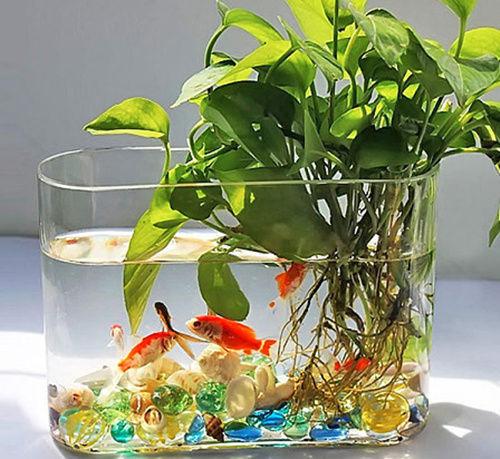
2. If you keep fish together with the plants, be careful to change the water often, and also remember to feed the fish. If conditions allow, you can add aeration equipment and medication to ensure the fish's living conditions.
3. Under normal conditions, the growing water in the container should be replaced once every one or two months; ordinary household tap water will do, but note that when the water temperature is lower than the indoor temperature, leave the tap water to stand for a while before use, to keep the root temperature stable. For hydroponic flowers and plants without fish, the water is generally changed once every one or two months. The water that is changed out can also be used to fertilize soil-grown plants, as it is very rich in nutrients.
4. Plants should be in harmony with the size of the room space; spacious rooms suit larger plants so they do not look empty. For relatively small rooms, smaller plants should be chosen to avoid a feeling of oppression.
5. Hydroponic plants can be placed directly on the floor. For the floor, arrange large plants such as pothos columns, red gemstone philodendron columns, emerald philodendron columns, fiddle-leaf philodendron columns, broadleaf lady palm, and zebra dieffenbachia; on tables, arrange medium-sized plants such as Orlande, clustered bird's-nest fern, green giant, green emperor, and imperial philodendron, as well as small plants such as bamboo-node begonia, purple velvet plant, fairy pen, inch plant, spider plant, syngonium, cordyline, and slipper orchid; on top of large cabinets, on walls, and when used as hanging decoration, choose plants with drooping branches and leaves such as English ivy, pothos, mini monstera, and syngonium.
6. Hydroponic containers: it is best to choose transparent containers, first because you can view the roots, and second because you can clearly observe the water quality and water level. The roots of various plants differ in color, including white, black, orange-red and so on; these roots either cross and tangle, or are tender and lovely, and they are the main part of enjoying hydroponics.
7. Hydroponic flowers and plants should not be placed directly facing the air outlet of an air conditioner; too fast an airflow will damage the branches and leaves, causing leaf curling in mild cases and scorched edges and withering in severe cases.
The above is the relevant knowledge about hydroponic plants that the editor has collected and organized for everyone; I hope it is helpful to you all!