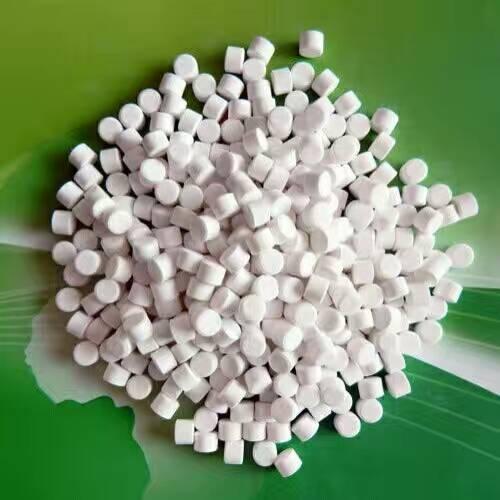
Do you understand the application of compound potassium monopersulfate in aquaculture?
China is a major aquaculture country and also a major consumer of disinfectants. In recent years, the production capacity and output of China's disinfectant industry have grown steadily, with an average annual growth rate of over 16%. However, with changes in the aquatic environment and pathogenic bacteria, traditional chlorine-based preparations have exposed many problems, such as strong irritation, residues, carcinogenic by-products, and gradually increasing dosage. Although chlorine dioxide, as a fourth-generation disinfectant, can basically be considered safe with no residues, it poses safety risks in use. Hospital disinfection in the European Union has completely banned the use of chlorine-based preparations, and the United States Environmental Protection Agency (USEPA) no longer allows chlorine dioxide, sodium dichloroisocyanurate, and trichloroisocyanuric acid to be used in fish farming water bodies. Although China currently has no such regulations, with people's increasing attention to food safety, the demand for environmentally friendly disinfection products will also grow higher and higher. Potassium monopersulfate compound salt [for consultation please add BMW0516888], as a new type of strong oxidant integrating safety, environmental protection and high efficiency, has been widely used in industry, agriculture and civil fields at home and abroad. This article mainly introduces the application of compound potassium monopersulfate series products using it as the main raw material in water treatment and aquaculture. Potassium monopersulfate compound salt series products are gradually being accepted by some high-end aquaculture farmers and have become a new favorite.
Professor Xue Guangbo, president of the Shanghai Disinfection Products Association, said at many industry conferences: "What disinfectants will we use in the 21st century? Potassium monopersulfate compound salt [for consultation please add BMW0516888], dibromohydantoin and other green disinfectants..." An unparalleled advantage of compound potassium monopersulfate series products is: quick-acting, green and residue-free, eliminating the secondary pollution and residual toxins caused by the use of halogen preparations, chlorine dioxide, and herbicides, turning precipitated organic matter into small particulate organic flocs, forming a hotbed for the growth of microbial products. Therefore, after using compound potassium monopersulfate products, microbial products can be used after 12 hours, combining quick action with long-lasting effect to bring out the best in each other.
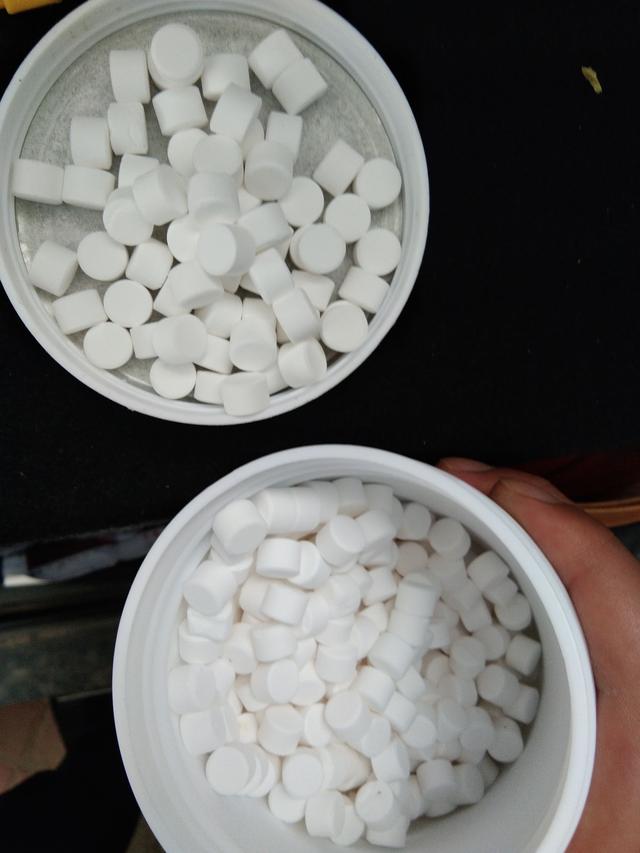
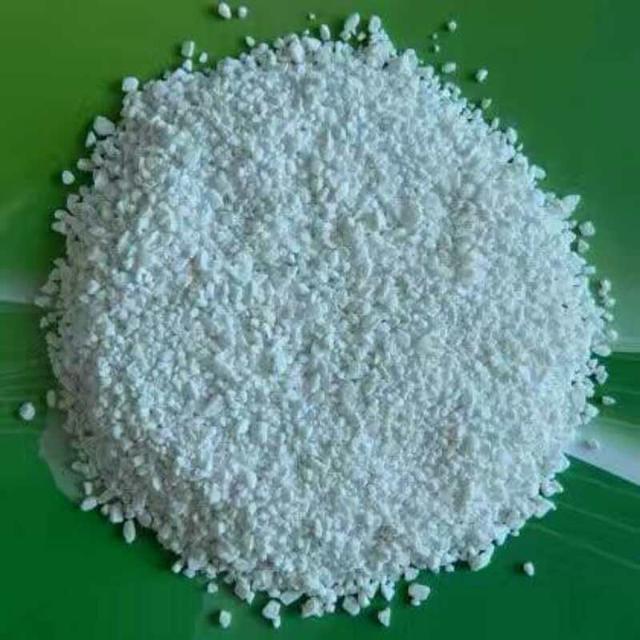
Potassium monopersulfate compound salt is mainly applied in the following aspects:
Disinfection and sterilization: Compound potassium monopersulfate powder disinfectant has been recognized by industry experts and governments worldwide and is considered the preferred disinfectant for preventing and controlling diseases of livestock, poultry and aquatic animals today. After potassium monopersulfate dissolves in water, it produces nascent oxygen, which is very active and has very strong oxidizing ability. It can denature the proteins of bacteria and viruses and disrupt the synthesis of their genetic material. Compound potassium monopersulfate powder disinfectants use exactly this principle to become the fifth-generation disinfectant in the livestock, poultry and aquaculture industry. The conventional formula is: potassium monopersulfate compound salt [for consultation please add BMW0516888] as the main component (generally not less than 50%), supplemented with organic acids, surfactants, sodium chloride, complexing agents, synergists, stabilizers, etc. After dissolution, the product can produce various high-energy, highly active small-molecule free radicals, reactive oxygen species and other derivatives. Through a chain reaction system, it destroys the permeability of microbial cell membranes, interferes with the DNA and RNA synthesis of pathogens, and kills various pathogenic microorganisms. It is not affected by organic matter, and its metabolites will not affect humans or the environment. The product kills and inhibits the growth and reproduction of viruses, bacteria, mycoplasmas, fungi, molds, vibrios and other pathogens in water bodies; high-concentration dosage has effects such as killing algae, eliminating algae and purifying water.
2. Bottom improvement, detoxification and water purification, mainly including the following aspects
1) Oxidize reducing harmful substances such as hydrogen sulfide, nitrite, ferrous compounds, and manganese(II) compounds, improve the bottom and remove odors;
2) Degrade pollutants that are highly harmful to the environment and difficult to biodegrade, such as polychlorinated biphenyls, polycyclic aromatic hydrocarbons, pesticides, herbicides, dyes (such as malachite green, etc.), herbicides, and algal toxins; modern water bodies often contain large amounts of toxic and recalcitrant organic pollutants, such as polycyclic aromatic hydrocarbons, polychlorinated biphenyls, herbicides, insecticides and dyes. Because of their stable chemical structure, strong biological toxicity, poor biodegradability, and long persistence in nature, they have potential carcinogenic, teratogenic and mutagenic toxicity to humans, animals and aquatic organisms. Because such substances have strong biological toxicity, biological methods are very difficult to degrade them. The advanced oxidation technology of potassium monopersulfate compound salt + catalyst is a newly developed international technology that can effectively degrade such pollutants. It uses the strongly oxidizing free radicals generated in the reaction system to decompose organic pollutants in water into small-molecule substances, and even mineralize them into CO2, H2O and corresponding inorganic ions, completely removing the pollutants. Degradation of chlorophenol pollutants in water: for example, degradation of pentachlorophenol. Experiments have shown that 50mg/L of 2,4-dichlorophenol can be completely decomposed within 1h;
3) Degrade secondary pollution caused by the use of chlorine preparations, bromine and iodine preparations, chlorine dioxide, "carcinogenic, teratogenic and mutagenic" aldehyde disinfectants, etc.; potassium monopersulfate can quickly oxidize reduced-state chloride ions into elemental chlorine. Chlorine dissolves in water to generate hydrochloric acid and hypochlorous acid, which synergistically sterilize with potassium monopersulfate, while also avoiding the combination of chlorine and organic matter to produce toxic carcinogenic, teratogenic and mutagenic chloramine substances, because potassium monopersulfate can quickly decompose such substances.
4) Complex and oxidize heavy metal ions, causing them to form stable non-toxic valence states;
5) Increase the oxidation-reduction potential of the water body;
6) Form an oxidized surface layer at the bottom of the pond, blocking toxic and harmful substances produced by anaerobic fermentation of organic matter in the sediment from diffusing into the water body.
3. Regulate pH and regulate the balance of algal phases. Compound potassium monopersulfate products are acidic and can lower the pH of the water body. At the same time, strong oxidants are commonly used algae-killing products. The compound product of potassium monopersulfate compound salt + organic acid + synergistic oxidant + catalyst, used together with amino acids, can effectively control cyanobacteria. It not only kills cyanobacteria, but also removes algal toxins, while at the same time cultivating beneficial algae. Degrade algal toxins in water: algae secrete some toxic metabolites, especially after death they release large amounts of algal toxins, including neurotoxins, hepatotoxins, cytotoxins, etc. These toxins have very low lethal concentrations and can accumulate in mammals. Advanced oxidation based on SO4·? can effectively remove algal toxins and is a very promising technology for controlling algal toxin pollution.
4. Sediment recycling and enhancing viable bacteria: quick results, no secondary pollution, and realization of "sediment suspension and reuse": after bottom improvement and detoxification, the bottom soil can become loose, causing the detoxified residual feed and dead algae particles to suspend and form organic flocs, thereby providing a nutrient source for plankton, beneficial microorganisms and fish and shrimp. After 12 hours, when used together with viable bacteria, it can enhance the growth and reproduction of viable bacteria and keep nitrite and other substances at normal levels for a long time. Therefore, when used together with microbial products, they bring out the best in each other, combining quick action with long-lasting effect.