For successful red swamp crayfish farming, planting aquatic plants is key
The red swamp crayfish, also known as the red swamp crayfish, red-clawed crayfish and freshwater crayfish, is a freshwater economic shrimp species, widely popular for its delicious meat. Because of its omnivorous diet, fast growth rate and strong adaptability, it has also become an important aquaculture species in recent years. In recent years, domestic consumption and international exports have grown rapidly, market supply has fallen short of demand, prices have continued to rise, and combined with the slump in other aquaculture species, red swamp crayfish farming has delivered remarkable returns, with the farming area increasing year by year. At present, red swamp crayfish farming mainly includes the rice-field crayfish farming model, the shrimp-crab polyculture model, and the model of planting aquatic plants for clear-water crayfish farming. Because red swamp crayfish like to inhabit hidden places such as aquatic plants and branches, and have habits such as being active by night and resting by day, and preferring shade to sunlight, planting aquatic plants for intensive red swamp crayfish farming has become the guarantee of high and stable yields. Moreover, red swamp crayfish grown in this environment are large in size, strong in transport tolerance and clean in body, and compared with other red swamp crayfish they are often hot sellers on the market, with no need to worry about sales channels. This article aims to discuss matters related to aquatic plant care, in the hope of providing some help for farming red swamp crayfish by planting plants.
I. The significance of cultivating aquatic plants
Aquatic plants can provide high-quality plant-based feed for red swamp crayfish, and provide a good place for red swamp crayfish to inhabit, molt and evade predators. More importantly, aquatic plants play a major role in regulating the water quality of the farming pond, keeping the water fresh, and improving the dissolved oxygen status of the water body. Red swamp crayfish are rather greedy feeders, and cases often occur of large crayfish eating small ones and hard-shelled crayfish eating soft-shelled ones; when water quality deteriorates, red swamp crayfish may even escape over the pond banks. Planting aquatic plants can alleviate the shortage of feed in the pond, prevent red swamp crayfish from cannibalizing each other, and aquatic plants can reduce the accumulation of eutrophication in the water body,keeping the water body always fresh.
II. Selection and pairing of aquatic plant species
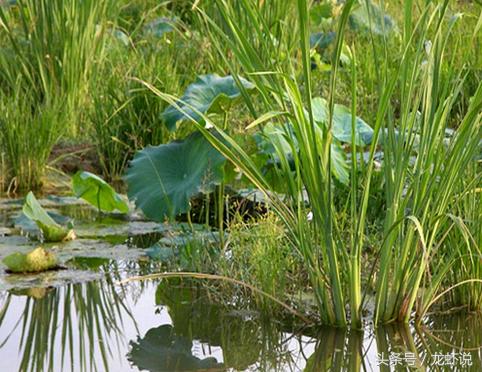
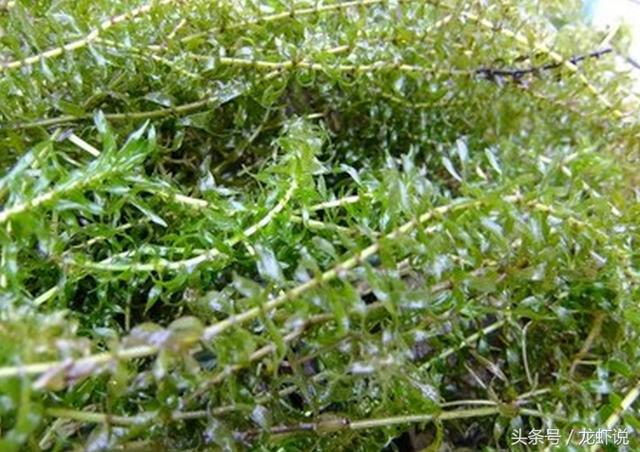
Aquatic plants commonly planted in red swamp crayfish farming include: hornwort, Hydrilla verticillata, vallisneria, Elodea, wild rice stem, water hyacinth, Potamogeton crispus, yellow silk grass, etc. These aquatic plants include submerged plants and emergent plants, and are proven good aquatic plant varieties that can be used for farming red swamp crayfish. The distribution of aquatic plants in the shrimp pond should be uniform, the species should not be single, and the species should be reasonably paired. In general, the area covered by aquatic plants accounts for about 1/3 of the shrimp pond. Implementing composite aquatic plant planting in the shrimp pond (meaning at least two aquatic plant species) can ensure that the pond has aquatic plants all year round. Common aquatic plant pairing models include: Elodea plus Hydrilla verticillata, Elodea plus yellow silk grass, wild rice stem plus duckweed, etc. Some farmers choose three or more aquatic plants for mixed planting that imitates the natural environment, which is also a good choice. In the Hanchuan area of Hubei, the model of Elodea plus Hydrilla verticillata is now used, planting Elodea in the return channels or "mu"-shaped channels in the pond and planting Hydrilla verticillata in the shallow areas, achieving good returns. Elodea is native to the Americas and is a high-quality, fast-growing, high-yield submerged plant. It is a low-temperature plant, cold-tolerant but not heat-tolerant; it can grow once the water temperature is above 5°C, and when vallisneria and Hydrilla verticillata have not yet sprouted, this plant has already grown abundantly. Hydrilla verticillata, commonly known as centipede grass, warm silk grass, lantern weed, etc., along with vallisneria and Elodea, belongs to the Hydrocharitaceae family, Hydrilla genus, a monocotyledonous perennial submerged plant, widely distributed in ponds, lakes and ditches. It is found in all provinces north and south of China. It can tolerate high temperatures better than Elodea and prefers an environment with ample sunlight, so planting Hydrilla verticillata in shallow areas allows it to grow normally. This model relatively well ensures that the pond basically has aquatic plants all year round, reduces the difficulty of aquatic plant management, and lowers farming risk compared with planting a single aquatic plant. In the Ziyang area of Sichuan, the model of wild rice stem plus duckweed is also a good choice for planting. Wild rice stem, also known as high gourd, wild rice shoot, wild rice hand, wild rice shoot, high shoot, is a perennial emergent aquatic herb of the grass family, wild rice genus. Duckweed, also known as green duckweed, field duckweed, duckweed grass, water duckweed, water duckweed grass, is a floating plant on the water surface of the duckweed family. This model uses the emergent plant wild rice stem to provide places for crayfish to hide and cling to, and uses duckweed to provide dim light and plant-based feed, which can provide an excellent growing environment for red swamp crayfish. However, what needs attention with this model is that duckweed needs to be enclosed with bamboo poles or ropes to avoid duckweed covering the entire pond and causing oxygen deficiency in the pond.
III. Care of aquatic plants
For aquatic plants, planting without management not only fails to let them function normally, but also, when large areas of plants die off, easily pollutes the water quality, further causing the death of red swamp crayfish. In the early stage of red swamp crayfish farming, the pond is required to have many plants and enough plants. After planting in the early stage and before releasing seedlings, the pond water level must be well controlled; if water is added too quickly or too deeply, it easily causes aquatic plants to grow only stems and not roots, and such aquatic plants are very prone to root breakage and floating up in the hot season. In the early stage, insects that eat aquatic plants should mainly be killed, and care of aquatic plants should be emphasized more than management of water quality. In the middle stage, the plants must be well managed: first, if the water color is too dense and affects the photosynthesis of aquatic plants, the water should be adjusted in time or the water level lowered to enhance photosynthesis. Second, if the water quality is turbid and pollutants adhere to the aquatic plants, products should be used in time to decompose them. Third, if the aquatic plants are withered and lack vitality, fertilizer should be applied in time and the plants "strengthened". Fourth, during the hot period, as the water level deepens, problems such as aquatic plants floating up and dying, water quality becoming turbid, and aquatic plants becoming dirty may appear; bottom-improving products can first be used to control the substrate, then plant fertilizer used to restore the vitality of the aquatic plants and prevent the aquatic plants from rotting.
Aquatic plants commonly used in red swamp crayfish farming ponds