Key Beekeeping Techniques for Chinese Honey Bees Building Comb
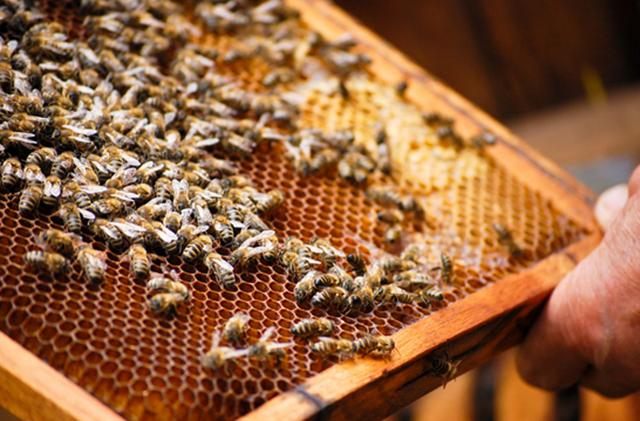
Chinese honey bees love new comb and dislike old comb. When keeping Chinese honey bees, be sure to seize the right moment to build new comb, so that new comb is used year-round. For Chinese honey bees to build comb, pay attention to the following points.
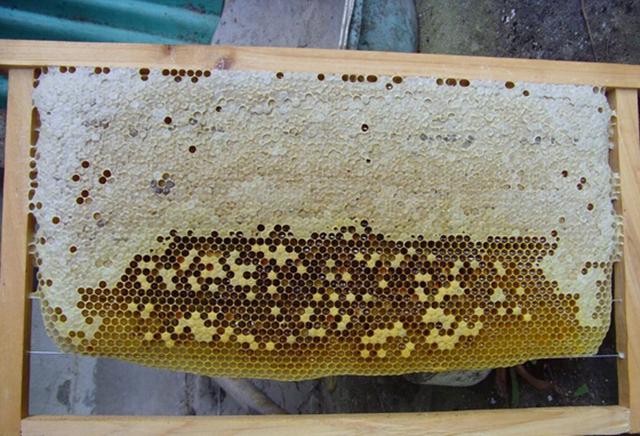
I. The Most Suitable Period for Comb Building
① When bees carry large amounts of pollen and nectar into the hive, a pollen ring appears on the comb;
② The surface of the top bar of the frame turns white, that is, white wax spots appear;
③ The bees begin to build new cells below the comb.
II. Preparation Before Comb Building
2-3 d before comb building, complete the preparatory work for comb building:
① Remove the old comb with no brood or little brood from the colony, so that the bees in the colony are densely clustered;
② Give the comb-building colony supplementary feeding to encourage the bees to secrete wax and build comb.
III. Methods of Comb Building
In order to give play to the bees' enthusiasm for comb building and guide the bees to build comb at the right time, the following methods should be adopted according to the specific conditions of the colony:
1. Building comb with foundation: When the colony is bringing in large amounts of pollen and nectar, the brood comb in the hive is normal, bees and comb are in proportion, and the combs are basically full-frame, a foundation frame can be inserted for comb building.
2. Continuing to build frames that are not full: When there are combs in the hive that are not full-frame, the bees should be made more densely clustered. If necessary, the full-frame combs in the colony can be temporarily transferred to another colony to create an advantage for comb building, and sufficient feed should be provided, so that the combs in the colony that are not fully built are built to full frame.
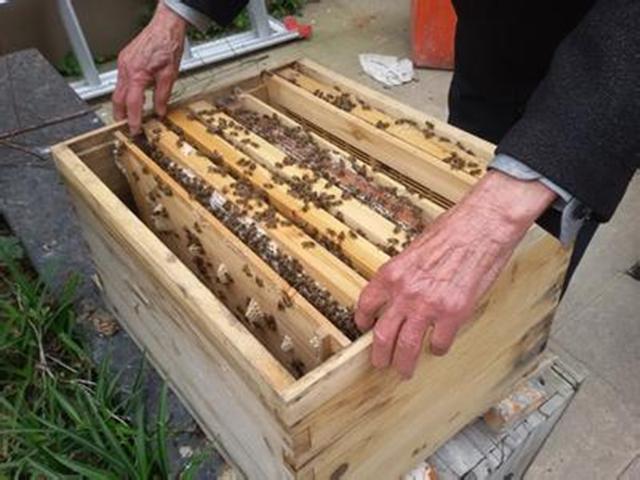
If the combs of the colonies in the apiary vary in size, the combs that are not full-frame can gradually be exchanged with full-frame combs from other colonies, to encourage the bees to build all the not-full-frame combs in the apiary into full-frame combs.
Continuing to build the not-full-frame combs in the colony to full frame: first, it can make full use of the hive space and increase the area of worker bee cells; second, it can prevent worker bees from building large numbers of drone cells in the empty spaces of the original comb when the colony later shows swarming fever; third, it can avoid the undesirable phenomenon of separated bee clusters after adding foundation because the original comb is too short.
3. Relay comb building: In an apiary, there are usually some colonies that are especially good at building comb, while others are never active in building comb. It is advisable to let the colonies good at building comb build comb continuously, and when the comb is 30-40% built, transfer it to the colonies that are not active in comb building to finish building.
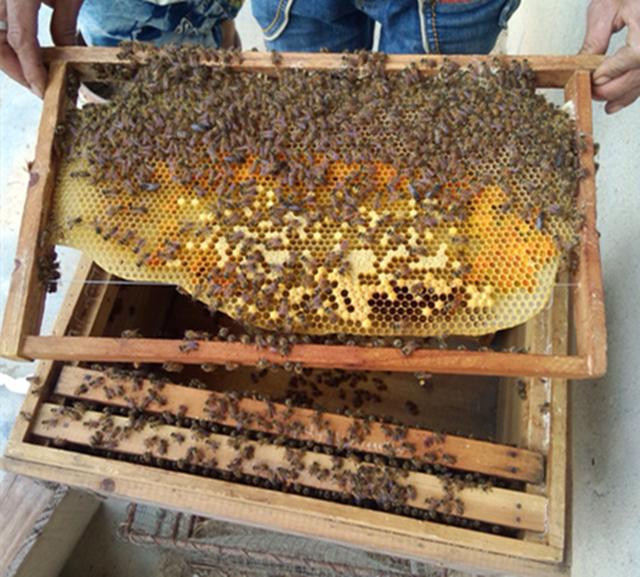
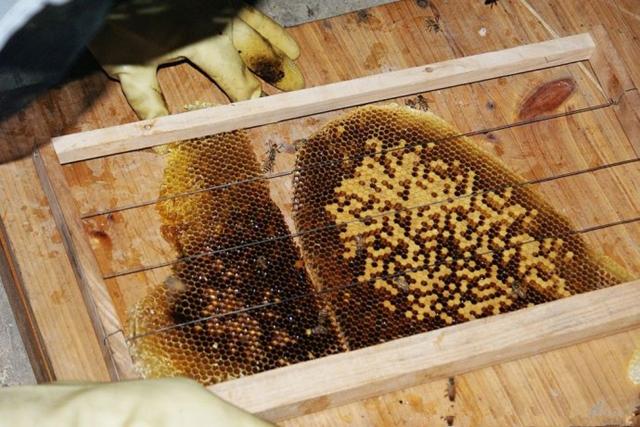
4. Cutting old comb to build comb: On the combs of Chinese honey bees, the brood-rearing area is usually in the middle-lower part of the comb, and the upper part of the comb is often the honey storage area, so even if the cells in the brood-rearing area of the comb turn black, the upper cells have not yet turned black. Therefore, Chinese honey bees always begin gnawing the comb from the middle-lower part. Since Chinese honey bees generally do not build drone cells outside the swarming period, the original comb can be used by cutting off the blackened old part in the middle-lower part of the comb and letting them rebuild it. This has certain value in the keeping of small colonies during early spring or autumn and winter brood-rearing periods.
5. Comb building with foundation starter strips: When foundation is in short supply, foundation strips 30-50 mm wide can be fitted into the covering surface of the top bar of the frame to let Chinese honey bees build comb, and neat full-frame combs can likewise be built.
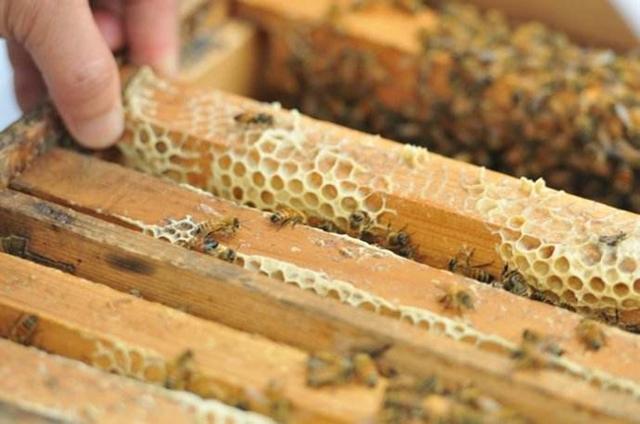
IV. Position for Inserting the Foundation Frame
① 2-frame colony: insert between the 2 combs;
② 3-frame colony: insert between the 2nd and 3rd frames inside the division board;
③ 4-frame colony: insert between the 3rd and 4th frames inside the division board;
④ 5-frame colony: insert between the 2nd and 3rd frames, or between the 3rd and 4th frames, inside the division board
V. Points to Note
① Under normal circumstances, add 1 foundation frame per colony each time;
② When adding foundation, the bee space on both sides of the foundation frame should be reduced (5 mm), and the original bee space should be restored after the comb is basically built;
③ When the added foundation has not yet been built, do not rush to add a 2nd foundation;
④ When a cold wave comes, if the colony is not temporarily adding foundation, do not build comb;
⑤ During non-honey-flow periods, give the comb-building colony supplementary feeding every evening;
⑥ For combs or foundation frames where comb building is skewed, appropriately turn the direction.
Chinese Honey Bee Keeping Techniques: Preventing Colony Absconding
Chinese Honey Bee Keeping Techniques: Guarding Against Robbing in Chinese Honey Bees
Chinese Honey Bee Keeping TechniquesSexual Maturity Experiment
Bee Keeping Techniques: Eight Principles of Feeding
Bee Keeping Techniques: Management of Breeder Queen Colonies
Bee Keeping Techniques: The Principle of Temperature Regulation in Honey Combs
To learn more bee keeping techniques, you can click to learn about the books on bee keeping below.