How Much Do You Know About Water Color Changes in Aquaculture?
I. What Is Water Color
Most farmers probably have a simple understanding of what water color is, but some farmers may not know how to identify and maintain water color. Water color refers to the color presented in sunlight by substances dissolved in water (including natural metal ions, pigments from sludge and humus, microorganisms and plankton, suspended leftover feed, organic matter, and clay or gelatinous substances, etc.). Among these, plankton and benthic organisms have the greatest influence on water color.
Cultivating water color includes two aspects: cultivating single-celled algae and cultivating beneficial microbial dominant flora.
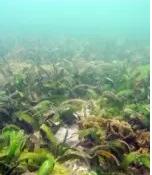
II. Advantages of Good Water Color
1. Increasesdissolved oxygen;
2. Stabilizes water quality,reducesthe content oftoxic substancesin the water;
3. Providesnatural high-quality feed;
4.reduces transparency, inhibits the growth of filamentous algae and benthic algae; provides a good growing environment, helping to avoid predators;
5. Stabilizeswater temperature;
6. Inhibits the growth of harmful bacteria and algae.
Good water color signifies a dynamic balance among bacteria, algae, and zooplankton.
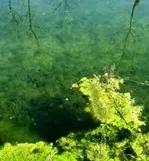
III. Classification of Water Color - Good Water Colors
1. Diatom type: tea-colored, tea-brown;
The water quality is relatively "rich and lively," with moderate fertility. The algae in the water are diatoms, such as: Chaetoceros, Nitzschia closterium, Phaeodactylum tricornutum, etc. These algae are all excellent feed; in addition, there are Coscinodiscus and Navicula. The cultured organisms living in this environment are vigorous, with bright and clean body color, good feeding, digestion and absorption, and fast growth.
Tea-colored water

Tea-brown water quality
2. Green algae type: light green, emerald green, dark green;
(1) Light green, emerald green
The water quality is very "tender and refreshing," with transparency of 20-35 cm and moderate fertility.
The algae in the water are green algae, such as Chlorella, Chlamydomonas, etc. Green algae can absorb large amounts of nitrogen fertilizer in the water and purify water quality.

Light green

Emerald green
(2) Dark green (dark but not turbid)
Mostly appears in the middle and late stages of aquaculture. The water is relatively dense, with transparency of about 10 cm, and the algae are mainly green algae. The water is relatively fertile but lively and refreshing. There are few suspended particles in the water; the water quality is stable, which helps ease stress responses to environmental and climate changes.
3. Mixed diatom-green algae type: yellow-green.
This water color is a symbiotic water color of diatoms and green algae. It is generally believed that "diatom water is unstable, and green algae water is not rich enough," while yellow-green water combines the advantages of both diatom water and green algae water. The water color isstable and nutrient-rich.
Yellow-green
The water quality of the above good water colors is refreshing, bright, and lively. The water splashed by the aerator is white, and any foam dissipates quickly.
Dangerous Water Colors
1. Green turbid type: blue-green, dark green
(1) Blue-green or dark green
Blue-green algae or Microcystis multiply in large numbers in the water. The water quality is dense and turbid, with transparency of 20 cm; a small amount of green suspended fine particles appears on the water surface at the downwind area. This is most likely to occur in aging ponds and easily turns into "copper-green water." In this kind of water body, organisms can still survive, but water quality regulation must be carried out; otherwise, the water quality will age, large numbers of algae will die and float on the water surface, and the incidence of disease in shrimp will increase.
Blue-green, old green
(2) Gray-green, gray-blue or dark green
The concentration of harmful algae is high and they begin to die, and floating oily pollutants appear on the water surface
The above two kinds of water quality are dense, turbid, and dead, and the water is sticky and slippery; the water splashed by the aerator is light green or light blue; foam is likely to form, and the foam trails are long and difficult to dissipate.
2. Red turbid type: sauce-red, black-red
(1) Sauce-red or brick-red
Large numbers of protozoa or red tide organisms multiply in the water.
Sauce-red
(2) Black-brownor soy sauce color
Mainly contains flagellate algae, Euglena, etc. This water color is caused by management failures, such as excessive feed feeding and excessive leftover feed and feces, leading to an increase in dissolved and suspended organic matter. The water is extremely eutrophic, and the water quality and bottom sediment are extremely aged. Because some harmful algae secrete toxins, they poison aquatic organisms; and the bottom sediment deteriorates, so the incidence of disease is very high.
Black-brown
The above two kinds of water quality are dense, turbid, and dead, and the water is sticky and slippery; the water splashed by the aerator is light red or light black; foam is likely to form, and the foam trails are long and difficult to dissipate. The water and bottom have a fishy odor.
3. Yellow turbid type: yellow, yellow-mud color
(1) Yellow
Mainly contains flagellate algae such as dinoflagellates and golden algae. Organic matter that has accumulated in the pond for a long time is easily decomposed by bacteria to produce this water color.
Yellow water
(2) Turbid, stratified, yellow-mud color
① False turbidity: When diatoms, brown algae, or green algae coexist in the water and are relatively numerous, the water color looks somewhat turbid, but it is actually the color presented by several algae mixed together. You can scoop a cup of water with a transparent cup and let it stand for a few minutes. If no sediment is visible, or if the dissolved oxygen changes little in the morning and evening and is between 4-8 mg/L, it is false turbidity.
Turbid water, yellow-mud water
② Stratified turbidity of pond water: The upper layer has a certain water color, while the bottom layer is turbid. This situation is mostly seen in overwintering greenhouses. Large temperature differences, relatively clear water, unstable bacterial and algal phases in the water, and improper use and matching of aerators are the main causes of this phenomenon.
③ Uniform turbidity of pond water:
a. Improper medication, such as certain disinfectants killing algae.
b. Water quality aging, bottom sediment resuspension.
c. Shallow water level, caused by water inflow from wind and rain, or caused by shrimp stirring up the bottom mud.
4. White turbid type: milky white
Harmful microorganisms or zooplankton in the water reproduce excessively, algae are eaten by zooplankton causing water hypoxia, and excessive activity of zooplankton causes it; or the water contains large amounts of ciliates, rotifers, copepod zooplankton, and clay particles or organic debris.
White turbid water
5. Moss water: filamentous algae water, moss water, mud skin water
Due to various reasons, the water cannot become fertile for a long time, resulting in the growth of moss
Moss water