What are the breeding techniques for natural incubation of meat pigeons?
After pigeons are paired up, they proceed to reproduce, and the female pigeon crouches in the nest bowl for long periods. After the second egg is laid, the parent pigeons begin incubating. During the parent pigeons' incubation, the following management tasks should be noted and carried out:
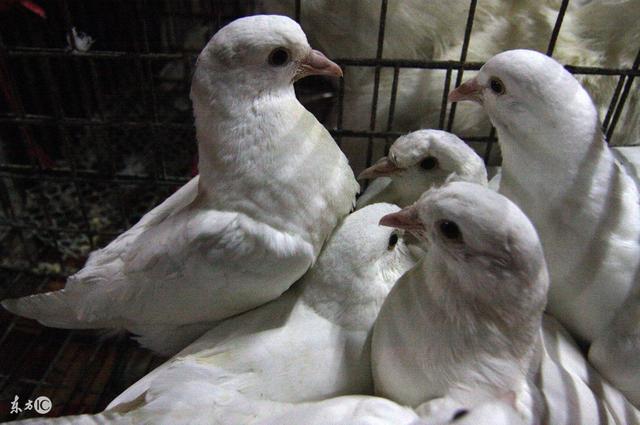
1. Keep the environment quiet, avoid external disturbances and the occurrence of stress factors, and provide appropriate shading for the pigeon cage when necessary to encourage the parent pigeons to focus on incubating.
2. The nest bedding should ideally be double-layered old burlap, with chaff or wood shavings or dry fine sand underneath the burlap, with dry fine sand being the most ideal, at a thickness of 2-3 cm in the nest bowl. The keeper should check the egg-laying and incubation situation every day, and promptly remove any broken eggs.
3. Increase the nutritional level of the feed during the incubation period, ensuring the crude protein content reaches 18-20%, and the energy level should be increased accordingly. This gives the parent pigeons a strong physique and lays a good foundation for brooding the squabs. Prevent the eggshells from being soiled with droppings, because bacteria may invade the eggs and cause embryo death. If droppings have already stained the eggs, they can be wiped clean with gauze.
4. Candling is a must-do task. Candle the eggs once each on the 5th day and the 10th day of incubation. During the first candling, if red-brown blood vessels distributed in a spider-web pattern are found inside the egg and the shape is stable, it is a fertilized egg, and it should be left to continue incubating. If blood vessels are distributed inside the egg but appear as a single thick line in a "U" shape, it is a dead sperm egg. If it is transparent with no blood vessels, it is an infertile egg. Dead sperm eggs and infertile eggs should be removed. On the 10th day of incubation, perform the second candling. If most of the egg appears dark, with a relatively translucent blank area at the other end due to the enlarged air cell, it indicates the embryo is developing healthily. If the egg shows no clear distinction between dark and light, the contents are unstable, there is a sensation of movement when turning the egg, and the shell appears gray, it is a dead embryo egg and should be removed promptly.
5. Promptly carry out egg merging, because egg merging is one of the effective measures to improve the reproductive capacity of meat pigeons. After removing the infertile eggs, dead sperm eggs, and dead embryo eggs, merge 2 eggs per nest into one nest, and merge the remaining eggs into other nests with the same incubation period or a difference of 1 day. Merging nests after 10 days is preferable. If nests are merged before 10 days, the empty-nest breeding pigeons need only about 8 days to lay eggs, and early egg-laying will affect the pigeons' physical recovery. The next clutch may be weak, or phenomena such as infertile eggs, dead sperm eggs, and dead embryo eggs may occur.
6. Mastering the hatching date is crucial. From 7-8 days after the second candling, pay attention to observing the hatching situation of the squabs. If hatching is indeed difficult, manual assistance is needed. Generally, when incubation has reached 18 days and only a small hole has been pecked in the shell surface, manual assistance in breaking the shell is needed. If the incubation period has exceeded 18 days and the shell has not been pecked, the embryo may have died.
7. The incubation temperature for pigeons is very important, and an appropriate temperature should be maintained. In winter, the room temperature should be kept at least above 5°C. If the temperature is too low, heating should be added to the room, otherwise the embryos may freeze to death in the early incubation period. In hot summer weather, reduce the bedding appropriately, open doors and windows, and turn on exhaust fans to keep the room temperature below 32°C, otherwise stillbirths may occur in the late incubation period.