A Detailed Guide to the Distribution, Habits and Cultivation Methods of the Norfolk Island Pine
Aliases: Norfolk Island pine, Araucaria heterophylla, slender-leaf Norfolk Island pine.
Scientific name: Araucaria heterophylla
Family and genus: Araucariaceae, Araucaria
Origin and distribution:
Norfolk Island in Oceania and the islands of northeastern Australia; it is cultivated in China's Fujian, Guangdong and other provinces.
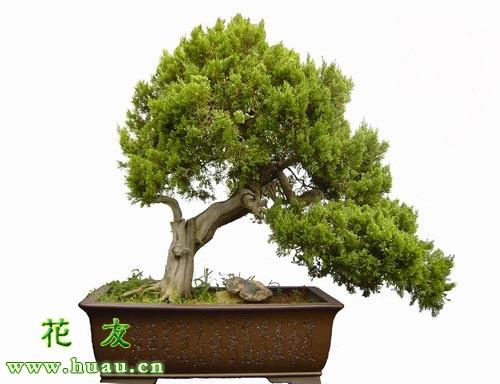
Morphological characteristics:
Evergreen tree; when potted it is generally a young tree, under 2 m tall. The crown is spire-shaped and dark green; the bark of the crown often splits horizontally or peels off in strips; the new bark has a bronze sheen.
The stem is upright, with lateral branches in whorls spreading horizontally. The branchlets are alternate in two rows, extending horizontally or slightly drooping. The leaves are of two types: on young trees or lateral branches the leaves are awl-shaped, curving upward, about 12 cm long, loosely arranged and bright green; on large trees or old branches the leaves are ovate or triangular-ovate, about 6 cm long and densely arranged. The cones are nearly round.
Growth habits:
It likes a warm, humid environment and grows well in places with abundant sunlight; it has a certain tolerance for shade, but strong sunlight exposure in summer should be avoided. It is not cold-tolerant. The Norfolk Island pine can purify the air; in a newly decorated room, it is very beneficial for absorbing harmful gases such as formaldehyde. As the name suggests, the Norfolk Island pine is native to Norfolk Island in Australia. The Norfolk Island pine does not need sunlight, rain or dew; the indoor minimum temperature generally only needs to stay no lower than -2°C. If there is a little sunlight indoors, that is fine too, but it cannot be exposed continuously, especially not to the blazing sun as in summer. It does not need frequent repotting or frequent fertilizing. Generally, fertilize once each in May and August, and it is best planted in sandy soil. The greatest advantage of growing a Norfolk Island pine bonsai is that you can shape it yourself and design the look you want. This kind of bonsai tree gives people a beauty of weathered strength and lush, verdant green.
A precious indoor plant that can be placed in the living room, study, office, shop, etc. Through photosynthesis, this plant can release water vapor and thereby regulate air humidity; it is suitable for indoor care in dry winters and is known as a "natural humidifier." It is sensitive to cold and drought and is suited to well-drained, humus-rich, slightly acidic sandy loam.
Cultivation methods for the Norfolk Island pine: it likes a warm, humid environment and grows well in places with abundant sunlight; it has a certain tolerance for shade, but strong sunlight exposure in summer should be avoided. It is not tolerant of cold or drought and is suited to well-drained, humus-rich, slightly acidic sandy loam.
When potting the Norfolk Island pine, a substrate mixed from garden soil, leaf mold and peat moss is best. Small seedlings are mostly used for potting, and a suitable pot should be chosen according to the size of the seedling. Araucaria heterophylla likes diffused light and is best placed in a bright spot inside a shed. If it is kept in a dark place for a long time, it should be moved into the sunlight every few weeks for proper exposure, which can keep the dark green leaves a beautiful color. Its growing season is long; except when the summer temperature exceeds 32°C, it can grow all year round.
From spring to autumn, it should be watered more, but waterlogging in the pot must be avoided. When it is hot and dry, spray water on the potted plant and the nearby ground to cool it and increase humidity. Watering should be timely; do not wait until the soil is dry before watering. From late autumn onward, gradually reduce watering to enhance its cold resistance. During the growing season, apply fertilizer every 2 weeks, preferably a compound fertilizer containing nitrogen and potassium. Insufficient fertilizer tends to make the branches and leaves turn yellow.
During growth, to prevent the trunk from leaning to one side, it is best to turn the pot once every half month so the plant receives light evenly. In addition, the trunk of a young tree is fragile and easily bent and deformed, so from the seedling stage a support should be set up to fix the trunk. To prevent the plant from growing too tall, repot once every 2-3 years after the weather warms in spring. Usually, take care to protect the lateral branches so they are not damaged and affect the plant's shape.
Under normal conditions, the Norfolk Island pine does not need branch pruning; let it grow naturally. The optimum growth temperature is 10°C-25°C, and the overwintering temperature is above 5°C. In the overwintering season, give it a certain amount of light, and the potting soil must not be too dry; on clear days, water should also be sprayed to increase humidity.
For more flower-growing experience, succulent cultivation, bonsai appreciation, and to exchange ideas with fellow flower lovers, please go to the Flower Lovers Micro Community: http://m.huau.cn, or follow the WeChat public account: huaucn.