The Complete Guide to Arowana Keeping: Teaching You How to Raise the King of the Aquarium
In the long river of China's 5,000-year history, the "dragon" is a symbol of the spirit of the Chinese nation. It carries strength, hope and the Chinese people's longing for a better life. Since ancient times, our nation has called itself the "descendants of the dragon." Dragon culture is an important origin and component of Chinese national culture and has had a profound influence on the development of Chinese culture. This influence has penetrated every level of Chinese society.
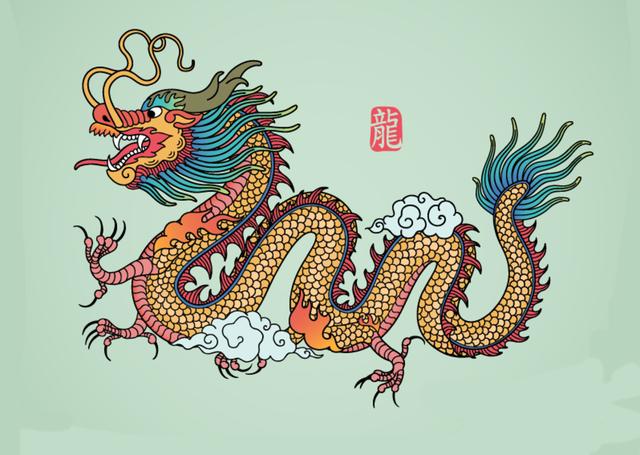
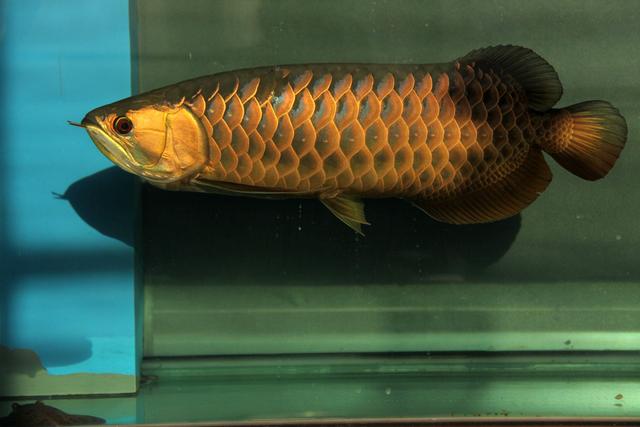
People worshipped the dragon in a totemic manner, and tried every possible means to make the image of the dragon concrete and vivid. People kept speculating and kept searching, and finally created a composite of lion's head, deer's antlers, fish scales, chicken claws... If you still feel its image is not clear enough, then when you first see the prehistoric creature growing in the primitive tropical lakes of Southeast Asia, you may be astonished by its enormous, brilliantly gleaming scales and its "ruler of all under heaven" majesty! At that moment, you will certainly blurt out - that is the legendary dragon. Since the day this prehistoric creature was discovered by humans, it has become an object that people vie to keep. The locals all say that as long as the family has one, it will bring good luck to oneself and one's family, and will bring greater fortune and longevity, prosperity in wealth, protection from disasters, and the fulfillment of wishes... Moreover, the locals gave it a resounding and fitting name -Arowana!
Precisely because of this, the arowana, together with its name, became famous throughout every place in the world where Chinese people have set foot. The "arowana craze" also quietly rose within the global aquarium community. Singapore, Indonesia, China and other countries have successively seen the emergence of "arowana websites" of varying scales. Especially in China, the world's largest and most active arowana-themed community - Arowana Peak. The Arowana Peak forum not only shows people the outstanding arowanas of enthusiasts from around the world today, but more importantly provides enthusiasts with a platform for mutual exchange of breeding techniques and breeding experience, so that more friends can not only understand arowanas, know arowanas, and know how to keep arowanas, but also let Arowana Peak truly become the preferred comprehensive interactive platform for learning and exchange among arowana enthusiasts worldwide!
Therefore, the Arowana Encyclopedia will take you closer to this mysterious prehistoric fish, share the joy of observing "dragons" with friends who love "dragons," and exchange insights on keeping "dragons." It popularizes the basic knowledge of arowanas and the way to keep them!
Overview of Arowanas
The arowana is also known as the dragon spitting pearl fish (Hong Kong, China, Macao, China), silver ribbon fish (Taiwan, China), and silver boat fish and silver big-knife fish (Japan). In its place of origin it is called AROWANA (read by local Chinese as "Ya Luo Wa Na"), which in Spanish means "long tongue." The scientific name of the arowana is "Scleropages," meaning tongue or choking shape. Because of its large, flat and elongated body, with the trunk covered in huge, neatly arranged, gleaming scales, a large mouth, and two barbels at the corners of the mouth, it swims with a leisurely demeanor, exactly like the "dragon" in myths, and thus is named "arowana." It still retains the body-shape characteristics of ancient times and has long been known as a "living fossil among fish," with great value for keeping and viewing.
The arowana is a large freshwater fish. It appeared on Earth in the ancient Carboniferous period, and around the Jurassic period began swimming in freshwater waters on Earth, gradually diverging from a common ancestor into two types, namely the Australian arowana and the Asian arowana. Some Japanese scientists believe that the Asian arowana diverged during the Cretaceous period from its close relative - the Australian arowana (pearl arowana). Today, apart from North America, it is distributed on all other continents. In Asia, it is mainly distributed in Southeast Asia, with only one species, namely the Asian arowana; in Australia there are two species, namely the pearl arowana and the spotted arowana; in Africa there is also one species, namely the African arowana; and there are two species in Latin America, namely the silver arowana and the black arowana.
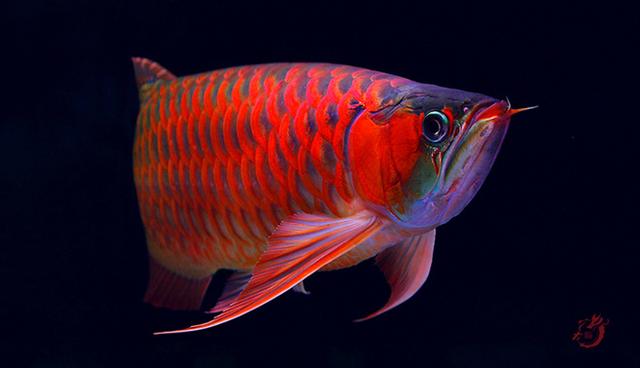
According to relevant records, the arowana was first discovered and named by the American ichthyologist Dr. Vandelli in 1829 in the Amazon River basin of South America. In 1933, the French ichthyologist Dr. Pellegrin discovered the red arowana in Saigon, Vietnam. In 1966, the French ichthyologists Blanc and Dommartin discovered another variety of arowana in Phnom Penh. Afterwards, experts and scholars from some other countries successively discovered several arowana varieties in Vietnam, Malaysia, Indonesia, Thailand and other places. In order to distinguish them, scholars, based on differences in various characteristics such as the body surface of the arowana, named them respectively golden arowana, orange-red dragon, golden-yellow arowana, white golden arowana, green arowana and silver arowana, etc.
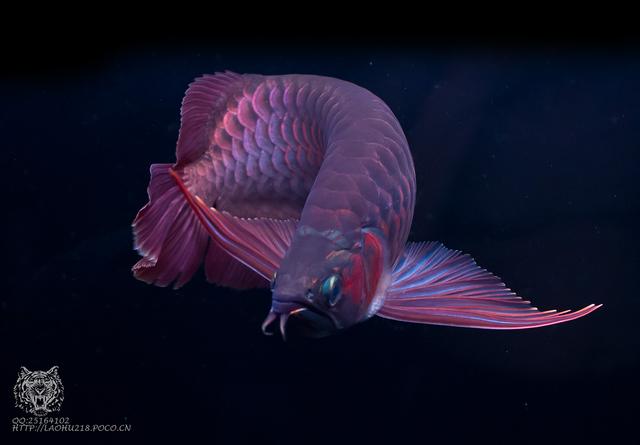
The introduction of the arowana as an ornamental fish into aquariums began roughly in the late 1950s, and by the 1980s it gradually became popular all over the world. Since the arowana became popular worldwide, demand surged sharply, causing arowanas, especially Asian arowanas, to suffer frantic hunting by poachers in their habitats, and the number of wild arowanas dropped sharply. Among them, the golden arowana and red arowana produced in Malaysia and other places were especially affected, and by the late 1980s they were on the verge of extinction. For this reason, the Washington Convention (an agreement formulated by the United Nations to protect wildlife) began to explicitly prohibit the capture and sale of wild arowanas, thereby protecting wild arowana resources. In Indonesia, a major exporting country of arowanas, the country's red arowana has now been listed as a national treasure-level animal.
In order to meet the needs of enthusiasts, scientific and technological workers in many places of origin of wild red arowanas in Asia began conducting artificial breeding experiments on arowanas and achieved breakthrough progress. Indonesia, Malaysia, Singapore and other countries successively succeeded in producing first-generation, second-generation... arowana offspring by semi-artificial means. In accordance with the requirements of the Washington Convention, these countries of origin of arowanas all formulated a set of good management measures for the output of breeding and propagation stock, and these were strictly implemented. The protected wild red arowanas (first generation) are strictly managed and prohibited from export; only by the second generation, that is, the third generation and below, may they be sold externally. The specific practice is that production enterprises implant special chips for wildlife identification into the bodies of "F3" juvenile fish, and then apply to the Washington Convention organization for registration. After the organization accepts the application, it verifies, registers and files it, and then issues a "sales permit." Only after obtaining the "sales permit" may the production enterprise legally conduct sales.
Today, arowanas are sought after by enthusiasts, and arowana prices once climbed sharply. This is not only because of their majestic body, imposing presence, gorgeous body color, and rarity and preciousness, but also because keepers often place infinite beautiful hopes on them and endow them with many symbolic meanings. For example, many keepers place them in prominent positions in the living room at home or in the office, hoping that the arowana can bring good luck to themselves and their family and make their household prosperous and wealthy; some enthusiasts keep nine arowanas in the same aquarium, giving them the meaning of "nine dragons in heaven"; some enthusiasts keep arowanas together with Thai tiger fish, calling it a dragon-tiger tank, taking the meaning of dragons soaring and tigers leaping... In short, all of them convey blessings that the owner will enjoy good fortune, auspiciousness, family prosperity and career success.
In fact, among many countries, Chinese people (including overseas Chinese) have the deepest feelings for arowanas. As the symbol of the Chinese nation, the "dragon" has for 5,000 years been deeply rooted in the hearts of all Chinese people, forming the dragon culture with the strongest cohesive force, and its influence has long penetrated every aspect of social life.
The legendary dragon can today only be understood and appreciated from mythological novels and artistic works, but the real arowana is something people can get close to. For Chinese people, who have always called themselves "descendants of the dragon," their feelings toward the arowana are self-evident. Because the name of the arowana contains the character "dragon," and its appearance also resembles the legendary "dragon" somewhat, after the arowana was introduced into our country, the keeping craze quickly heated up.
The Structure of the Arowana
Naming of the Arowana
The arowana, a large freshwater fish, is called AROWANA in its place of origin. Its scientific name "SCLEROPAGES" means tongue or hard pharyngeal shape. Taxonomically, the arowana belongs to the family OSTEOGLOSSIDAE (bony-tongue fish family, also called bony-pharynx fish family).
The arowana was first discovered and named by the American ichthyologist Dr. Vandell in 1829 in the Amazon basin of South America. In fact, the arowana already existed as early as the ancient Carboniferous period and has long been known as a "living fossil among fish." In the late 1950s it was introduced into aquariums in the United States as an ornamental fish, and afterward became popular throughout the world.
The reason "SCLEROPAGES" is called "arowana" in China is that the arowana's whole body gleams, its scales are unusually large, it has a big mouth, and there are two barbels at the corners of the mouth, exactly like the "dragon" in Chinese myths and legends, and thus it got this name.
Introduction to the Arowana
The arowana has a robust body, gorgeous colors, an elegant and generous swimming posture, and noble grace, with a kingly demeanor, and is regarded in many places around the world as a symbol of status and position. Arowanas are produced in four places: Asia, South America, Australia, and Africa. Different places of origin also produce different arowana varieties. The most commonly kept red arowana and golden arowana belong to the Asian arowana, whose main producing areas are Indonesia and Malaysia.
The basic characteristics of the arowana are: a huge body, generally 60-80 cm in length, with shimmering golden scales. The golden-yellow scales account for about 1/2 of the entire fish body. Some Asian arowanas show arowana horseshoe markings on their scales after hybridization. In crossback golden arowanas, the golden color crosses the fifth row of scales, and many neatly arranged scales are densely set at the base of the dorsal fin, anal fin and caudal fin, giving off a peculiar luster. The barbels of the arowana are generally relatively complete, and the eyes are also very bright.
The surface lines of its two gill covers are rich in variation. Some arowanas, such as the red-tailed golden arowana, have special red patches on the gill covers. The arowana has a very long lifespan and can generally live for several decades.
The arowana is a carnivorous fish. From juvenile to adult, it must be fed animal-based bait, with live food being best. It is best not to feed a single type of bait; a nutritionally rich menu should be formulated to ensure balanced nutrition. The water temperature suitable for arowanas can be anywhere from 24~29°C. If the fish adapts well, it can even adapt to a temperature of 22~31°C. However, like other ornamental fish, arowanas must absolutely not be subjected to sudden temperature changes.
The golden arowana is an ancient relict species and an internationally endangered protected animal. Its breeding and production are constrained by the Washington Convention (CITES). Golden arowanas produced by registered golden arowana farms in Malaysia and Singapore come with bloodline coding chips.
What we usually call arowana and keep as arowana mainly refers to the Asian arowana!
Which Arowana Variety Is the Best
If one must ask which arowana variety is the best, then in terms of variety, the red arowana and golden arowana are generally liked by everyone, and their prices are also relatively expensive. Among red arowanas, the chili red arowana is the best. The red arowana and golden arowana do not differ much in body shape. The head is relatively pointed, and coloration starts from the gill covers. The timing, speed and depth of coloration of the gill covers determine the coloration state of the entire fish body, so when selecting a red arowana, the first thing to pay attention to is the gill cover area. Of course, the body shape and condition of the arowana should also be noted.
Among golden arowanas, the crossback golden arowana is the most sought after. Keeping a golden arowana with all six rows bright is what everyone pursues, but many people pay too much attention to back-crossing and ignore the performance of the pearl scales. To judge the quality of a golden arowana, the pearl scales are also quite important. Compared with one fish whose pearl scales are all bright but whose back-crossing is not high, and another fish whose pearl scales are half bright but whose six rows are all bright, choosing the one with all pearl scales bright is the wiser choice, and the later development of the fish will definitely not be poor; if you choose the one with all six rows bright, it is very likely to show scale regression later.
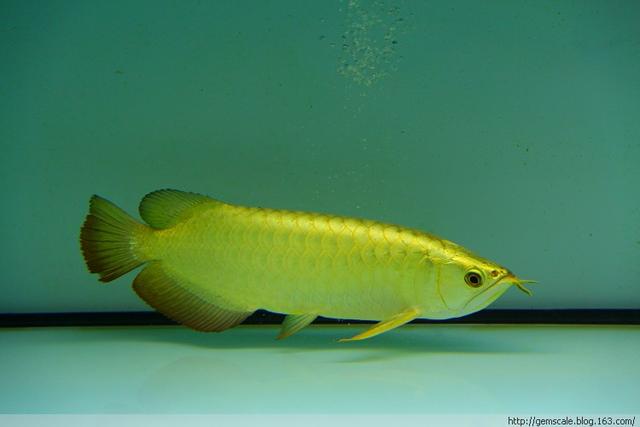
Besides the red arowana and golden arowana, another answer to which arowana variety is the best is the green arowana. The green arowana is relatively cheap. Compared with other types of arowanas, it appears much smaller and more delicate, with a round and small head, while those whose tails are pale yellow in the juvenile stage are yellow-tailed golden arowanas, whose price is a bit higher.
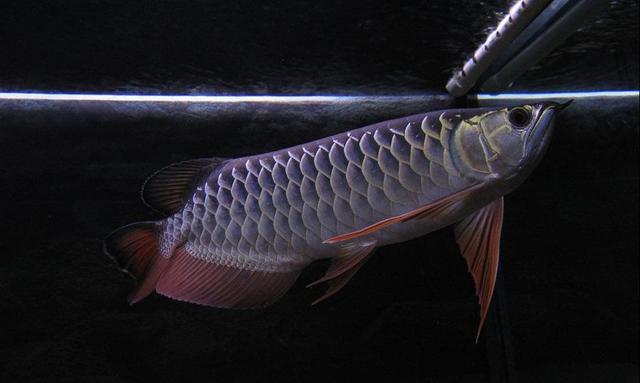
There is also one more type that can participate in the selection of which arowana variety is the best, and that is the silver arowana. The silver arowana has a variant that is snow-white all over, called the snow dragon. Because individuals of it are relatively rare, it appears a bit more precious.
For each person, the answer to which arowana variety is the best is also different, depending on personal preference, so there is no very accurate answer to prove which arowana variety is the best. Moreover, there is no best, only better. If daily keeping is done properly, raising a high-quality arowana is not difficult.
How Long Can an Arowana Live
The arowana, which lived in the same era as the dinosaurs hundreds of millions of years ago, still retains the body-shape characteristics of ancient times, and therefore is known as a "living fossil among fish." Today this ancient relict species has become a new favorite in aquariums. Arowanas are precious, but not "finicky." As long as good water quality, sufficient oxygen, appropriate temperature and food are guaranteed, they can live very well. So exactly how big can an arowana grow, and how long can an arowana live?
There are records in aquariums that wild arowanas are said to be able to live for a hundred years. Theoretically, the lifespan of an animal is generally eight to ten times the number of years of its maturity period. That being the case, the theoretical lifespan of the arowana should be between fifty and sixty years. So how long can an arowana kept in an aquarium live?
It is said that the arowana is a fish species that is easy to keep. As long as you usually pay attention to changing the water regularly, maintaining the temperature, feeding regularly and in a balanced way, and interacting with the arowana to form a "tacit understanding," there is no need to deliberately take care of an arowana kept in an aquarium; its lifespan is not something ordinary ornamental fish can compare with. Isn't the very thing that attracts arowana hobbyists to keep arowanas the long lifespan of the arowana? So exactly how long can an arowana live? How long an arowana can live and what factors are closely related to it?
Subjectively speaking, the lifespan of fish is closely related to its body size and age at maturity. The longer and larger the fish's body, and the later its age at maturity, the longer its lifespan generally is. However, lifespans also differ among fish. The vast majority of fish have lifespans concentrated between two and twenty years, among which sixty percent of fish have lifespans concentrated between five and twenty years, and fish that can live more than thirty years are very few. The arowana belongs to the large tropical fish, so its lifespan is also relatively longer. The golden arowana's lifespan can reach several decades, and the red arowana's lifespan can also reach between forty and fifty years; the silver arowana is shorter, generally able to live only 20 years.
Exactly how long an arowana can live is also affected by objective factors such as the arowana tank environment, arowana diseases, arowana hybridization and other accidents.
Arowana Picky Eating
When keeping arowanas, many hobbyists discover that the arowana is interested only in a certain food and completely ignores other foods. This situation isarowana picky eating。
In hobbyists' arowana keeping process, they mostly choose barley worms, centipedes, small shrimp, etc. as the arowana's food. Some hobbyists with more free time prepare frozen fish and shrimp for the arowana, but some hobbyists provide only a single type of barley worm as bait, and in this way it is relatively easy to cause the phenomenon of arowana picky eating. So how should arowanas be fed to prevent arowana picky eating?
How to Prevent Arowana Picky Eating:
When feeding arowanas, the main bait and supplementary bait should be separated. It is recommended to use a feeding method mainly based on fish and shrimp, supplemented by other insects, such as barley worms, centipedes, small frogs, etc. This can not only prevent arowana picky eating, but also ensure the arowana's daily nutritional balance.
In addition, the arowana should also be exercised in daily life to keep its appetite strong.
1. Create stable and good water quality conditions for the arowana
2. Keep the fish tank's keeping environment stable
3. Add an appropriate amount of tankmates, which can stimulate the arowana's appetite
4. Appropriately reduce the feeding amount to increase the arowana's appetite
5. Regularly adjust the types of food
How to Correct Arowana Picky Eating:
When it is discovered that the arowana is picky, the "starving" method may be appropriately used to correct arowana picky eating. On the 1st day, first feed the food the arowana likes, then pause feeding on days 2-4. On the 5th day, first feed one small centipede or small cricket, and after attracting the arowana's attention, feed one fish. The following two days are the same as the 5th day. After a week, the arowana has begun to accept the food being fed, but the owner needs to continue the training, and each day's feeding should not be too satiating. After persisting for a period, return to normal feeding. This method can effectively "tempt" the arowana, thereby achieving the correction of the arowana's picky eating.
After arowana picky eating is successfully corrected, the owner should feed the arowana regularly and in fixed amounts, and when selecting arowana bait should ensure the diversity of food, so as to avoid recurrence of arowana picky eating in the future.
The arowana is a large tropical ornamental fish and can grow to about 50CM or longer. If you keep fewer arowanas or the body is below 35cm, you can temporarily keep it in a smaller fish tank (with a length within 1 m), but within half a year it probably will no longer fit. At that time you will have no choice but to find it a larger space. There is no need for the arowana tank to be too tall; a maximum of 80cm is recommended, because a tank that is too tall is inconvenient for tank maintenance. The length can be decided by yourself, mainly taking into account the limits of household space, but it must not be less than 1.5 m. The width of the fish tank must be chosen as 60cm; this width is also the size chosen by most arowana keepers in Japan, Taiwan, China and domestically (but I have heard of a 40cm width used to keep two silver arowanas about 90 cm long, but if they are Asian arowanas that is absolutely not acceptable).
The arowana is a carnivorous fish, so its impact on water quality is relatively serious. Under this premise, the fish tank's filtration becomes especially important. It is necessary to achieve dry-wet separation and remove bait residue and fish waste as much as possible, thereby reducing the ammonia content in the water and maintaining water quality. The white cotton for dry-wet separation needs to be cleaned or replaced regularly. When replacing or cleaning filter materials, one point must be noted: they should be cleaned in small batches, to avoid causing drastic fluctuations in water quality and causing the arowana discomfort.
In addition, the arowana is an upper-layer fish, so when keeping it in a community, special attention must be paid to the choice of fish, avoiding the selection of upper-layer fish of the same type. Arowanas are territorial, so fighting in mixed keeping is common. Since you have chosen mixed keeping, you must be prepared for the worst, and mixed keeping also has relatively higher requirements for water quality. Fish in mixed keeping often fight, and if there are wounds, poor water quality can very easily cause fish disease. So mixed keeping is not only a challenge to filtration but also a challenge to the keeper's heart.
The arowana is a fish with a stomach, so when feeding the arowana there is no need to worry that the arowana will eat itself to death. Moreover, the arowana has a certain memory. After it has eaten insect-type food, it will remember that taste, and when the bait is changed, it will refuse to eat because the taste is not right. Therefore, it is not recommended to feed the arowana insect-type bait.
The arowana is also a famous color-changing fish; the environment has a great influence on its body color. Therefore, when keeping an arowana, attention should be paid to the choice of fish tank background and lighting. Appropriate backgrounds and lighting should be selected according to the needs of different arowanas.
How Big Can an Arowana Grow
Arowanas have long been a symbol of good fortune and wealth, and in China they have even been given the reputation of feng shui fish, with numerous enthusiasts. As a heavyweight pet of the twenty-first century, arowana hobbyists must plan ahead before buying, understand how long an arowana can live,how big an arowana can growand prepare a suitable arowana tank. Do not buy an arowana on a sudden whim.
How big an arowana can grow determines how large an arowana tank the hobbyist needs to prepare. Generally speaking, the length of the arowana tank must be at least one to two times the body length of the arowana. The body length of adult arowanas differs according to variety, and generally they can grow to 70 cm to 100 cm, so the arowana tank for keeping arowanas must be sufficiently spacious and safe. The width and height dimensions of the arowana tank should not be less than 60 cm, and the length is best at more than 150 cm, so as to allow the arowana enough space for activity and to turn around within the tank.
How big can an arowana grow? I believe many arowana hobbyists are full of curiosity. According to reports, the maturity period of the arowana is its growth process, but after the arowana's body has matured, it can still continue to grow slowly. The arowana's lifespan is several decades long, so its body length can grow to astonishing sizes.
Different species also result in different body lengths of arowanas. So how big can golden arowanas, red arowanas and silver arowanas grow? The normal size of red arowanas growing in the wild is more than one meter, while red arowanas kept in aquariums can grow to 80 cm, and golden arowanas can grow to nearly one meter at their longest. For the silver arowana, often used as a practice fish, the most common length is 50 cm to 60 cm, while adult silver arowanas will grow to about 100 cm. In addition, farms may have silver arowanas of two to three meters.
Factors such as feeding, lighting, arowana tank environment and water quality will also affect the arowana's body length.
Habits of the Arowana:
1. The keeping environment of the arowana. In nature, the arowana is a freshwater fish living in weakly acidic upper-layer waters. Therefore, in an aquarium, the arowana moves in the upper layer, and can survive at a water temperature between 20-30°C, but it is best when kept at 25-28°C. The PH should be between 6.5-7.5. The arowana is very sensitive, with a very strong ability to perceive changes in the outside world; external changes that are too frequent or too great will frighten the arowana and may very likely cause illness. Therefore, one very important point in keeping arowanas is to keep the arowana's living environment stable. This is the most important and most carefully understood point of the arowana's habits.
2. Feeding the arowana. The arowana is a carnivorous fish, and from birth to adulthood it must be fed animal-based bait. According to the arowana's different stages, for example, feed it different foods. Juvenile dragons can be fed bloodworms, but if it is summer, attention must be paid to the preservation method of bloodworms in summer. Larger arowanas are best mainly fed small fish and small shrimp, with some insect-type food occasionally added, to ensure balanced nutrition for the arowana. Understanding the arowana's habits clearly is the first step in keeping it.
3. Group keeping and mixed keeping of arowanas. The arowana is an extremely domineering dragon, not only in appearance; its temperament is also irascible and its disposition fierce, and it values ownership of territory greatly. Therefore, when group keeping or mixed keeping arowanas, one must think thrice before acting. Each arowana has its own personality. Through keeping it, understand what kind of personality your beloved fish has, and only then consider whether to keep it in a group or in a community.
Understanding arowana tank setup and the arowana's habits is quite important. Only by understanding them clearly can one keep them correctly, prevent arowana illness, or treat arowana illness in time.
Breeding of Arowanas
Becausearowana breedingis much more difficult than that of ordinary ornamental fish, very few arowana hobbyists can successfully breed arowanas themselves. The relatively high difficulty of breeding conditions and the arowana's own ornamental value have made the arowana one of the expensive fish in the ornamental fish world.
Arowana Breeding Methods:
Natural pairing: Keep 5-6 arowanas together and let them develop feelings for each other on their own. This is the most ideal form of natural pairing. If mixed keeping is started from juveniles, the success rate is relatively high.
Artificial pairing: In a large tank, place one male and one female arowana respectively on the two sides of the tank, with a partition set in the middle. Holes must be made in the middle of the partition to ensure water circulation and avoid changing the water's pH when the partition is removed, which could cause arowana disease.
After the arowanas have reached sexual maturity, removing the partition will reveal the arowana's tail-chasing behavior, and during this period biting each other will also occur. The arowana may jump or collide due to fright; these are all normal manifestations. Continue observing after a few days. If the two arowanas swim slowly and intimately together, then pairing has succeeded. If they are still continuously fighting, then pairing has failed.
So exactly where does the difficulty of arowana breeding lie?
1. Males and females are difficult to distinguish
From their appearance, arowanas basically appear hermaphroditic, and it is very difficult for us to distinguish the sex of an arowana. Taking the golden arowana as an example, distinguishing male from female mainly relies on head characteristics, body length, etc., but for different individual arowanas this is not a very effective method.
2. The fighting phenomenon of arowanas
Arowana breeding generally has two methods, natural pairing and artificial pairing, but no matter which method is used, the arowanas need to be kept together, and the arowana is a very territorial fish, so fighting during mixed keeping is unavoidable. Arowanas that are fighting are difficult to pair, and paired arowanas may suffer external injuries caused by fighting, so it is naturally difficult to carry out arowana breeding.
3. Other factors
For example, the arowana tank (or pond) used for keeping is too small, or one of the paired arowanas has not reached the conditions for sexual maturity, etc. All these will cause difficulties in arowana breeding.
After reading these causes summarized by the editor, have you gained a further understanding of arowana breeding? I believe that when everyone sees how harsh the breeding conditions of arowanas are, they will love the arowana's extraordinary performance even more.
At present,arowana breedingand hatching are still at a bottleneck stage in China, and there is not yet any record of successful breeding and hatching in China. Cases of domestic arowanas holding eggs occur from time to time, but successful hatching has not yet been heard of.
Arowanas can survive for about 18 years. Their growth period and the developmental period used for maturity are very long; generally the female must take 6-12 years and the male must take 5-16 years before they can breed. Moreover, not all arowanas can breed in aquariums; the golden arowana cannot. At present, the arowana varieties mainly bred in aquariums include the silver arowana, red arowana, green arowana, Australian arowana and several other varieties.
Like cichlids, arowanas are mouthbrooders, and they are also naturally pairing fish. When breeding in nature, arowanas hold the eggs in their mouths to hatch them. After hatching, the male fish guards near the fry. When enemies attack or when frightened, the parent fish will hold the fry in their mouths until the danger has passed. This will continue until the fry can forage on their own. For arowanas, the female lays the eggs, and the male then holds the eggs in his mouth.
Because arowanas have their own pairing habits and do not like humans to pair them artificially, you can keep several juveniles together from a young age (5-7 years) and let them pair freely. You can also place mature fish, one male and one female, on the two sides of a large tank, separated by a partition. Holes must be made in the partition to facilitate water circulation on both sides.
The fish will adapt to the situation here. When you discover that the arowanas show signs of estrus, remove the partition. At this time they will make the special tail-chasing movements of arowana breeding, and then will bite each other's fins, especially the section from the anal fin to the caudal fin. The arowanas will be frightened and jump, or collide, and may even cause the barbels to break off and bleed. Such injuries will not threaten the arowanas' lives in a short time, so everyone must be patient.
After a few days, if the two arowanas begin to calm down and start swimming slowly with intimate behavior of leaning close together, that indicates pairing has succeeded. If they are still fighting fiercely, that indicates pairing has not succeeded and they need to be paired again.
Arowanas are truly elegant, swimming silently, steady and calm!
La la la!! The arowana introduction is about done!
Veteran fish keepers basically have one in their tank!
Follow the editor, learn a little every day! (^-^)V