In-depth analysis and practical key points of fermentation bed farming technology
Interpretation of national farming policy
In the southeastern coastal areas, traditional farms have been forcibly shut down and ordered to rectify due to serious pollution, and next the state will gradually rectify farms nationwide; farms with serious pollution and huge energy consumption will be shut down for rectification. Fermentation bed farming will become the first choice of ecological farming, and it is also a farming model supported by the government.
Detailed interpretation of the fermentation bed farming model
Fermentation bed farming models are divided into contact fermentation beds and partition fermentation beds, among which contact fermentation beds can be subdivided into above-ground contact fermentation beds and underground contact fermentation beds, and partition fermentation beds can be subdivided into vertical partition fermentation beds and separated partition fermentation beds.
Above-ground contact fermentation bed
The construction mode in which the fermentation trough is built upward from the ground is called an above-ground contact fermentation bed, and the farmed livestock and poultry are in direct contact with the fermentation bed litter for farming.
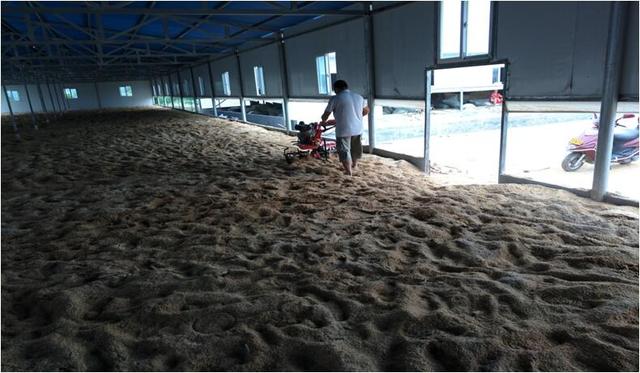
Above-ground fermentation bed
Above-ground contact fermentation bed Partitioning of the drinking water area
For the above-ground contact fermentation bed, to prevent excessive humidity in the fermentation bed caused by water leaking or splashing while livestock and poultry drink, the drinking water area can be partitioned from the fermentation bed area.
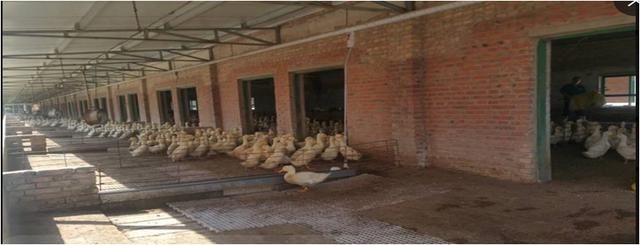
Underground contact fermentation bed
The construction mode in which the fermentation trough is dug downward from the ground is called an underground fermentation bed, and the farmed livestock and poultry are in direct contact with the fermentation bed litter for farming.
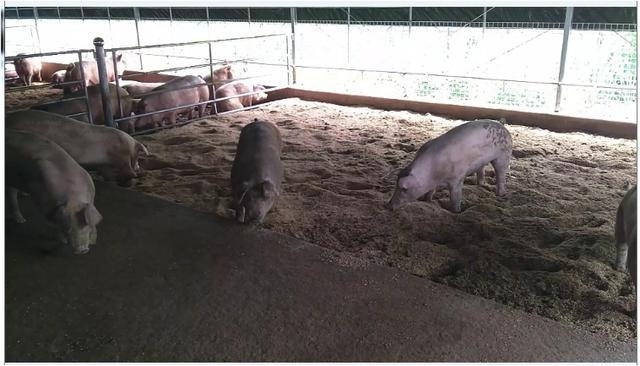
Vertical partition fermentation bed
Livestock and poultry are raised in cages or on nets and are not in direct contact with the fermentation bed litter, and the farming area and the fermentation bed area are distributed vertically.
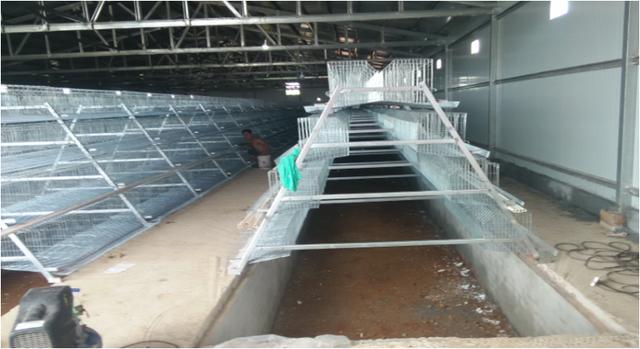
Separated partition fermentation bed
Livestock and poultry are raised in cages or on nets and are not in direct contact with the fermentation bed litter, and the farming area and the fermentation bed area are not distributed vertically; considering site and operational factors, these two parts are separated.
Selection of litter
The litter for fermentation beds is mainly selected from sawdust, rice husks, sorghum husks and peanut shells, and customers can match the proportions according to actual local conditions; among these, sawdust is a mandatory raw material, and no matter how the litter is selected, sawdust must be added. However, straw and mushroom residue are not recommended for large-scale use because they are not resistant to fermentation and are prone to mold.
Maintenance of the fermentation bed
The number of times the fermentation bed is turned and tossed mainly depends on the moisture of the material 10cm below its surface. When the surface moisture of the fermentation bed litter is 30%-40%, turn and toss it once every three days; when the moisture exceeds 40%, turn and toss it once every day.
Introduction to fermentation bed bacterial strains
First, an analysis of the functionality of individual bacterial strains
1. Saccharomyces cerevisiae
Compared with other bacterial strains, Saccharomyces cerevisiae has the advantages of large volume and rapid reproduction, and can quickly decompose the organic matter in manure and urine, preventing it from oxidizing into harmful products such as amines.
2. Lactobacillus plantarum
Lactobacillus plantarum is an anaerobic bacterial strain, and oxygen deficiency can occur in local areas during the operation of the fermentation bed; under such conditions, Lactobacillus plantarum can still play a role in decomposing manure and urine.
3. Bacillus subtilis
During the process of using manure and urine for growth and reproduction, Bacillus subtilis can form a variety of primary metabolites such as nucleic acids, amino acids and vitamins, which can be used by probiotics such as lactic acid bacteria and yeast to improve their reproductive activity and further increase fermentation efficiency.
Analysis of the combined functions of fermentation bed bacterial strains
Rujin fermentation bed bacterial strains are compounded from bacterial strains such as Lactobacillus plantarum, Saccharomyces cerevisiae and Bacillus subtilis, and during operation they can form a regional microecological working system on the fermentation bed, coordinating with each other and coexisting for mutual benefit, while also effectively inhibiting spoilage bacteria.
Isn't the editor's sharing very detailed! If there is anything else you don't understand, add the editor's WeChat (bjkylz123) and a large amount of materials will be given away for free!