How to grow Rosa banksiae? A complete guide to cultivation methods and precautions
The surface of Rosa banksiae is yellow-brown or gray-brown, and it is distributed in Sichuan, Yunnan and other places in China. The branches of Rosa banksiae can extend to more than 6 cm, and the branches and leaves are green, with alternate compound leaves, 3 to 4 leaflets, and long leaves that are elliptical or lanceolate. The flowers are white or yellow, single or double, with a rich, fresh fragrance.
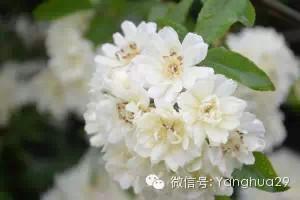
Propagation methods: Layering also has a relatively high survival rate, and the air layering method is mostly used, carried out from early spring to early summer. When layering, the part that goes into the soil needs to be wounded, and the soil should be kept moist. Rosa banksiae can also be propagated by grafting, using wild rose, single-petal Rosa banksiae or Shijieshan as rootstock for indoor cleft grafting from December to the following January, or outdoor cleft grafting in February to March.
Pot cultivation: Rosa banksiae can be grown in pots or planted in flower beds. For potted Rosa banksiae, theflower potneeds to be large, and enough base fertilizer needs to be applied during cultivation to ensure its growth; during the growth period of Rosa banksiae, apply a once every 20 to 30 days diluted decomposed liquid fertilizer. Note that nitrogen fertilizer should not be excessive, otherwise it will cause lush growth of branches and leaves and fewer flowers.
Light and watering: Rosa banksiae likes a sunny environment, is cold-tolerant and tolerant of partial shade, is not afraid of heat, but avoid moisture and waterlogging, and likes sandy soil that drains and breathes well and is fertile. Rosa banksiae seedlings are afraid of direct light, so attention should be paid to shading during the growth period. Rosa banksiae has strong sprouting ability. After sprouting in spring, apply once or twice of compoundHefeifertilizer to promote larger flowers and a rich fragrance.
Regular pruning: Rosa banksiae is also very tolerant of pruning. In winter, the plant should be pruned once to remove dead branches, diseased branches, leggy branches and overly dense branches, so as to enhance internal ventilation and light penetration. In addition to pruning the plant in winter, after the flowers fade, the faded flower stalks and some branches should also be cut off in time to ensure concentrated nutrient supply, so that stronger new branches can grow and more flowers can bloom.
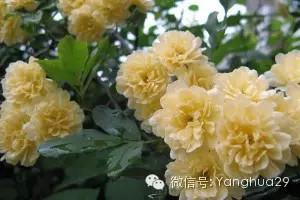
Pest and disease control: The main disease of Rosa banksiae is root rot. Diseased plants should be removed promptly. You can also mix 4 kg of 70% quintozene beside the plant, or use formalin to disinfect the soil. The main pests of Rosa banksiae include silver-striped noctuid, black aphid, short-horned grasshopper, etc., which can be sprayed with 80% trichlorfon at 800 to 1000 times dilution.
---------------------------------------
Gardening knowledge
WeChat: yanghua29
Gardening knowledge, questions and answers, solving gardening problems!