How Does Jasmine Survive Winter? A Detailed Guide to Growing Methods
Jasmine (Jasminum sambac) originated in India and loves sunlight; plenty of sunlight must be ensured whether in winter or summer, hence the saying "jasmine that cannot be killed by sun." If sunlight is insufficient, jasmine leaves become large and thin, the color fades, the internodes lengthen, and flowers are sparse with a weaker fragrance. Next, the editor of Wuhan Decoration Network will walk you through jasmine growing methods and how jasmine survives winter.
I. Jasmine Growing Methods
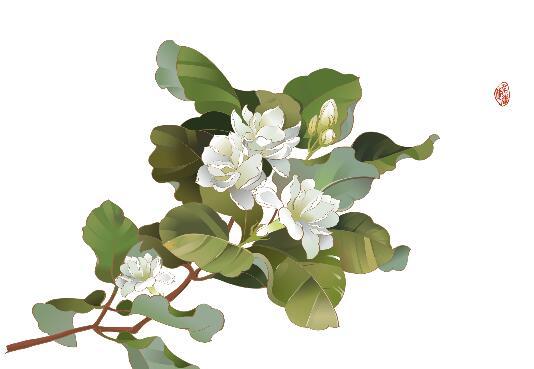
Jasmine Quick Facts:
1、Jasmine is said to have been introduced from ancient Persia during the Han Dynasty, and its name is a transliteration; in ancient texts it also appears as moli, mali, mueli, and so on. Ji Han of the Jin Dynasty wrote in "Records of Plants and Trees of the South": "The naximing flower (that is, jasmine) and the jasmine flower were both transplanted by foreigners from the Western Regions to Nanhai; the southern people loved their fragrance and competed to plant them."
2、Jasmine was first cultivated in China in the Nanhai region, then spread to Guangdong and Yunnan, and afterward throughout the whole country. By the Song Dynasty, cultivation was already widespread. In the Ming Dynasty, jasmine was used to "steam oil and extract liquid, for making face creams and hair oil." In the Qing Dynasty, it was used for scenting tea, and together with white orchid, zhulan, and daidai, it became one of the four great tea flowers. Today, it is most commonly grown in Guangzhou, Fuzhou, Hangzhou, Suzhou, and other places.
Jasmine Growth Habits:
1、Jasmine likes warmth and moisture, and grows fastest especially under the high temperature and high humidity of summer.
2、Its optimum growth temperature is 25-35°C. It fears cold and is quite sensitive to low temperatures; the minimum temperature must not fall below 3°C, and even a short period of light frost can cause leaf damage and drop.
3、It loves light and fears shade, and is especially suited to growth and development under direct strong light and long-day conditions, where its floral fragrance is also strongest. However, it also tolerates partial shade; under shade, the plant's leaves are pale, the branches are thin and long, the flowers are few, and the fragrance is faint.
4、It likes fertile, loose, slightly acidic sandy and semi-sandy soil, and fears poor, heavy clay, and alkaline soil. It fears both drought and waterlogging, and it is best to keep the soil consistently moist; both water accumulation and drought can affect growth and development.
5、Although jasmine has broad adaptability, it still has relatively specific requirements for its living environment, such as temperature, light, soil, and moisture.
Jasmine Growing Requirements:
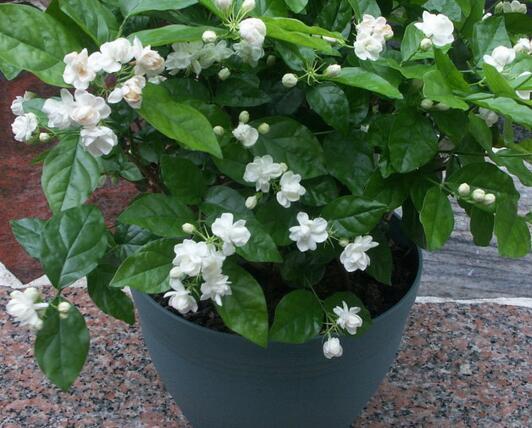
Temperature:
1、Jasmine likes warmth and heat, fears cold, and is quite sensitive to temperature. Generally, when the daily average temperature is around 10°C, the root system only begins to grow slowly; when the daily average temperature is around 19°C, the branches only begin to sprout; and only when the daily average temperature is above 23°C can it develop flower buds and form flowers.
2、An air temperature of 25-35°C is the best temperature for jasmine growth, and 32-37°C is the most suitable temperature for flowering. If the temperature stays below 9°C for 1 consecutive month, it will drop a large number of leaves.
3、If the temperature falls below 0°C, there is a risk of being frozen to death. Therefore, for household potted jasmine, when the temperature drops below 10°C, freeze protection and warmth measures should be taken to help it survive winter safely.
Light:
1、Jasmine loves light and fears shade; direct strong light and long-day light are especially suitable for its growth and development. If light is sufficient, the branches are thick and the leaves are thick, the leaf color is deep green, the flowers are numerous and large, the fragrance is rich, resistance to pests and diseases is also strong, there are fewer pests and diseases, and cold resistance is also strong.
2、If sunlight is insufficient, the branches become thin and weak, the leaves are thin and yellow and easily fall off, the flowers are small and few, the fragrance is faint, and disease resistance and cold resistance are both poor. According to experimental measurements, when light duration is on the low side, or too little, jasmine plants cannot develop flower buds.
Soil:
1、Jasmine likes loose, fertile, slightly acidic sandy and semi-sandy soil, and fears poor, heavy clay, and alkaline soil. Because its root system is relatively well developed, during plant growth and development, especially during the flowering period, it needs to absorb large amounts of nutrients and water from the soil; therefore, deep, fertile, loose sandy loam is required.
2、When planted in deep, fertile, loose sandy loam, the plants are robust and the flower quality is good. If the soil used is relatively heavy clay, poor in air permeability, low in fertility, and also lacking organic matter, then root growth is hindered, the plants are short, the stems and branches are slender, and the flowers are few and small.
Moisture:
1、Jasmine fears drought and also fears waterlogging. If drainage is poor, forming long-term water accumulation or drought, both will affect the plant's growth and development. And because varieties differ, their water requirements also differ somewhat.
2、Single-petal jasmine has a relatively deep root distribution and is relatively drought tolerant, while double-petal jasmine, although its root system is vigorous, does not penetrate as deeply into the soil as single-petal jasmine, is relatively less drought tolerant, and requires more water.
Jasmine Propagation Methods:
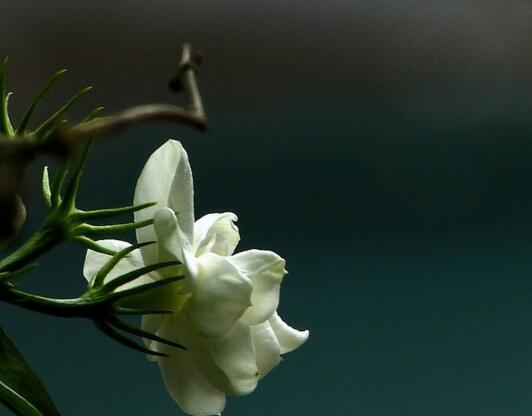
Jasmine is generally propagated by cuttings. This method has the advantages of a high propagation coefficient, a high survival rate, and convenient management. Cutting propagation is divided into two types: hardwood cuttings and softwood cuttings.
Jasmine Hardwood Cutting Method:
1. Cutting time:Generally at the end of March. At this time the temperature begins to rise, the sap begins to flow, and the plant begins to sprout and grow. Cutting at this time means the cuttings callus quickly, grow quickly, and have a relatively high survival rate.
2. Cutting selection:It is best to use sturdy, pest- and disease-free 2-3 year old branches. Such branches have a grayish-white surface. The cuttings are generally selected in combination with pruning the mother plant, choosing from the branches cut off during pruning.
3. Cutting length:Cut the selected branches into 10-15 cm segments, with the upper end cut flat and the lower end cut at a slant. Insert them into loose, fertile, well-drained potting soil. After cutting, within one and a half months, adopt a "small amount, many times" watering method, that is, water frequently and in small amounts, to keep the potting soil "dry-dry-wet-wet," meaning a moist state that is neither dry nor wet. This is beneficial for callusing of the cut end and rooting of the cuttings, and is the key to cutting survival.
Jasmine Softwood Cutting Method:
1. Cutting time:May to August is suitable. At this time the branches have already become semi-lignified and are growing vigorously, and the survival rate after cutting is extremely high.
2. Cutting soil:For the cutting medium, you can use finely crushed and sifted cultivated soil, but it must be mixed with 40% rice husk ash or fine sand and gravel; you can also use the culture soil for growing jasmine, sifted into fine soil. Overall, the requirement for the culture soil is that it be fine and crumbly, loose, fertile, and well drained.
3. Cutting pot:A small pot with a diameter of about 22 cm can be chosen. On the drainage hole at the bottom of the pot, place two broken pot pieces crosswise to block soil but not water; spread a layer of 3 cm thick granular soil, fill the space above the soil particles with culture soil, and gently shake the pot so the potting soil settles.
4. Cutting selection:Choose vigorous green branches grown in the current year, with at least 3 pairs of leaves. The method of taking cuttings is to cut off two forked small branches together with a section of old branch, then cut apart from the middle to make two cuttings (Figure 21); then remove the pair of leaves at the base of the cutting. This method is called a "heel cutting," that is, with a small section of old branch attached; after cutting, it calluses and survives easily. Note that cuttings must be inserted as soon as they are cut and must not be stored too long, otherwise the cuttings will lose a large amount of water and will not survive after insertion.
5、For softwood cuttings, if jasmine seedlings are cut early, they can also bloom a small amount in the same year.
II. How Jasmine Survives Winter
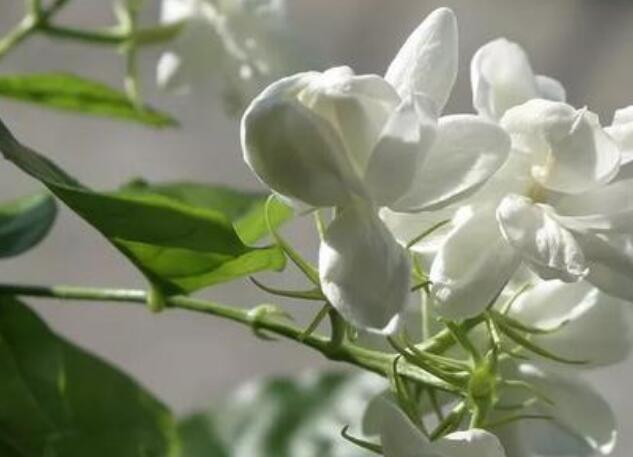
The key points of jasmine overwintering management are:
1. Control room temperature:
In northern regions, move jasmine indoors before the Cold Dew solar term each year and place it in a room with ample sunlight. Throughout winter, the most suitable nighttime minimum room temperature is 12°C-14°C, and the most suitable daytime maximum temperature is 18°C-20°C. Pay attention to proper ventilation, otherwise it easily causes leaf drop and root rot. Generally, open the window slightly for ventilation around noon on sunny days.
2. Water appropriately:
Whether potted jasmine grows well or poorly depends critically on whether watering is appropriate. In winter, jasmine has entered a semi-dormant state, and the amount of water absorbed and evaporated is very small, so watering should be restrained. If watering is excessive, it often causes root rot, yellowing leaves, and even leaf drop and death. But watering also must not be too little; generally, water once when the potting soil is seen to be dry and hard, keeping the potting soil slightly moist as appropriate.
3. Stop fertilizing:
Winter temperatures in the north are low, and jasmine is in a semi-dormant state in winter, so fertilization should be stopped. Generally, fertilization is stopped starting in October.
4. Prevent and control pests:
In winter, indoor ventilation is poor, and red spider mites and scale insects are prone to occur, damaging the tender branches and leaves at the shoot tips and affecting growth and ornamental value. Commonly, a 1500-2000 times diluted "1059" solution is sprayed on the leaves or the whole plant. Usually observe for the occurrence of pests and diseases and apply the appropriate pesticide.
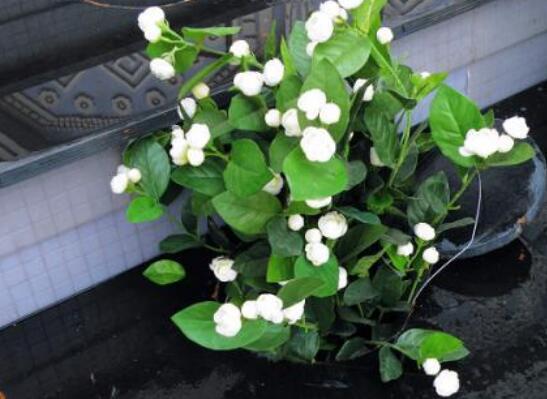
Jasmine Cultivation and Management Methods:
Potting jasmine:
1、Before potting, two things must be done well: preparation of the culture soil and selection of the flowerpot.
2、Culture soil is the foundation for flower growth and blooming. Because potted jasmine is planted in potting soil with limited nutrients, the potting soil is required to contain rich organic matter; according to the requirements of jasmine's growth habits, the soil must also have good water retention, drainage, and loose air-permeable properties.
4、Place soil and plant materials, such as fallen leaves, vegetable peelings, fruit peels, green grass, bran, etc., and animal materials, such as chicken, duck, and pigeon manure, barnyard manure, animal innards, feathers, fish scales, fish stomach and intestines, bone meal, and the residual water from washing fish and meat, etc., in layers in a jar, that is, one layer of soil and one layer of animal and plant materials, stack them well and press them firm, and after more than half a year of fermentation and decomposition, they can be used. If the soil is heavy clay, an appropriate amount of fine sand can be mixed in. The composition ratio of the culture soil is generally 4 parts soil, 4 parts compost, and 2 parts fine sand.
5、In winter, dig up the surface soil of paddy fields or garden soil, ditch mud, etc., and improve it through freezing and loosening, that is, let it freeze and be exposed to the sun for a period in the severe cold, then crush it finely and mix it with rice husk ash. The ratio is 7 parts soil and 3 parts ash.
6、Use scorched soil ash, that is, 7 parts of piled and smoked turf mud fully mixed with 3 parts of clear water sand.
7、For potted jasmine, unglazed clay pots are generally chosen, because the walls of unglazed clay pots are porous and have good permeability, which helps control the dryness and wetness of the potting soil and better suits the characteristics of jasmine roots, which like moisture and air permeability. Glazed pots and porcelain pots have smooth, non-porous walls and poor water and air permeability, which is unfavorable for jasmine root growth, so they are mostly not used. As for pot size, generally the pot diameter should be slightly smaller than the crown, that is, slightly smaller than the spread of the plant's branches and leaves. When planting, first prune the seedling appropriately, cut off dead branches, and appropriately cut off individual long roots, striving to make the root system even on all sides, which can promote balanced root growth.
Watering jasmine:
1、According to jasmine's habits of liking moisture, fearing water accumulation, and liking air permeability, watering should follow the principle of "do not water if the potting soil is not dry; water as soon as the soil is dry." Soil dryness means the surface of the potting soil turns white. Watering should preferably soak through at one time, allowing thorough flow and drainage, so that the potting soil is in a dry-dry-wet-wet, alternating dry and wet state. This is because jasmine needs both water and air. If the potting soil is often in a wet state, air cannot enter the soil, and the jasmine plant will grow poorly due to lack of oxygen, and may even die. Jasmine watering must be determined according to season, climate, and the growth condition of the jasmine. For the Jiangsu and Zhejiang regions, it can roughly be managed as follows:
2、From mid-March to early April, after jasmine has overwintered, the root system begins to become active, and it can be watered once every 3-5 days.
3、From mid-April to mid-May, the temperature begins to warm up, but the temperature is not yet high; the jasmine plant is sprouting branches and growing leaves, and water consumption is not very great. At this time, water once every 2-3 days, and watering can be done any time from 10 a.m. to 2 p.m. each day. But during this period, the branches and leaves of jasmine are continuously growing and the temperature is gradually rising, so the amount of watering should also increase accordingly.
4、From late May to early June is the spring flowering period, and the temperature is relatively high, so jasmine's water requirement gradually increases. At this time, water once every 1-2 days, before 10 a.m. and after 3-4 p.m. each day. During this period, watering should also be handled flexibly: on sunny days and windy days, water a little more; on cloudy days, it is better to water a little less.
5、From mid-June to late August, it is exactly the "dog days" hot weather, with the highest temperatures, and jasmine is also in its peak flowering period, with a very large water requirement. During this period, not only should it be watered every day, but it should be watered sufficiently and thoroughly, and it may even need watering once in the morning and once in the afternoon. When watering, also pay attention to sprinkling water on the leaf surface. Only in this way can the flowering period be extended and the fragrance be made more intense. But there are often showers during this period; if water accumulates in the pot, it should be poured out promptly.
6、In September and October, the temperature gradually drops. Although jasmine is still blooming autumn flowers, the amount of blooming gradually decreases, and growth activity is also weakening. At this time, water once every 1-2 days. If there is continuous autumn rain and water accumulates in the pot, pour it out promptly, or use a thin wire to make 1-2 small holes in the potting soil to help drain rainwater.
7、Starting in November, the temperature turns cold, and attention should be paid to controlling moisture to promote solid branch growth and prepare for safe overwintering. When the weather is dry, water once every 3-5 days.
8、From late November to early March of the following year is jasmine's cold-protection overwintering period. At this time, moisture must be strictly controlled; otherwise, too much watering will lower the soil temperature and be unfavorable for the plant's safe overwintering. Generally, water once every 5-10 days or so. It depends on where the potted plant is placed: for pots placed in a sunny spot by a window, water once every 5-7 days; for pots placed in a shaded spot, water once every 10 days or so, keeping the potting soil consistently moderately moist.
Fertilizing jasmine:
1、For potted jasmine, reasonable fertilization is the key to growing the potted plant well and increasing flowering. In ordinary households, fertilizer sources are very broad; methods for making dry fertilizer and liquid fertilizer have already been introduced in the earlier flower section, so they will not be repeated here.
2、For thoroughly decomposed homemade fertilizer and human and animal manure/urine fertilizers, the mixing ratio with water is generally: 2 parts fertilizer and 8 parts water. Cake fertilizers, such as soybean cake and rapeseed cake, can also be used directly after being crushed into powder without fermentation. They can be applied either dry or after soaking. The amount used is generally 25 grams of cake fertilizer per potted plant. Granular fertilizers sold in flower and tree shops can also be used according to the instructions.
3、Fertilization should follow the principle of reasonable application according to time, plant, and fertilizer type. Generally, the method of "light fertilizer applied frequently" is used, and small plants should be given less while large plants should be given more.
4、The time of fertilization should be handled flexibly; generally, fertilizing shortly before evening is suitable. When fertilizing, the potting soil should not be too dry. If it is too dry, that is, if the potting soil turns white, it will easily burn the plant's roots and also be unfavorable for the plant to absorb fertilizer. Therefore, fertilization should be combined with watering. If fertilizing in the evening, water promptly the next morning without waiting for the potting soil to dry; this is called "return water," which helps the plant fully absorb the fertilizer. If "raw fertilizer" is mistakenly used, or the fertilizer is too concentrated, burning the plant's roots and causing leaf tips and edges to scorch yellow, leaves to lose water and droop, and a large number of leaves to fall, then "fertilizer withdrawal" measures should be taken immediately. Rinse the potting soil with clear water 2-3 times, using a large amount of water, so that the raw fertilizer or overly concentrated fertilizer liquid drains out from the drainage hole at the bottom of the pot along with the water. At the same time, place the potted plant in a shaded place, stop fertilizing, and after 5-7 days, once the plant has regrown new roots, put it back in its original place.
Repotting and Changing Soil for Jasmine:
1、After 2-3 years of growth, the root system of potted jasmine becomes tangled and bent into a ball in the potting soil, the physical and chemical properties of the culture soil have also deteriorated, and the available nutrients have significantly decreased. This will seriously affect the continued growth of the jasmine plant: the branches and leaves become thin, flowering noticeably decreases, and some only grow branches and leaves, bloom very little, or even do not bloom at all. At this time, repotting and changing the soil should be carried out promptly.
2、For repotting time, you can choose late spring, when jasmine has already begun to sprout and send out branches. In the lower Yangtze region of Jiangsu, Zhejiang, and Shanghai, repotting in early May is suitable, and it should not be done too early, to avoid increasing leggy branches. The new soil used for repotting should be slightly coarser than the soil used when planting the seedling. For the new flowerpot, as mentioned above, fill the drainage hole at the bottom with broken tiles or broken pot pieces, then first spread a layer of coarse-grained culture soil at the bottom of the pot.
Shaping and Pruning Jasmine:
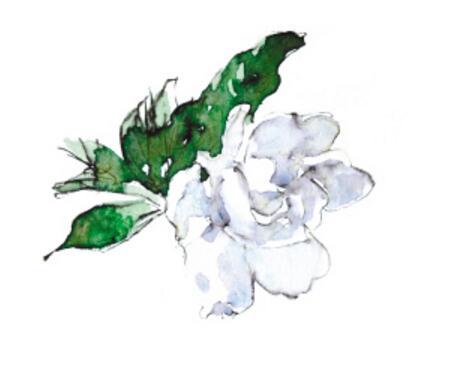
1、Shaping and pruning, also called pruning and training, includes leaf removal, branch training, bud removal, pinching, and removal of blind buds. This can both create a beautiful shape and improve ornamental value; it can also promote jasmine potted plants to sprout earlier, bloom earlier, bloom more, and bloom well. 1. Remove the top 2 cm thick layer of old soil.
2. Leaf removal:
In the lower Yangtze region of Jiangsu and Zhejiang, around early April, when the daily average temperature has reached about 10°C, jasmine potted plants should undergo a general leaf removal. The specific method is: after the potting soil has dried, except for keeping 2-3 branches on the plant with 2 robust old leaves left at the upper end of each,
3. Branch training:
This includes pruning and shaping. While removing leaves, prune branches, cutting off dead branches, pest- and disease-damaged branches, aged branches, and thin weak branches. Generally speaking, jasmine can grow five flushes of branches in a year: the first flush is thick and strong, the second is next, and by the fourth and fifth flushes they are very thin and weak. When pruning, the thin weak branches of the fourth and fifth flushes can be cut off (Figure 27); because these thin weak branches cannot develop large numbers of flower buds, they both waste nutrients and affect ventilation and light transmission, which is unfavorable for robust growth of the potted plant.
4. Bud removal:
Around Grain Full, when new shoots are growing and the first flower buds appear along with them. Because the temperature is still relatively low at this time and the temperature difference between day and night is relatively large, the flower buds develop poorly, the flowers are small, and the fragrance is poor. In order to avoid wasting the plant's nutrients and promote more new shoots and more and better flower buds, this first batch of flowers should be entirely removed in time before they develop and grow, including the flower buds at the tips of the branches (Figure 28).
5. Pinching:
After one or two years of growth, jasmine potted plants often send out several leggy branches from the base of the plant. Such leggy branches generally do not produce buds or bloom. In order to transform leggy branches into flowering branches, pinching must be carried out (Figure 30). For the pinching length, the remaining part should be roughly equal in height to the main stem; generally, the tip of a branch with 2-3 pairs of small leaves is cut off. After pinching, 4-8 new branches usually sprout below the cut, and flower buds grow at the branch tips. This treatment can both increase flowering and help transform the branches.