Detailed Explanation of Key Points in Hy-Line Brown Layer Breeding Technology
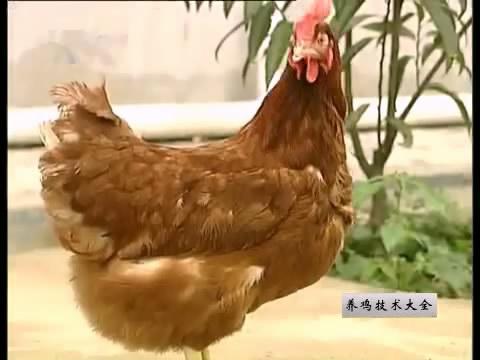
Hy-Line Brown layers have always attracted attention for their high egg production rate. Hy-Line Brown layers start laying early, with a stable peak laying period and an average age at first egg of 149 days. The usable period of Hy-Line Brown layers is 80 weeks of age. Generally, at 60 weeks of age they lay 248 eggs, at 74 weeks of age they lay 320 eggs, and by 80 weeks of age they lay 347 eggs; after 80 weeks of age, egg production declines. The eggs of Hy-Line Brown layers are standard brown in color. In the early stage of laying, the eggs are slightly smaller; by 32 weeks of age, the average egg weight is 62.3 grams; in the later stage of laying, the eggs become larger and larger; at 70 weeks of age, the average egg weight is 66.9 grams.
The appearance of eggs is also a major factor in consumers' purchasing choices. The eggshells of Hy-Line Brown layers are relatively hard, making transportation very convenient. At the same time, the eggshell color is bright and vivid, giving a smooth and clean impression.
For laying hens, high production alone is not enough; we also need to look at how much feed they consume. Hy-Line Brown layers have a high egg-to-feed ratio and are layers that eat less and produce more. From 18 weeks to 80 weeks of age, one Hy-Line Brown layer needs 112 grams of feed per day, and the feed-to-egg ratio during the laying period is 2.2:1 to 2.3:1. In addition to the above advantages, Hy-Line Brown layers also have good adaptability to the environment, tolerance to cold, tolerance to heat, strong disease resistance, and a high survival rate. Hy-Line Brown layers are a breed developed by Hy-Line International of the United States. Because the eggshell color is brown, they are named Hy-Line Brown layers.
Hy-Line Brown layers belong to a four-line hybrid cross. So what is a four-line cross? A four-line cross is made up of four lines, crossed pairwise to obtain two single crosses, and then the two single crosses are crossed with each other; the resulting line combination is the four-line cross. In other words, the grandparent stock of Hy-Line Brown layers has four lines, and these four lines are fixed. Then line A and line B are crossed to obtain the sire line of Hy-Line Brown layers, and line C and line D are crossed to obtain the dam line of Hy-Line Brown layers. The sire line and dam line are crossed to produce commercial Hy-Line Brown layers.
Through four-line hybrid crossing, Hy-Line Brown layers combine the excellent genes of several chicken breeds into an outstanding hybrid layer.
In the breeding process of Hy-Line Brown layers, experts also used the principle of sex-linked color genes to achieve the goal of distinguishing male from female commercial chicks by color as soon as they hatch. Chicks with egg-yellow down are males, and chicks with brown down are females. In this way, female Hy-Line Brown chicks can be easily obtained without the need for vent sexing. At hatching, the sexing accuracy can reach over 98%. This makes it easy and accurate to separate males from females during production, because layers use female chicks, and male chicks are generally culled.
Management of Hy-Line Brown Layers During the Brooding Period
The stage of Hy-Line Brown layers from one day of age to seven weeks of age is called the brooding period. Before brooding Hy-Line Brown layers, the brooding room must first be cleaned thoroughly, and various disinfection measures must be used to eliminate pathogenic microorganisms remaining in the brooding room. The first disinfection uses 5% caustic soda for spraying, the second disinfection uses an iodine-containing or chlorine-containing disinfectant, and the third disinfection is carried out one week apart, using potassium permanganate for fumigation once.
One day before the chicks arrive, if the temperature is relatively low, heating should be provided in advance so that the temperature near the cages is maintained at 35°C to 36°C. Then prepare feed and drinking water, create a clean and warm environment, and the chicks can be received.
Selecting a Breeding Farm
The management of breeding farms for Hy-Line Brown layers is very strict. China has specialized grandparent farms and parent farms. The quality and purity of grandparent and parent stock have a great impact on commercial Hy-Line Brown layers. When choosing a breeding farm to order chicks, we can check whether the breeding farm has relevant certificates. First, it must have a breeding livestock and poultry business license. In principle, those without a breeding livestock and poultry business license are not allowed to produce chicks. The introduction certificate is a certificate issued by a grandparent farm to a parent farm, which helps chicken farmers and commercial chicken producers make purchases.
Selecting Chicks
According to the principle of gene-linked color, chicks with egg-yellow down are males, and those with brown down are female chicks. When selecting chicks, first look at their mental state. Choose chicks with neat and clean down, lively and agile movement, bright eyes, balanced body posture when standing, and strong legs. At the same time, listen to whether their calls are loud and clear. Then use your hand to feel the tightness of the chick's abdomen. The abdomen should be elastic, and the navel should be well closed, without scars or deformities. Only chicks meeting these requirements can be considered high-quality chicks.
Vaccination of Chicks
After the chicks are selected, there is one more thing to do: ask clearly what diseases the chicks have been vaccinated against just after hatching. Before the chicks leave the hatchery, they are first injected with Marek's disease vaccine, and then mechanical spraying is used to immunize one-day-old chicks against Newcastle disease and coccidiosis. The mechanical spraying method does not require catching each chicken one by one, and the vaccine can directly contact the mucosa of the eyes, nose, and throat; even finer droplets can enter the upper trachea, producing better results than eye drop and nasal drop methods.
Temperature Management During the Brooding Period
During the chick stage of Hy-Line Brown layers, the chicken's own body temperature regulation function is not yet fully developed, so mastering the temperature in the brooding room is very important. For chicks from 1 to 3 days of age, the room temperature should be maintained at 35°C to 36°C; for 4 to 7 days of age, the room temperature should be maintained at 33°C to 34°C; afterward, lower it by 2°C each week until the temperature stabilizes at 21°C.
Humidity Management During the Brooding Period
Generally, farmers only pay attention to the temperature in the brooding room, which often makes the air in the room very dry. This is also not acceptable. When chicks have just arrived, the relative humidity in the brooding room should be maintained at 65% to 70%.
Lighting Management During the Brooding Period
If newly hatched chicks do not receive light stimulation, some chicks may not start eating or drinking. Therefore, during the first three days after the chicks arrive, strong light should be maintained for 20 to 23 hours per day. Bright light can encourage chicks to eat and drink, until after 7 days, when lighting gradually returns to normal. In the chicken house, 40-watt to 60-watt bulbs are generally used, with a spacing of 3 m between lamps.
Ventilation Management During the Brooding Period
Ventilation during the brooding period is also very important. Ventilation can keep the air in the brooding room fresh, but the relationship between ventilation and heat preservation must be well controlled. It is best to begin paying attention to ventilation from the second day of age to keep the air in the brooding room fresh. Special attention should be paid to the fact that in winter, ventilation and heat preservation are inherently contradictory. To resolve this contradiction, sufficient heating measures and heating equipment are needed.
Density Management During the Brooding Period
During the brooding period, Hy-Line Brown layers need sufficient space so that every chick has a place to eat and drink. This is beneficial to the quality of both the brooding and growing periods. Taking caged chicks as an example, for chicks from 0 to 4 weeks of age, 33 birds can be raised per sq m; for chicks from 4 to 7 weeks of age, 24 birds can be raised per sq m.
Drinking Water Management During the Brooding Period
After the chicks enter the chicken house, cooled boiled water should be used for drinking during the first three days, and the water temperature should be maintained at 10°C to 21°C. In the water, 2% to 5% glucose can also be used. Within 10 days, provide one 1-liter drinker for every 50 chicks. After 10 days, it is best to switch the chicks to nipple drinkers. After switching to nipple drinkers, the labor of watering can be reduced, and it is also beneficial for the chicks to drink freely.
Feed Management During the Brooding Period
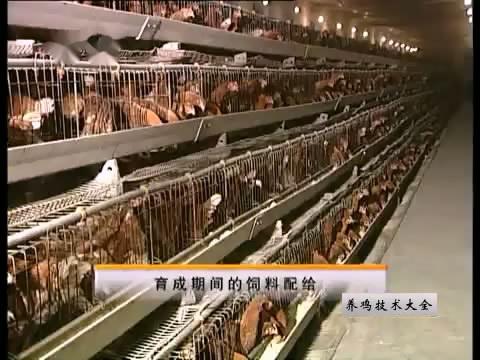
After hatching, chicks gain weight very quickly. At 2 weeks of age, they weigh twice as much as at birth; at 6 weeks of age, they are 10 times their birth weight. In addition, chick feathers grow quickly. At 3 weeks of age, feathers account for 4% of body weight; at 4 weeks of age, feathers account for 7% of body weight. According to these characteristics of chicks, during the brooding stage, there is a relatively high requirement for protein feed. Formula for 0-6 weeks of age: corn 61.7%, soybean meal 30%, fish meal 5%, bone meal 2.5%, salt 0.35%, feed additive 0.15%, amino acids 0.2%, choline 0.1%, and add about 10 grams of multivitamins per 100 kg of feed. Formula for 6-7 weeks of age: corn 70.7%, soybean meal 22%, fish meal 4%, bone meal 2.5%, salt 0.35%, feed additive 0.15%, amino acids 0.2%, choline 0.1%, and add about 10 grams of multivitamins per 100 kg of feed. In addition, the digestive organs of chicks are not fully developed, and the crop and gizzard have small capacities and limited food storage. Therefore, when feeding chicks, feed small amounts frequently to achieve scientific breeding. They can be fed once every three hours, day and night without interruption.
During the brooding period of Hy-Line Brown layers, sanitation and disinfection work should still be done well. These tasks are basically the same as those in the breeding of other laying hens.
Management of Hy-Line Brown Layers During the Growing Period
The stage of Hy-Line Brown layers from 7 weeks of age to 18 weeks of age or 20 weeks of age is called the growing period. During this time, Hy-Line Brown layers have sound body temperature regulation and strong vitality, enhanced adaptability to the external environment, and significantly enhanced resistance to disease.
Temperature, Humidity, and Ventilation Management During the Growing Period
During the growing period, the temperature in the chicken house is not required to be as high as during the brooding period. It is generally maintained between 18°C and 23°C, and the relative humidity in the chicken house is maintained at 60% to 70%. During the growing period, ventilation work in the chicken house must be done well. The purpose of ventilation is to regulate the temperature in the chicken house, reduce humidity, and remove harmful gases from the chicken house, such as ammonia, carbon dioxide, hydrogen sulfide, and other harmful gases. Among them, the ammonia concentration must not exceed 25 ppm, the carbon dioxide concentration must not exceed 1500 ppm, and the hydrogen sulfide concentration must not exceed 10 ppm.
Density Management During the Growing Period
As the chickens grow larger, the flock density must be adjusted during the growing period. Taking caged chickens as an example, for 7-10 weeks of age, 24 Hy-Line Brown layers per sq m; for 10-20 weeks of age, 14-16 Hy-Line Brown layers per sq m. When adjusting density, chickens should also be housed in separate cages according to body weight. Especially for chickens with relatively low body weight, feeding management should be strengthened after grouping so as to maintain the uniformity of the whole flock. For the body weight standard of Hy-Line Brown layers, at 7 weeks of age the body weight should reach 590 grams, at 15 weeks of age the body weight should reach 1340 grams, and at 18-20 weeks of age the body weight should reach 1550 grams.
Feed Allocation During the Growing Period
During the growing period of Hy-Line Brown layers, the protein content in the feed should be reduced to prevent the flock from becoming too fat and accumulating fat. Formula for 7-15 weeks of age: corn 70.8%, soybean meal 19%, fish meal 2%, bone meal 2.5%, wheat bran 5%, salt 0.35%, feed additive 0.15%, amino acids 0.1%, choline 0.1%, and add about 10 grams of multivitamins per 100 kg of feed. After 15 weeks of age, the feed formula needs to be adjusted again, increasing the calcium content in the feed so that the calcium in the bones of the laying hens can be deposited to the maximum extent before laying begins. Formula for 15-18 weeks of age: corn 64.3%, soybean meal 17%, fish meal 2%, bone meal 2.5%, wheat bran 10%, shell powder 3.5%, salt 0.35%, feed additive 0.15%, amino acids 0.1%, choline 0.1%, and add 10 grams of multivitamins per 100 kg of feed. During the entire growing period, feed is generally given 3-4 times per day. If the flock is found to be overweight, the number of feedings can be appropriately reduced to control the body weight of the flock.
Lighting Management During the Growing Period
First, let us talk about the effect of light on egg production in laying hens. Light plays an important role during the growing period of laying hens. When light waves pass through the chicken's eyes and are transmitted to the pituitary gland, they promote the production and secretion of hormones by the gonads, and the chicken's ovaries and other reproductive organs begin to develop. In other words, the higher the light intensity and the longer the lighting time during the growing period, the earlier the chicken's sexual maturity, that is, the laying period, will arrive.
During the growing period, light affects the sexual maturity of chickens. If the lighting time is too long and the intensity is too high, the chickens will mature early and lay early. Some people may think that laying early is a good thing, right? Laying too early is really not a good thing, because if laying starts too early, the chicken's bones have not yet fully developed, which is harmful to the body of the laying hen. Although laying starts earlier, the peak laying period is short and lacks staying power. Under normal circumstances, as long as 11 hours of light are maintained each day, laying hens will begin to lay eggs at five months of age.
Management of Hy-Line Brown Layers During the Laying Period
After 18-20 weeks of age, Hy-Line Brown layers enter laying period management. At about 146 days, 50% of the laying hens begin to lay. The task during this period is to create a comfortable environment and fully realize the genetic potential of the laying hens.
Temperature, Humidity, and Ventilation Management During the Laying Period
During the laying period of Hy-Line Brown layers, temperature and humidity management and ventilation management are basically the same as during the growing period. Keep the air fresh, control the temperature at 18°C to 23°C, and maintain the relative humidity at 60% to 70%.
Lighting Management During the Laying Period
During the growing period, we once used light control methods to keep the body maturity and sexual maturity of the laying hens consistent. During the laying period, light is appropriately increased to raise egg production. On the basis of the lighting during the growing period, increase light by 1 hour each week until daily light increases to 15 to 16 hours, after which the light can remain constant at 15 to 16 hours. Still use 40-watt to 60-watt bulbs, with a spacing of 3 m between lamps.
Feeding Management During the Laying Period
Like all laying hens, Hy-Line Brown layers need large amounts of calcium, phosphorus, vitamins, and trace elements during the laying period. Only when nutrition is and balanced can the laying hens perform better. Wait, the source says ""; translate as "sufficient". Formula for 19-40 weeks of age: corn 57.25%, soybean meal 24.5%, fish meal 3%, bone meal 2.5%, wheat bran 5%, shell powder 7%, salt 0.35%, feed additive 0.15%, amino acids 0.15%, choline 0.1%, and add about 15-20 grams of multivitamins per 100 kg of feed. Formula for 40-60 weeks of age: corn 60.18%, soybean meal 21.5%, fish meal 2.5%, bone meal 2.5%, wheat bran 5.6%, shell powder 7%, salt 0.35%, feed additive 0.15%, amino acids 0.12%, choline 0.1%, and add about 15 grams of multivitamins per 100 kg of feed.
The usable lifespan of Hy-Line Brown layers is 80 weeks of age. After 80 weeks of age, egg production declines and they gradually lose their use value. At this time, they can be sold as commercial chickens. Overall, breeding Hy-Line Brown layers requires relatively little worry in feeding management, has a high return rate, and good economic benefits.
More at: tm655.com
WeChat: tm655-com