2018 Beef Cattle Farming Cost and Profit Analysis
Beef cattle farming is a very promising industry right now. Of course, aside from the high costs, stable prices, a stable market, and stable demand are its advantages, and at the same time, compared with pork and chicken, beef has the characteristics of being high in protein and low in fat. As people's living standards continue to rise, beef consumption will also gradually increase. Now let's take a detailed look together: 2018 beef cattle farming costs and profits!
I. The Beef Market Situation
The price of beef at the retail end varies enormously. Imported or domestic, different cuts of beef, fresh or frozen meat, ordinary cattle or premium cattle, grain-fed or grass-fed, fattened cattle or draft cattle, beef cattle or culled cattle - all of these affect the price of beef! For something like Japanese Wagyu that can be fed to produce marbled beef, it has a separate grading system, ranging from A1-A5 to different shimofuri levels, and the price can reach 100-1000 yuan/kg. For domestic fattened cattle, chilled fresh beef (large cuts, such as flank, brisket, and chuck) sells in supermarkets for 80-100 yuan/kg, while frozen minced meat sells for between 40-60 yuan/kg.
If the retail price of beef is too low, it may be smuggled, privately slaughtered without inspection and quarantine, or it may be water-injected meat, dairy cow meat, or even old sow meat (which is a bit redder and more like beef), etc.
II. Cattle Farming Costs and Profits
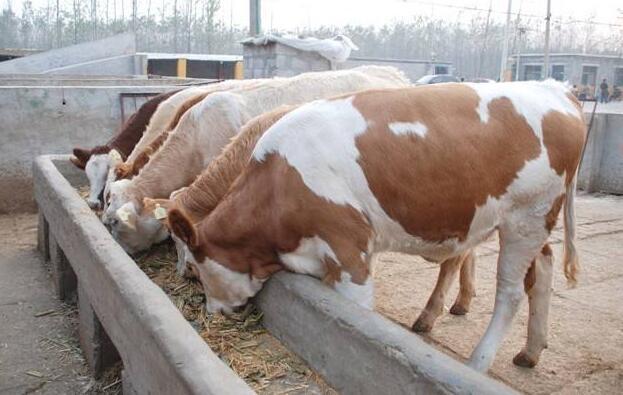
With retail beef prices staying high, are farming profits very large then? Let's do the math. The price of calves is related to breed and quality. At present, China's main beef cattle breeds include Simmental, Charolais, Limousin, and improved cattle (generally using Luxi Yellow Cattle as the sire and the above three breeds as the dam for crossbreeding improvement). Generally speaking, the price of improved Simmental and Luxi calves is around 4000, while purebred ones are around 7000.
Let's calculate based on one calf at 6000 yuan, raised for 10 months to 1300 jin for sale at slaughter, with beef at 13 yuan per jin. One beef cattle needs about 17 yuan of feed per day on average, so the feed cost for 10 months is about 5100 yuan. After also allocating some costs for cattle shed construction, equipment investment, and daily management, the profit is about 4000 yuan.
Earning 4000 from one cow? Don't get excited yet. First, you need money to invest. Beef cattle have a long growth cycle, and only raising many of them is profitable. But calf prices are so high, and the ongoing capital input is large. In addition, you need to raise them well. Cattle and similar herbivorous livestock have quite a lot of diseases, and the sudden death rate from disease is also relatively high. If a large-scale disease outbreak causes sudden deaths just before they are ready for market, farmers really can't bear the loss! Taking into comprehensive account your investment cost, labor cost, time cost, and risk factors, the profit is not high.
The Current State of Beef Cattle Farming
1. Beef cattle have always been in short supply. Globally, beef accounts for more than half of meat in developed regions of the world, while in China it accounts for only about 10%. In terms of per capita beef availability, developed countries in the world are above 50 kg, the world average is 10 kg, while China has less than 5 kg, and some areas in the south have less than 2 kg. China has entered the stage of building a moderately prosperous society in all respects, and beef is part of the indicators of moderate prosperity. People are paying more and more attention to improving the quality and structure of their diet, and the demand for beef, especially high-quality beef, will increase day by day.
2. Cattle are herbivores, with high feed utilization and the highest conversion rate among livestock. They have low costs and high returns. Because they eat grass, they do not compete with humans for grain, and their safety and hygiene indicators are relatively high, making them close to natural green food. The cattle farming industry is an ancient, long-term, and stable industry. Many examples and practices have proven that some far-sighted businessmen and engineering contractors, after completing their basic capital accumulation, invest their surplus funds into the livestock and cattle farming industry.
3. In the future, China's demand for beef cattle will gradually increase. Choosing beef cattle farming is a good opportunity. If you can seize the opportunity, that's good, but without a good investment budget and scientific farming methods, it still won't work.
Beef Cattle Farming Costs
1. Breeding cattle cost: First-generation Simmental cattle, 3-5 months old, weighing 200-300 jin, expected purchase price 3000-4000 yuan per head. Limousin beef cattle, 3-5 months old, weighing 400-500 jin, expected purchase price 3000-5000 yuan per head. When buying beef cattle, do not be greedy for cheapness. Beef cattle breeds are divided into high, medium, and low purity. In choosing the weight of beef cattle, you should not plan to buy small ones just because you have less funds. Small calves have poor adaptability and low disease resistance, are not easy to keep alive, and in the end raising them is not as good as directly buying ones that are relatively older and heavier.
2. Disease prevention cost: Vaccines are needed twice per year for each cow. The main vaccines include foot-and-mouth disease, sheep pox, triple vaccine and tetravalent vaccine, etc. Each cow needs 3 yuan per year. 100 cows need 300 yuan for vaccines per year. Disease treatment is estimated at 40 yuan per cow per year, and 100 cows need 400 yuan in treatment costs per year.
3. Feed cost: Raising beef cattle from 300 jin for 10 months requires an investment of 16 yuan per day, and 300 days requires an investment of 4800 yuan (roughage/concentrate).
① Roughage: wheat straw, rice straw, corn stalks, silage stalks, pasture grass, peanut vines, sweet potato vines, leaves, and various other herbaceous plants. Based on an average of 18-20 jin per day and a roughage purchase price of 0.3 yuan per jin, an investment of 6 yuan is needed (daily roughage cost per beef cow).
② Concentrate: cornmeal, soybean meal, wheat bran, salt, wheat chaff, cooked soybean cake, bone meal, baking soda, and appropriate additions of multivitamins and trace elements. Based on an average of 6-7 jin per day and a mixed concentrate price of 1.4 yuan per jin, an investment of 10 yuan is needed. (Daily concentrate cost per beef cow.)
4. Other costs: Other expenses include water and electricity fees and disinfection fees. The money from selling cattle manure can offset these costs. Monthly labor cost is estimated at 2000 yuan.
Beef Cattle Farming Profits
Beef cattle weighing 200-300 jin have a purchase cost of 3000-4000 yuan, and after 10 months of farming gain 800-900 jin (feeding cost 4500-5000 yuan), reaching a slaughter weight of 1100 jin. At a finished cattle price of 13 yuan per market jin, the sales budget is more than 14000 yuan. After deducting feeding costs, the net profit per beef cow is about 5000 yuan.