How to grow African jasmine? Cultivation methods and management key points
African jasmine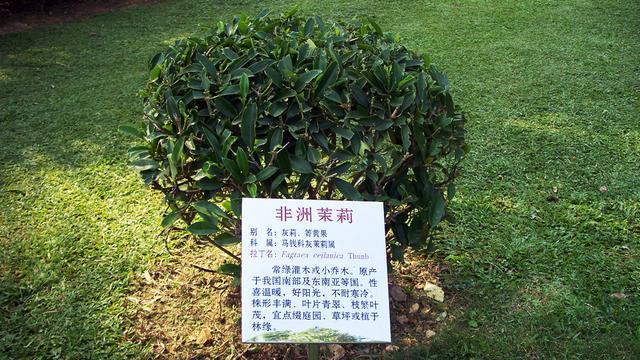
Growth habits
It likes warmth and sunshine, but requires avoiding direct strong sunlight in summer; it prefers high air humidity and good ventilation. In its environment, African jasmine is not tolerant of cold, dry freezing, or sharp drops in temperature; it grows best in loose, fertile, well-drained loam; its sprouting and suckering ability is strong, and it is especially tolerant of repeated pruning. The flowering period is May, and the fruiting period is from October to December. Chinese milk jasmine grows well under warm climate conditions, with an optimal growth temperature of 18°C to 32°C. When the summer temperature is above 38°C, plant growth will be inhibited; in winter, the temperature should not be lower than 3°C to 5°C, otherwise the leaves and tender shoots are very likely to be damaged by freezing.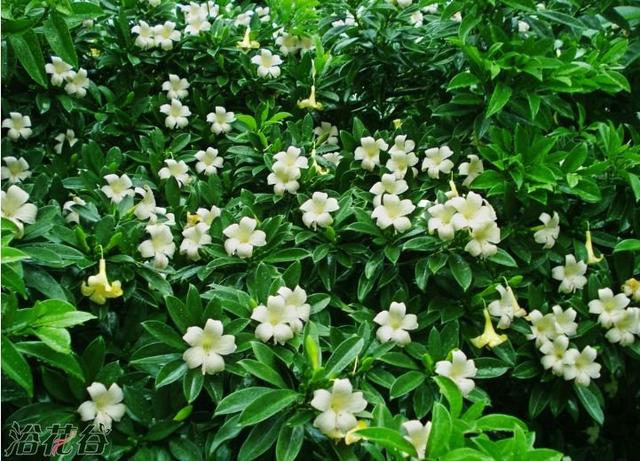
Propagation methods
Sowing: It is advisable to collect ripe fruits from October to December, remove the seeds, and then scatter-sow or drill-sow them in a loose, fertile sandy loam seedbed, with a soil covering thickness of 2 to 3 cm, and cover with rice straw or plastic film to keep warm and prevent cold; or store the seeds in sand until the seeds crack and show white before sowing.
Cuttings: Cutting propagation can be carried out from the end of April to October, but it is best to take cuttings during the plum rain period in June to July, when the rooting effect is relatively ideal. Cut 1- to 2-year-old healthy branches as cuttings, 12 to 15 cm long, with 2 to 3 half-leaves, and the lower cut is best located 0.2 to 0.3 cm below the node. Insert them into peat soil, sandy loam, vermiculite, or yellow subsoil, but peat soil gives the best rooting effect. Cover with plastic film to retain moisture, and in clear weather pay attention to providing shade with a shed. After 1 to 2 months they can root, and the survival rate can reach more than 80%.
Division: From March to April, when the plants just begin to sprout, remove the clustered plant from the flower pot, or dig up the clustered ground-planted plant from the soil, shake off part of the old soil, and at the weak points where the root system joins, cut it apart with a sharp knife, so that each clump has at least 2 to 3 stems and a portion of intact roots, then plant them separately in the ground or in pots.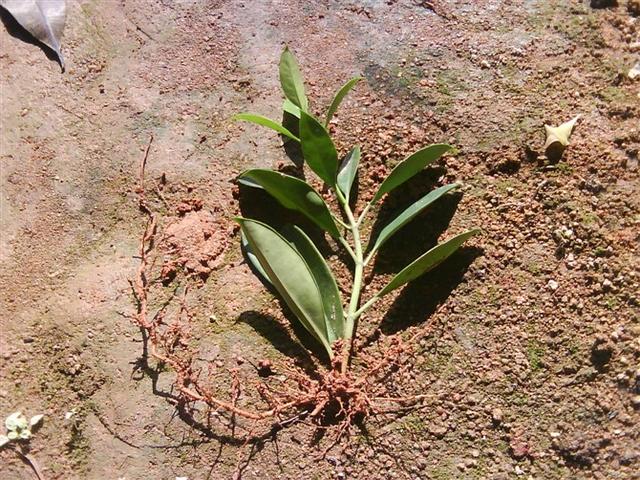
Management key points
Temperature: African jasmine grows well under warm climate conditions.
Light: African jasmine likes sunlight, and its native environment is mostly semi-shaded. For ground planting in South China as garden greening trees, it is best to choose a site with side shade; for pot cultivation north of the Yangtze River, it can receive full sunlight in spring and autumn, while in summer it requires shade from a shed, or it should be moved under the dense shade of large trees, and at least avoid direct sunlight for several hours around noon; it is especially worth noting that in June to July, after long rainy periods, when a clear day comes, the temperature rises suddenly and the light is very intense, so shading work must be done well to prevent young new shoots and tender leaves from being scorched. For potted plants in public places, relatively sufficient scattered light is required, or they should be placed near a window; they should not be placed in an overly dark place, otherwise the leaves will lose green color and turn yellow or fall off.
Water: Whether ground planted or potted, sufficient water is required, but the roots must not have standing water, otherwise root rot easily occurs. In spring and autumn, watering should be done to the extent of keeping the pot soil moist; during the plum rain season, be careful to prevent waterlogging; in the scorching hot summer, spray water once in the morning and once in the afternoon to increase humidity and lower temperature; in winter, for indoor potted plants, it is appropriate to keep the pot soil slightly moist, and around noon when the temperature is relatively higher, spray an appropriate amount of water on the leaf surface.
In spring, summer, and autumn, under normal fertilization, if the lower leaves of a potted plant turn yellow and fall off, it is very likely due to root rot from waterlogging, and the pot should be repotted and the soil changed in time; in summer, if watering has been neglected and the newly sprouted tender shoots wilt and droop, do not immediately pour a large amount of water onto the pot soil, but first spray some water on the leaves, and after the leaves recover slightly, then give the pot soil an appropriate amount of water.
Soil: For planting in southern regions, the planting site should be loose, fertile, well-drained sandy loam. For pot cultivation in the north, a mix of 7 parts leaf mold, 1 part river sand, 1 part composted organic fertilizer, and 1 part fermented sawdust can be used. During the growing season, loosen the soil of potted plants once a month, always keeping the root area in a well-aerated state. In addition, potted plants can have their soil changed once every 1 to 2 years.
Fertilizer: During the growing season, apply a thin decomposed cake fertilizer water once a month to potted plants, and apply a phosphorus-potassium fertilizer once before flowering in May to promote flowering; after autumn, supplement with 1 to 2 more applications of phosphorus-potassium fertilizer to pass the winter safely. For pot cultivation in northern regions, to prevent leaf yellowing, add 0.2% ferrous sulfate when watering and fertilizing during the growing season. When planting in the ground, apply sufficient base fertilizer at planting time, and in late autumn dig a trench around the outer root zone and bury cake fertilizer, 0.5 to 1 kg per plant;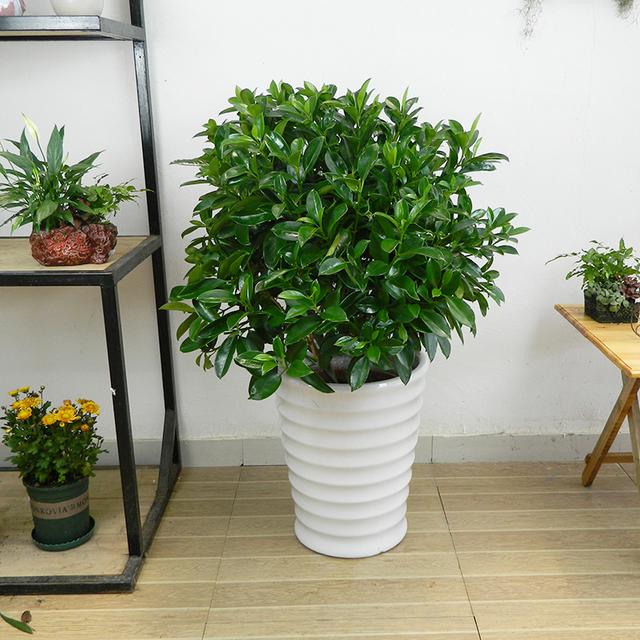
Planting precautions
Placement location. African jasmine is a tree species that likes sunlight, and its native environment is mostly semi-shaded. Once a plant is severely scorched, after heavy pruning it is difficult to restore its full crown in a short time. For potted plants placed in indoor public places, relatively sufficient scattered light is required, or they should be placed near a window; they should not be placed in an overly dark place, otherwise the leaves will lose green color and turn yellow, and in severe cases the leaves will fall off.
Environmental impact. The leaves of African jasmine are relatively thick and emerald green, and visually they can give people a pleasant feeling. The volatile oils produced by African jasmine have a significant bactericidal effect. They can help people relax, are conducive to sleep, and can also improve work efficiency, and its flowers have a bactericidal and detoxifying effect in medicinal use. On the other hand, these volatile oils can regulate the body's hormone balance, and its fragrance is also faint, feeling very fresh, and has a good effect on improving the home environment.
However, we must know that all living things need to breathe. During the day, plants also release carbon dioxide, but during the day photosynthesis is greater than respiration, so macroscopically they appear to release oxygen. At night there is no sunlight, and plants only carry out respiration, absorbing a small amount of oxygen and releasing a large amount of carbon dioxide, so macroscopically they appear to release carbon dioxide. As for African jasmine, after it blooms its fragrance spreads everywhere, and many people like to put it in the bedroom