What are the cultivation methods and precautions for the white sand cactus?
Many flower lovers are not very familiar with the cultivation methods of the white sand cactus, and find that the white sand cactus is not particularly easy to bloom, mainly because the white sand cactus needs to go through low-temperature treatment in winter. Below, the editor will introduce the cultivation methods and precautions for the white sand cactus.
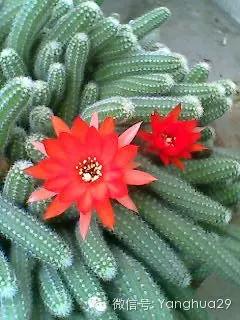
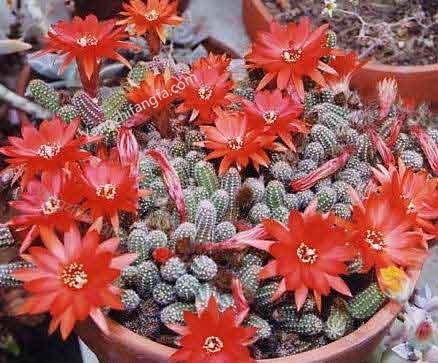
Brief introduction to the white sand cactusWhite sand (Baitan), also known as small cactus whip, commonly called golden bull palm or gourd fist. Many flower lovers also call it the white sand cactus. It belongs to the genus White Sand of the Cactus family. Place of origin: northern Argentina. The white sand cactus is a perennial succulent plant. Its stem is not round and ball-shaped like a cactus ball, but rather a slender cylindrical shape, growing in clusters, much branched, with a pale green body color, and a plant shape resembling a "mountain peak" rising and falling at different heights. The low shallow ribs number 6-9, and the ribs bear dense areoles; on one areole grow about 15 white, small, radiating short spines, with no central spine. In late spring and early summer, flower buds emerge from the areoles on the sides of the stem. The buds are covered with brown filamentous hairs and open vermilion funnel-shaped flowers, with many stamens, yellow, and 1 pistil, white. The flower diameter is 3.5-5 cm, opening during the day and closing at night, then opening again the next day, and can stay open for 3-4 days. It blooms easily, profusely and brilliantly.Cultivation methods for the white sand cactus
The white sand cactus likes an environment with ample sunlight, dryness and good ventilation. It tolerates partial shade and drought, and fears waterlogging, high temperatures and strong light. The suitable growth temperature is 15-25 degrees Celsius. At freezing point in winter, its stem will turn red and appear soft and weak, and above 5 degrees Celsius it can grow slowly. During the growing season it needs sufficient water. In summer, with high temperatures, be sure to provide shade and ventilation. In winter, keep the potting soil dry. It can be grown with general cactus potting soil.
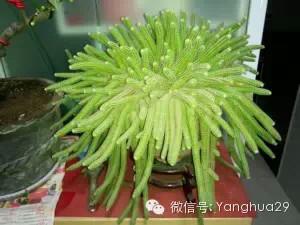
When growing the white sand cactus indoors, keep the temperature between 5℃ and 10℃, provide good light, and it is best to place it near a window. The white sand cactus will bloom only after going through sufficient dormancy in winter. If the room temperature is too high, it is easy to make the white sand stop dormancy and begin to grow, and then it will no longer bloom. After spring begins, in northern regions move it outdoors in mid-April to bask in the sun. During this period it must not be watered. As the temperature rises and light intensifies, the stem body of the white sand gradually turns dark red, that is, it begins to grow flower buds. In the early stage of bud formation it still must not be watered; only when the buds grow to 1 cm may it be watered. After watering, the stem body of the white sand gradually changes from dark red to green, and after 2 weeks it can bloom successively. If it is watered before the buds have fully developed and taken shape, the white sand will immediately grow offsets, and the small buds that have already appeared will also shrink accordingly; only the somewhat larger buds can bloom normally. That is to say, after spring begins, the white sand should only be exposed to the sun and not watered. Only after the buds are firmly set may it be watered. This is the key to promoting blooming in the white sand.
Variegated varieties of white sand: Shanchui, also called Jinge. Its slender tubular succulent stem is bright yellow, and set off against the red flowers, it appears especially beautiful and eye-catching. A intergeneric hybrid variety of white sand and the Echinocereus genus "Huifengyu," after artificial cultivation it also produced a variegated mutation: Hongxianli Yujin. Its succulent stem is slender tubular, with an orange-yellow body color. In spring it bears dark red funnel-shaped flowers laterally, brightly colored and also quite eye-catching.
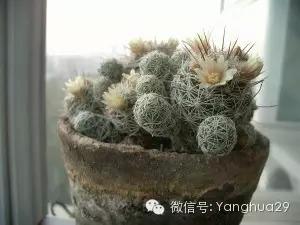
Precautions for cultivating the white sand cactusFor the care of the white sand cactus in summer and autumn, it is the same as other cacti. In winter the white sand begins dormancy, so watering should be stopped, and it is better to keep the potting soil slightly dry. Keep the indoor temperature between 5℃ and 10℃, provide good light, and it is best to place it near a window. The white sand will bloom only after going through sufficient dormancy in winter. If the room temperature is too high, it is easy to make the white sand stop dormancy and begin to grow, and then it will no longer bloom.
After spring begins, in northern regions move it outdoors in mid-April to bask in the sun. During this period it must not be watered. As the temperature rises and light intensifies, the stem body of the white sand gradually turns dark red, that is, it begins to grow flower buds. In the early stage of bud formation it still must not be watered; only when the buds grow to 1 cm may it be watered. After watering, the stem body of the white sand gradually changes from dark red to green, and after 2 weeks it can bloom successively. If it is watered before the buds have fully developed and taken shape, the white sand will immediately grow offsets, and the small buds that have already appeared will also shrink accordingly; only the somewhat larger buds can bloom normally.
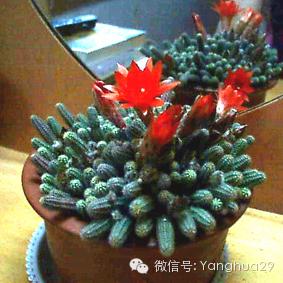
Cultivation methods for cactiFirst, about soil:Cacti like soil that contains sufficient nutrients and is loose and permeable. Therefore, a special potting mix must be prepared. You can use 4 parts vermiculite, 4 parts fine sand, and 2 parts fully decomposed humus, mix them evenly and set aside. The prepared potting mix should preferably barely form a ball when squeezed in the hand and scatter as soon as the hand is released.
Although cacti are drought-tolerant plants in the plant kingdom, like all plants they cannot do without water.The amount of watering should vary with the seasons.
In spring, grasp the word "moderate."In spring the outdoor temperature is not high, so only a small amount of watering is needed.
In summer, grasp the word "moist."In summer the sunlight is strong and the temperature is high. If watered too much, it may cause root rot, but if lacking water, some plants may show scorched spots and shrinkage, reducing their ornamental value. Frequently spraying the cultivation area can increase air humidity, lower the ambient temperature, and also allow the stems to absorb water.In autumn, grasp the word "more."In autumn, cacti enter a stage of vigorous growth. At the same time, some cacti that bloom in winter, such as Christmas cactus and Epiphyllum, undergo flower bud differentiation in autumn and need sufficient water and fertilizer. In nature, autumn is also clear and crisp with less rain, so they should be watered more.
In winter, grasp the word "control."In winter, most plants enter a dormant state, and merely keeping the potting soil moist is enough. At this time, too much watering may cause the base of the stem to rot.
The above content is the editor's introduction to the cultivation methods and precautions for the white sand cactus. After reading it, do you have a little understanding of the white sand cactus? In fact, to grow cacti well, you must first consider aspects such as watering and fertilizing: watering, fertilizing and potting soil are very closely related.
---------------------------------------
Flower-growing knowledge
WeChat: yanghua29
Flower-growing knowledge, questions and answers, solving flower-growing problems!