How to restore and manage a dead fermentation bed after it fails?
In fermentation bed farming, we sometimes encounter a dead bed (strong odor, strong stench, caking, no heat generation, no decomposition, no fermentation) caused by excessive moisture in the fermentation bed, bedding that is too compact and too fine, plus a period of continuous manure and urine accumulation without timely turning and raking. At this point, check it: if the bedding is still not saturated with absorption and most of it is still loose and fresh, and the problem is caused only by the reasons above, then it can be saved.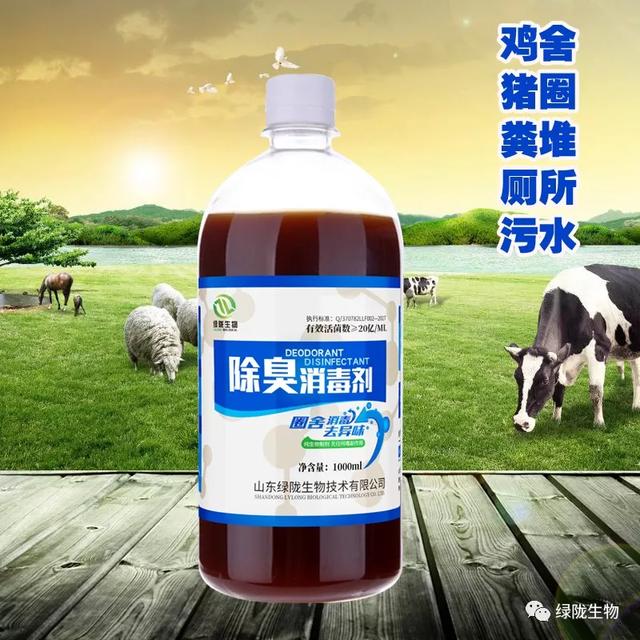 Rescue method: ① Use Lyulong deodorizing disinfectant diluted 50 times, spray 200-600 ml per cubic meter (the amount depends on the severity), the purpose being to neutralize alkalinity and to neutralize and fix ammonia. When necessary, for example if the fermentation bed has been in use for a relatively long time, and the bedding is short of carbon sources (especially bedding made mainly of rice husk and sawdust, and bedding systems where the temperature just will not rise), then carbon energy must be supplemented, such as adding glucose at 100 g per cubic meter, or cornmeal at 200 g per cubic meter; the glucose or cornmeal can be mixed into the microbial deodorizing and disinfecting bacteria solution and stirred together for later use. ② Then appropriately add fresh dry bedding on the surface, the purpose being to balance the moisture; how much dry bedding to add depends on the situation, add more if it is too wet, and add at least some even if it is not too wet. ③ Supplement bacteria: add more than 20 g of dry-sprinkle fermentation bed bacteria per cubic meter, mix it with half its amount of cornmeal at a 1:10 ratio, then evenly add it into the bedding. ④ The order of operations is: first manually spray the Lyulong deodorizing disinfectant solution; after that, sprinkle on the supplementary carbon energy such as glucose or cornmeal (the glucose and cornmeal can also be mixed into the deodorizing disinfectant solution and stirred together before spraying); then sprinkle the supplementary dry bedding on the surface; then sprinkle the Lyulong dry-sprinkle fermentation bed bacteria (the bacteria can be mixed into the supplementary dry bedding and stirred together before sprinkling); finally, start the turning and raking machine to turn and rake the bedding. Turn and rake the entire fermentation bed bedding twice in succession, then continue to observe the recovery; generally it can be restored.
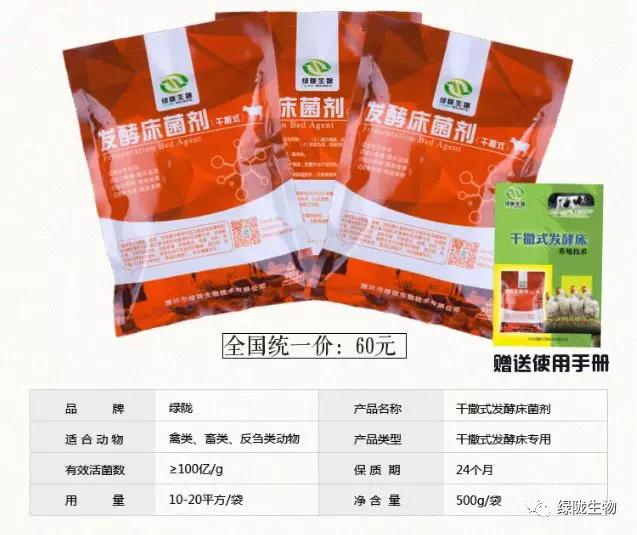 Since its founding, Lyulong Biology has served thousands of fermentation bed users. The following are the key maintenance tips for dry-sprinkle fermentation beds that we have summarized while serving users: fear rain, not wind (the shed must be ventilated, but must not be rained on or let in water); fear wet, not dry (control bedding moisture and keep it as dry as possible); fear compact, not loose (the bedding must be loose and breathable and must not cake); ammonia gas and water vapor must be discharged in time. If you still have questions about fermentation beds, you can contact us in time, and we will give you the most professional and most reasonable solution as soon as possible.