To succeed in whiteleg shrimp farming, getting the fry and seed stock right is key
In July 2016, Yangzhi Yidiantong came to Zhanjiang Haimao Shrimp Fry Company in Guangdong Province for a one-month study and exchange. During this period, the author studied shrimp fry development, the water treatment system, water quality observation and testing, how to tell good fry from poor fry, as well as stocking, daily management, fry harvesting and pond cleaning, and concluded that to successfully farm shrimp, you must start with the fry and seed stock.
1. Shrimp fry development stages
The growth and development stages of whiteleg shrimp fry mainly include 5 stages: fertilized egg, nauplius, zoea, mysis and postlarva. Each stage is further subdivided according to different morphology; for example, zoea can be subdivided into stage I, stage II and stage III, and the postlarval stage can also be subdivided into many stages such as P1 to P20. According to the introduction by Director Liang of Haimao Shrimp Fry Company, the metamorphosis of whiteleg shrimp fry at each growth and development stage has certain patterns and characteristics. Among them, the nauplius is mainly observed by looking at the tail fin, the zoea by looking at the eye spot and tail appendages, the mysis by looking at the swimming legs, and the postlarva by looking at gill development. However, determining each phase of each growth and development stage requires production experience and further observation under a microscope.
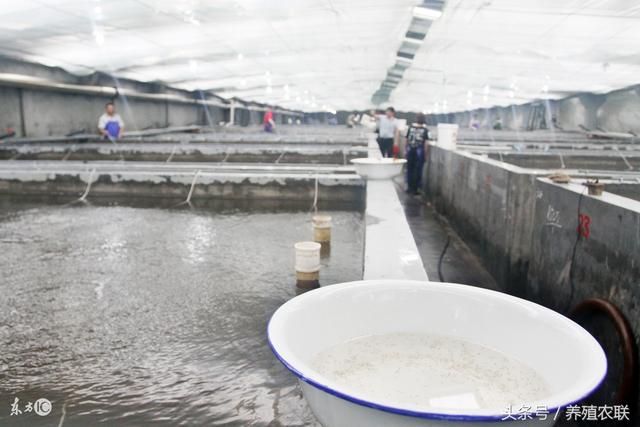
Shrimp fry
2. Water treatment system
The treatment process of the water treatment system includes: sand-filtered seawater - sedimentation pond - chlorination disinfection in a large pond - fine sand filtration - protein skimming - dark tank - precision filter - ultraviolet disinfection - activated carbon adsorption - high-density fiber filtration - workshop. Seawater treated through this complex water treatment system is clean and clear, and the water body contains no aquatic organisms or organic matter, providing a reliable water body for later fry rearing.
Shrimp farming: simple small shed model, whiteleg shrimp farming profitability 90%, maximum profit per mu over 20,000
3. Water quality observation and testing
Water quality observation and testing mainly include water preparation, dissolved oxygen, physicochemical indicators and substrate improvement. Among them, the standard for good or bad water is "fertile, lively, tender and refreshing." Water in this state is clear and highly vital, with good bait abundance, making it the optimal condition for farming water; changes in dissolved oxygen are mainly affected to a large extent by algal photosynthesis and the respiration of some aquatic organisms and microorganisms; physicochemical indicators mainly include ammonia nitrogen, nitrite, pH value and total alkalinity, and corresponding targeted measures should be taken for changes in different indicators; substrate improvement is very important for maintaining long-term relative stability of the water body. For substrate improvement, biological substrate improvement, chemical substrate improvement, cooling substrate improvement and physical substrate improvement can be used (physical substrate improvement only works for a short time, but cannot fundamentally improve the substrate).
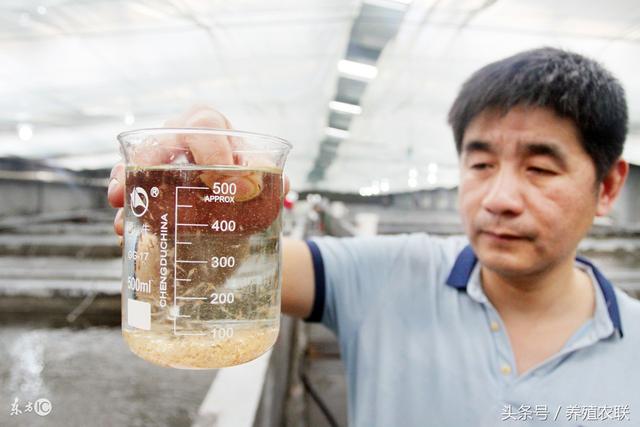
Shrimp fry
4. Distinguishing good shrimp fry from poor shrimp fry
High-quality shrimp fry should have characteristics such as a complete body without damage, a smooth body surface without attachments, a clearly outlined hepatopancreas, strong phototaxis, strong stress resistance, strong ability to swim against the current, uniform size, continuous long-distance swimming, strong jumping, body color without red or pale blue-green, and a full gastrointestinal tract (a single black line). Poor-quality shrimp fry often show weak stress resistance, poor ability to swim against the current, weak adaptability to water temperature and salt concentration; weak vitality and slow response; incomplete shrimp fry, with scratches on the body surface or missing appendages; abnormal body color, with white turbid muscles, red or blue bases of appendages; dirty gill filaments, with parasites, algae and feces attached to the body surface; and adverse symptoms such as shrunken hepatopancreas, empty stomach and empty intestine.
Shrimp farming: polyculture of giant freshwater prawn and whiteleg shrimp has good benefits
5. Preliminary preparation work
One week before stocking fry in the workshop nursery ponds, the nursery ponds must be cleaned and disinfected. First, disinfect and clean the clearing tools and shed cloth, then splash the nursery ponds with methanol or potassium permanganate (disinfect for more than 12 hours), next splash the surroundings and walkways of the nursery ponds with methanol or potassium permanganate, and finally rinse the nursery ponds with fresh water, scrub them clean with laundry detergent, and then open the roof to expose them to the sun. In addition, before stocking fry, seawater and fresh water must be added to the nursery ponds to adjust the water temperature (32°C) and salinity (not lower than 16‰, with 22‰ being most suitable), then nutrients are added to the water body to cultivate microorganisms in the water, and fry can be stocked after about 1 week.
6. Stocking fry
The stocking standard for Haimao Shrimp Fry Company's Prima whiteleg shrimp is to use nauplii, putting Prima shrimp fry larvae at the nauplius stage into each nursery workshop, with 5 million to 6 million stocked in each nursery pond (30 cubic meters). Through practice and observation of fry stocking in the nursery workshops of each area of Haimao Shrimp Fry Company, it was found that stocking methods are mainly direct stocking and stocking after disinfection, and the difference in stocking method mainly depends on the choice of the technical masters in each area. Through exchanges with the technical masters, a more comprehensive understanding of these two stocking methods was gained. Because nauplii have undergone long-distance transport, the shrimp fry themselves are relatively fragile at this time. Direct stocking can reduce further harm to the shrimp fry, but may introduce related bacteria and viruses, while stocking after disinfection avoids the entry of bacteria and viruses, but causes certain harm to the shrimp body.
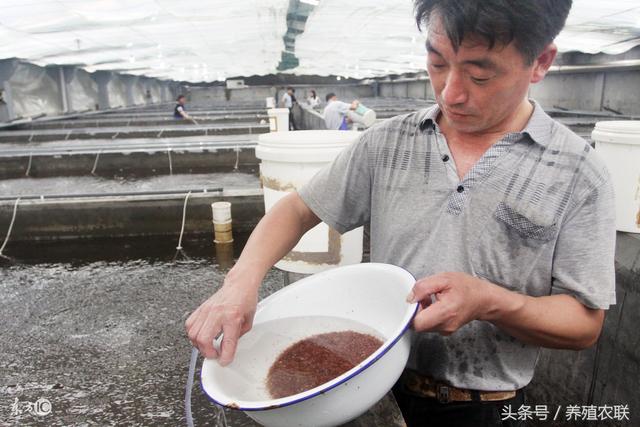
Shrimp fry
7. Daily management
The daily management of the workshop after stocking fry mainly focuses on grasping the physicochemical indicators of the water body, changing water in the nursery ponds and feeding. In addition, the water temperature of the nursery pond water body, the vitality of the shrimp fry, and whether there are dead fry, aeration conditions, and feeding conditions must be observed every day. Water body physicochemical indicators are mainly tested in the laboratory. After stocking fry, the water quality of the farming workshop must be tested every day. Through understanding the test indicators (mainly Vibrio composition, pH value, ammonia nitrogen and nitrite, etc.), the water quality of the nursery pond and the condition of the shrimp fry can be judged; water changes in nursery ponds are generally done by changing one workshop every other day, usually pumping out water to a depth of 20 cm in the nursery pond. When pumping water, a sieve silk net must be used for filtration and observation (the mesh size of the sieve silk net is determined by the size of the shrimp fry) to check whether there is fry loss, and then 20 cm of water is added to the nursery pond (10 cm seawater, 10 cm fresh water). However, some special situations must be treated specially, and the specific process and operations are mainly arranged by the technical masters in each area; feeding mainly includes plant-based bait and animal-based bait. Among them, before the mysis stage, plant-based bait and frozen brine shrimp are mainly used, and later animal-based bait such as shrimp skin and brine shrimp are mainly used. The feeding interval is 4 hours. As the type of bait changes, the ammonia nitrogen and nitrite content in the nursery pond water body begin to rise, but the impact on the shrimp fry is not great. In addition, the water body color also changes from pale yellow-green to tea-brown.
Shrimp farming: comprehensive prevention and control technology for whiteleg shrimp diseases
8. Fry harvesting and pond cleaning
The standard for fry harvesting is mainly the P5 stage of postlarvae, and the entire nursery process takes about 13 days to 15 days. Before harvesting fry, the water in the nursery pond must be drained (at this time, note that the inserted pipe in the pond must not be pulled out directly; because the water level difference inside and outside the pond is relatively large, pulling it out directly will cause a great impact on the shrimp fry and kill them). When the water level in the nursery pond is drained to 40 cm to 50 cm, the inserted pipe can be pulled out, allowing the shrimp fry to enter the harvesting net, after which a sieve silk net is used to collect the fry. In addition, when collecting fry, attention must also be paid to the amount collected with the sieve silk net each time; when the amount of shrimp fry is too large, it may cause death from hypoxia. After draining water and collecting fry, the shrimp fry are put into double-layer plastic bags containing 20 liters of cool water with oxygen added, and finally placed into foam boxes with ice bottles, then packed and loaded onto vehicles separately according to air transport or road transport. Transport vehicles all have refrigeration functions, and attention should be paid to the temperature inside the vehicle during transport (around 20°C). After fry harvesting, first rinse the residual matter on the bottom and four walls of the harvesting pond with fresh water, then scrub the pond bottom, four walls, aeration pipes, heating pipes and air stones clean with laundry liquid.
Friends interested in farming can follow the public account: Yangzhi Yidiantong, where wonderful farming news and technical articles are shared every day. Submission email: [email protected].