What are the treatment recommendations for big red gill disease in fish?
Fish Dada Classroom
The aquculture university without walls
◆◆◆
One
The pathogen, symptoms, epidemiology and diagnosis of big red gill disease
01
Pathogen
The pathogen of big red gill disease has not yet been determined. Many views hold that it is caused by Aeromonas hydrophila or Vibrio infection, but through artificial challenge experiments, the symptoms of big red gill disease have never been reproduced. In some cases of big red gill disease, no parasites or viruses were found,and it is speculated that the symptoms of big red gill disease appearing in crucian carp are mainly the result of the combined action of bacterial infections such as Aeromonas hydrophila and Vibrio, poor aquaculture environment, and external factors such as drug irritation of the gills. The fact that effective treatment can be achieved with antibacterial drugs also supports this point.
02
Symptoms
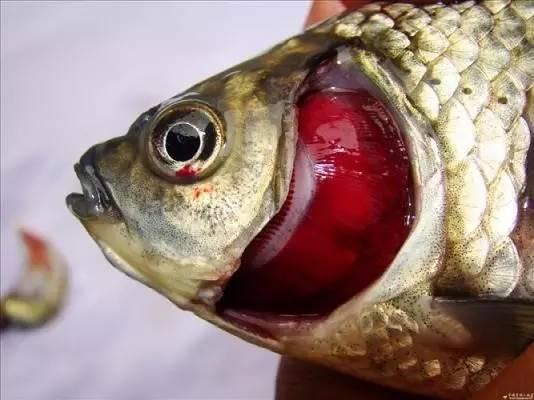
There are no obvious symptoms in the early stage. In the middle and late stages, sick fish often swim erratically below the water surface near the pond bank, especially at the downwind outlet. With the naked eye, the head and back of the sick fish appear black, commonly known as "black head." The gills are edematous, bleed, and appear bright red, whereas the gills of normal fish appear dark red.
When the sick fish is dissected, the most obvious symptom is spotted hemorrhage in the liver, which in severe cases appears mottled or white, sometimes accompanied by enlargement and blackening of the gallbladder; there is also pale yellow ascites (which becomes jelly-like after contact with air). In the late stage of the disease, the sick fish float listlessly at the water surface and around the pond, especially in sheltered areas. After the sick fish die, most have intact body surfaces, while a few show hemorrhage at the base of the fin rays and on the body surface, and the caudal fin and the tips of the various fin rays turn white. Because the gills of affected crucian carp are edematous and bright red, farmers call it big red gill. It often occurs concurrently with parasitic diseases.
03
Epidemiology
Since "big red gill" disease occurred in aquaculture areas such as Yancheng, Jiangsu in 2007, it has shown a trend of gradual spread. The peak incidence of "big red gill" disease is generally from May to July, and it is prone to occur at water temperatures ranging from 20°C to 26°C, mainly affecting crucian carp weighing less than 250 grams.
04
Diagnosis
During the diagnostic process, pay attentionto distinguishing big red gill in crucian carp from gill hemorrhage disease.
The gill filaments of fish affected by big red gill disease are especially bright red (like the red flesh of a watermelon), and once placed in a water basin they return to their original color, which differs from the symptoms of previously affected fish. Sick fish often show darkened body color. The operculum of dead fish has no red spots, the body surface of dead fish is relatively normal, the swim bladder of sick fish shows diffuse hemorrhage, and feeding decreases during the onset of the disease.
In contrast, the swim bladder in gill hemorrhage disease shows pinpoint hemorrhage. Darkened body color is less common, and sick fish show excited feeding during the onset of the disease. On one side of the operculum there are red patches formed by accumulated blood, and there is pinpoint congestion on the eyeball, lower jaw, and base of the pectoral fins.
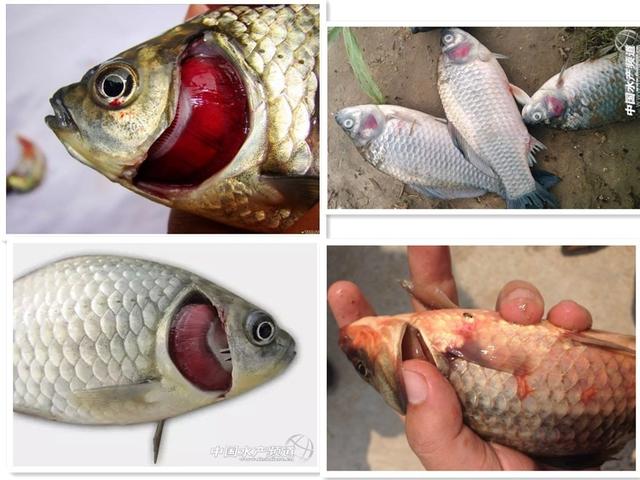
Image sourceChina Aquaculture Channel
The difference between big red gill and gill hemorrhage disease in the figure above (the left 2 images showbig red gillsymptoms, the right 2 images showgill hemorrhagesymptoms)
Two
Causes of big red gill disease
The main causes of big red gill and gill hemorrhage are:
01
Degeneration of fish fry quality
Big red gill disease is also directly related to the degeneration of crucian carp germplasm. In the main crucian carp aquaculture areas, the coverage rate of improved fry varieties is low, the threshold for aquaculture seedling production is low, and many non-standard hatcheries practice inbreeding during breeding, resulting in germplasm degeneration of crucian carp fry, reduced disease resistance, and increased incidence.
02
Worsening water environment pollution and deterioration of pond bottom sediment
In actual production, it has been found that the incidence in ponds with good water quality management is significantly lower than in ponds with poor water quality management. Before the high-incidence period of disease in May, reasonable disinfection, water adjustment, and management measures will play a key role in the prevention and control of crucian carp aquaculture diseases throughout the year.
03
Irrational use of insecticides and antibiotics
In areas where crucian carp big red gill disease is severe, non-standard drug use is common during aquaculture. Large quantities of non-drug products with unknown ingredients appear in production as therapeutic drugs. Misled by some fish drug sales personnel, many farmers choose strong irritant insecticides and disinfectants such as heavy metals, amobam, organophosphorus compounds, and pyrethroids in large doses for frequent deworming and disinfection. The irrational use of antibiotics (such as sulfonamides, doxycycline hydrochloride, etc.) damages the liver, the drug metabolism organ of fish, leading to a decline in fish constitution and immunity.
04
Irrational feeding by farmers, etc.
Driven by economic interests, many farmers have the mentality of increasing feeding amounts so that fish reach market size as quickly as possible for sale, but haste makes waste. The intake of excessive nutrients creates excessive metabolic pressure in the fish body, exceeding the fish's own nutritional needs, and is thus converted into fat accumulated in the liver and mesentery, causing a decline in the fish's resistance to disease.
Three
Prevention and treatment of big red gill disease
01
Prevention
1、Reasonable deworming of parasites. During aquaculture, it is recommended to regularly use Chinese herbal medicines for deworming to prevent parasites. It is not recommended to use highly irritating insecticides, and it is not advisable to kill parasites whenever they are seen. It is necessary to judge whether the number of parasites is sufficient to cause disease, and to prevent parasites through overall improvement of the aquaculture environment.
2. When the peak feeding period of aquaculture arrives,strengthen the management of water quality and bottom sediment, regularly use photosynthetic bacteria, Bacillus, compound microbial preparations, etc., and bottom sediment improvers such as potassium monopersulfate to improve the bottom sediment and maintain a good aquaculture environment.
3. During the high-incidence season of disease, regularlyuse immune enhancers(aquaculture-specific VC, Astragalus polysaccharide, etc.) mixed into feed for feeding to improve the fish's constitution and resistance.
4. Selection of fry,it is recommended to choose high-quality fry from standard improved variety farms. Do not covet cheap prices and choose inferior fry, which leads to decreased growth speed and disease resistance, and ultimately the loss outweighs the gain.
02
Treatment
After the disease occursfirst reduce the stress on farmed fish from adverse environmental factors. When crucian carp develops big red gill disease, due to the existence of gill lesions, impaired gill respiratory function is certain. During treatment,ensure sufficient dissolved oxygen in the pondto reduce fish stress responses caused by excessively low dissolved oxygen in the water body.
When the disease occurs, first test the water quality. Ponds where big red gill disease occurs often have poor water quality. If the water quality is poor, treatment should first start with stopping feeding, anti-stress measures, and improving water quality to improve the living environment of the sick fish.
Secondcheck whether there are parasites such as Trichodina and Dactylogyrus on the gills, and if present, deal with them promptly; finally, use mild disinfectants externally such as povidone iodine and methionine iodine, combined with internal administration of antibacterial drugs and Chinese herbal medicines for detoxification and repair of constitution and immunity, as well as immune enhancers. Before using antibacterial drugs, it is best to conduct a drug sensitivity test first, so as to target the treatment precisely and achieve better therapeutic results.
[Recommended plan]
1. If the water quality of the aquaculture pond is poor, it is recommended to first stop feeding for 2 days. In the morning, use Sanbao high-stability VC (dosage 250 g per mu-meter) or splashed ginger (300 g per mu-meter) + organic acids (500-1000 mL per mu-meter), mix with water and splash over the whole pond. In the afternoon, use zeolite powder (5-10 kg per mu-meter) or argon nitrate purifier (sodium lignosulfonate, 250 g-500 g per mu.meter) to treat ammonia nitrogen and nitrite in the aquaculture water body. Turn on the aerators fully in the pond, and before nightfall use solid oxygen tablets (calcium peroxide, 2 packs per mu) and scatter dry over the whole pond. For 2 consecutive days.
2. Examine the gill filaments under a microscope. If the parasitic load is sufficient to cause disease, deal with the parasites on the gills promptly; otherwise, no treatment is needed.
3. If the water quality problem is not serious and there are no parasites on the gills, you can directly proceed to the third step: in the morning use povidone iodine (250-500 mL per mu-meter) or Sanbao methionine iodine (each bottle for 4 mu-meter of water body) for water body disinfection. In the afternoon use splashed ginger for anti-stress treatment, for 2 consecutive days. Turn on the aerators fully in the pond, and before nightfall use solid oxygen tablets (calcium peroxide, 2 packs per mu) and scatter dry over the whole pond. For 2 consecutive days.
At the same time, reduce feed and administer medicated bait. When administering medicated bait, the feed feeding amount (is 1/3~1/2 of the normal amount). For internal administration, the recommendedplan is as follows:
(1) Fangcao Junni (10% florfenicol) 2 packs or Nuokexin (10% enrofloxacin) 100 g + Fangcao Sanhuang powder or Banhuang powder (1 pack) + aquaculture-specific vitamin C (20 g) or Astragalus polysaccharide immune herb 1 pack + Kunhong vitamin K3 (1 pack), mix with 10 kg of feed, feed continuously for 5-7 days.
(2) Compound sulfamethoxazole powder (for aquaculture) 400 g + Fangcao Sanhuang powder or Banhuang powder (1 pack) + aquaculture-specific vitamin C (20 g) or Astragalus polysaccharide immune herb 1 pack + Kunhong vitamin K3 (1 pack), mix with 10 kg of feed, feed continuously for 5-7 days. For sulfonamides, the first dose must be doubled.
Before using antibacterial drugs, it is best to conduct a drug sensitivity test first, so as to target the treatment precisely and achieve better therapeutic results.
4. Precautions during treatment
(1) Do not use highly irritating drugs, such as chlorine preparations and insecticides. Iodine preparations have good effects and low irritation, and are the first-choice drugs.
(2) Try to avoid irritating actions such as changing water and moving nets.
(3) Dead and diseased fish must be promptly removed. It is best for the nets used to remove dead fish to be dedicated to a single pond to prevent the spread of pathogens.