What are the effective methods for disposing of animal carcasses from livestock farming and slaughter?
I.Technical Background
With the rapid development of the livestock industry, the scale and intensification of farming have continued to increase, and the number of animal tissues, dead pigs, and livestock and poultry carcasses from abnormal deaths has grown. This has become a prominent problem affecting current food safety, animal disease prevention and control, and the sustainable development of the livestock industry. Improper disposal can also cause serious environmental pollution and spread disease, directly threatening public health security. How to effectively dispose of dead animals has become a new challenge encountered in the development of the livestock industry and even society as a whole, and finding a safe, effective, environmentally friendly, and economically feasible technology for the harmless treatment of dead animals is extremely urgent.
At present, there are mainly three methods for the harmless treatment of animal tissues and livestock and poultry that die abnormally, namely incineration, deep burial, and high-temperature and high-pressure treatment.
1. Incineration treatment: Incineration not only has high equipment costs, with a single incineration unit generally costing more than 300,000 yuan, but the treatment process also produces large amounts of dust, carbon monoxide, nitrogen oxides, sulfides, and other pollutants, causing a major impact on the environment. The operating cost of incineration is also relatively high; for example, incinerating a 100 kg dead pig consumes about 50 yuan in energy costs, and this does not even include labor costs.
2. Deep burial treatment: This method is simply not suitable for large-scale farms. According to regulations, dead pigs must be buried in pits at least 2 m deep, sprinkled with quicklime, and then covered. In actual practice, there are many problems: 1) Because large-scale farms have dead animals almost every day, there is not enough land to dig pits for burying them all, and digging a pit 2 m deep as required costs at least 100 yuan in labor per operation; 2) In actual practice, the depth of dug pits rarely exceeds 1 m, failing to meet epidemic prevention requirements; 3) Sterilization is incomplete, making secondary contamination and the renewed spread of pathogens likely, and it also pollutes groundwater, soil, and other natural environments. Therefore, it has now evolved into digestion tanks, in which dead pigs are placed in wastewater or chemical agents to decompose naturally; this takes a long time, is inefficient, and creates a harsh environment.
3. High-temperature and high-pressure method: Taking the complete system produced in Taiwan, China for manufacturing organic fertilizer as an example, the following problems exist: 1) The equipment investment cost is very large, at least more than 400,000 yuan per set; 2) Large-scale farms cannot meet the treatment volume, while the equipment requires the same heating and fermentation costs regardless of the amount, resulting in very high treatment costs; 3) One treatment takes about 3 days, making it impossible to treat dead animals that appear at any time each day on demand, and supporting cold storage facilities also need to be built.
The treatment method developed by our company uses composting technology and the strong decomposition effect of microbial strains, combined with mechanical crushing to expand the contact surface area, thereby decomposing and treating animal carcasses efficiently and at low cost. This technology completely solves the problems of the three commonly used methods above and has clear advantages. Taking a pig farm with an annual output of 10,000 head or a poultry operation with an annual slaughter volume of 500,000 birds as an example for comparison:
1. Small footprint: a 30-50 sq m fully enclosed crushing treatment area, plus a 500 sq m decomposition area, for a total area of about 600 sq m, a reduction of 60% compared with other technologies;
2. Low construction cost: the total investment requires only 250,000-300,000 yuan, saving 70% compared with using the high-temperature method;
3. Low treatment cost: treating one 100 kg dead pig or 100 poultry birds weighing 1 kg each costs only about 5-10 yuan (including labor, electricity, bedding material, and a small amount of microbial strain cost; there are regional differences.);
4. All-weather treatment at any time: crushing and processing one 100 kg dead pig takes only a few minutes and can be carried out continuously; the decomposition area generally composts and decomposes for 10-15 days.
5. Environmentally friendly with no secondary pollution: the operation of this technology requires only high-fiber bedding material, a small amount of electricity, and microbial preparation products. No harmful gases or odors are produced, and the fully enclosed system produces no fly larvae.
6. Safe and reliable: the treatment system of this technology is a complete biological treatment system. The treatment environment decomposes animal carcasses in a slightly acidic and continuously high-temperature environment, and viruses, pathogenic bacteria, parasites, and the like in the animal body are generally completely killed within 7 days. The used bedding material must also undergo sealed high-temperature fermentation and composting before being used as farmyard manure, so there is no biosafety problem.
7. Full-process automatic electronic video recording: Because central or local governments generally provide subsidies for actively carrying out harmless treatment of dead livestock and poultry, this invention automatically records truthfully throughout the process and does not require an epidemic prevention officer to be present on site. Relevant personnel only need to hand the video materials to the epidemic prevention officer so that both parties can confirm the quantity, time, and location, ensuring the implementation of the policy and protecting the rights and interests of the farming owner.
8. Reuse of waste: after treatment, the animal carcasses and bedding material undergo microbial composting and fermentation again, becoming high-quality organic farmyard manure that can be recycled.
II.Technical Content
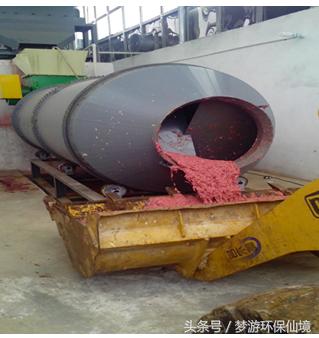
This powerful biological treatment equipment consists of the following parts: crusher, lifting hopper, mixing tank, spray cleaning system (including an outdoor probiotic container), dual ultraviolet sterilization lamps, exhaust fan, positioning video recording device, electrically controlled operating device, indoor bedding material bucket, indoor temperature and humidity display, fermentation treatment tank display, and enclosed treatment house. The crushing treatment area plus the composting decomposition area occupy a total area of about 600 sq m, about 1 mu or so.
The implementation steps of this powerful biological treatment are: 1) In a fully enclosed treatment room, the crusher pulverizes animal carcasses into a slurry; 2) It is conveyed by a conveyor into the mixing tank; 3) Bedding material already mixed with a composite heat-producing microbial fermentation inoculant is added to the mixing tank, and the mixture is stirred evenly. 4) It is conveyed into a fermentation tank for high-temperature fermentation, with the fermentation temperature maintained above 40°C, an average maintained temperature of 45-55°C, a maximum of 70°C, and a fermentation time of about 10-15 days. 5) After fermentation in the pile area is completed, the bedding material becomes agricultural organic fertilizer. 6) Each time the treatment machine power is started, the synchronized dual-lens surveillance recorder automatically records, documenting all information of the treatment process. The recorder has a GPS positioning function, recording the geographic location of the treatment and the specific time and quantity of animal carcasses treated, etc.
III.Safety Assessment
The biosafety issue of dead livestock and poultry is a key concern for everyone. In terms of biosafety, this technology ensures biosafety in the following aspects.
1. The fully enclosed indoor crushing treatment area of this equipment is within an area controlled by a probiotic environment. The microbial varieties used comply with China's GB20287-2006 standard, and each gram of bedding material in the treatment tank contains compliant probiotics >100 million cfu/g; other areas are regularly and irregularly sprayed with probiotic flora. The number of probiotics in the air is more than 1,000 times that in a normal environment, and the entire environment is in a slightly acidic state (pH below 5.0). Viruses such as foot-and-mouth disease virus, porcine reproductive and respiratory syndrome virus, and avian influenza, and harmful microorganisms such as Escherichia coli and Staphylococcus aureus, are all easily killed.
2. The slightly acidic environment in the fermentation tank is not suitable for the survival of viruses and harmful microorganisms, and at the same time the high temperature above 60°C generated during fermentation can kill these viruses. Even heat-resistant Escherichia coli finds it very difficult to survive for more than 6 hours in this temperature and acidic environment.
3. Strong ultraviolet sterilization lamps are installed both at the entrance to the room and at the exhaust fan outlet, ensuring greater safety
IV.On-site photos of achievement cases:
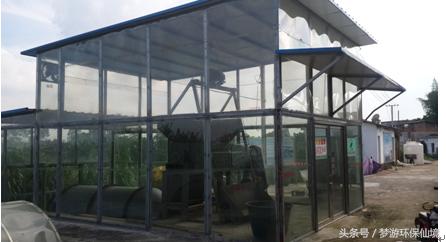
Panoramic view of the treatment equipment installation
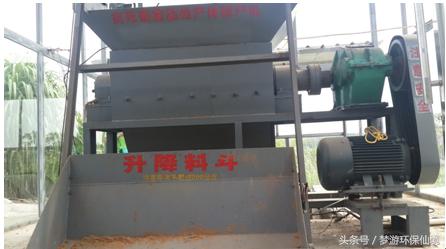
Crusher
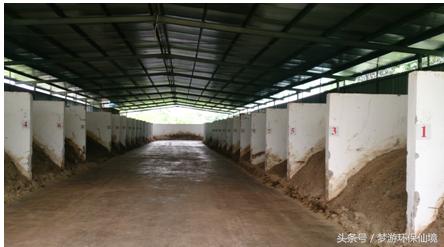
Fermentation stacking area
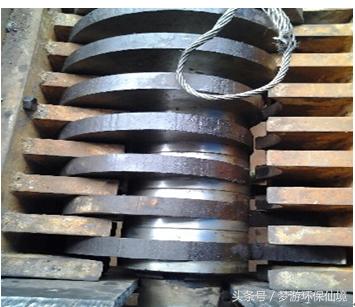
Internal structure of the crusher
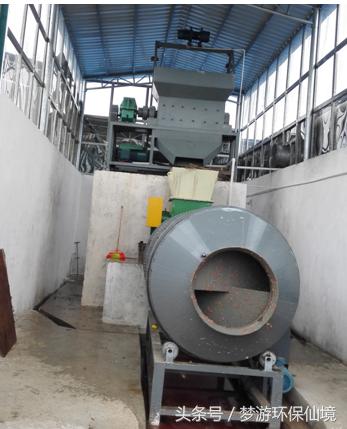
Crusher