Detailed Explanation of Large-Scale High-Yield Aquaculture Technology for Tubifex Worms
How can Tubifex worms be cultured for higher yields? The main function of Tubifex worms today is as a high-quality animal protein feed, so with the rapid development of the aquaculture industry, the market prospects of Tubifex worms are being discovered by more and more farmers, who see this as a fast way to get rich. For this reason, the editor has put together a set of high-yield culture techniques for Tubifex worms, as follows: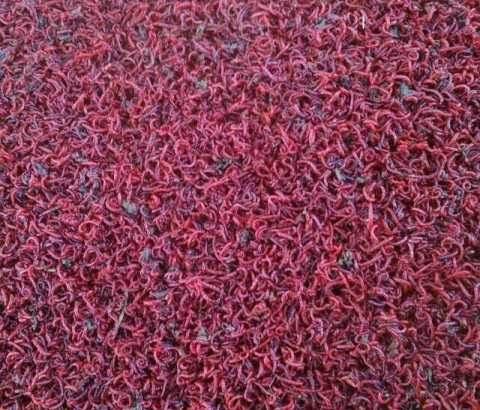
I. Pond Construction
Tubifex worm culture ponds should be built in places with abundant water sources, such as scattered open plots beside domestic sewage ditches on the outskirts of cities, beside small streams and rivers, and at leakage water collection sites of fish farms. The worm pond is best built in a long strip shape 10-30 m long, 1-1.2 m wide and 0.2-0.25 m deep, and can also be built in meandering, circulating and other shapes. The bottom of the pond is best paved with stone slabs or covered with "sanhe soil" (ponds with a hard bottom need no treatment). Inlet and outlet openings should be set up, and anti-escape facilities should be installed at each water opening.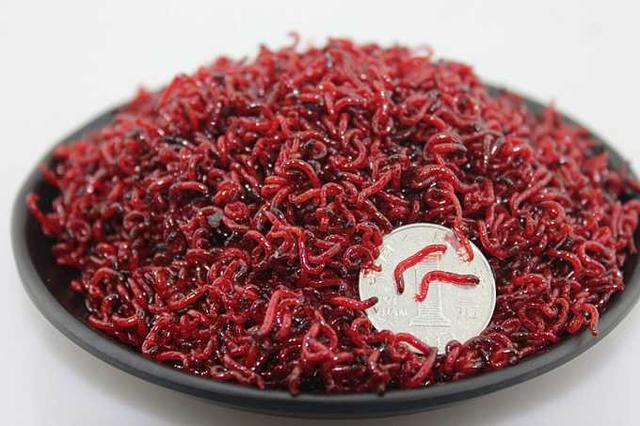
II. Culture Medium
For the base material of the culture medium, organic-rich sludge can be used, such as silt from the bottom of fish ponds and black mud beside sewage ditches, mixed with an appropriate amount of loose material (such as bagasse) and organic matter (such as cow dung). The procedure for filling the worm pond with culture medium is: first spread a layer of bagasse or other sugar-rich fibrous material on the bottom of the pond, at 2-3 kg per sq m, then immediately spread a layer of sludge so that the total thickness reaches 10-12 cm, add water to submerge and soak the base surface, and after 2-3 days apply base fertilizer, using a total of 10 kg of pig, cow and chicken manure per sq m. Before introducing the worm seed, spread another layer of sludge about 3-5 cm thick on the surface, scatter a layer of mixed feed such as fermented bran, rice bran and cornmeal, at 150-250 g per sq m, and finally add water so that there is a 2-5 cm water layer above the culture medium surface. At this point the Tubifex worm seed can be introduced for inoculation.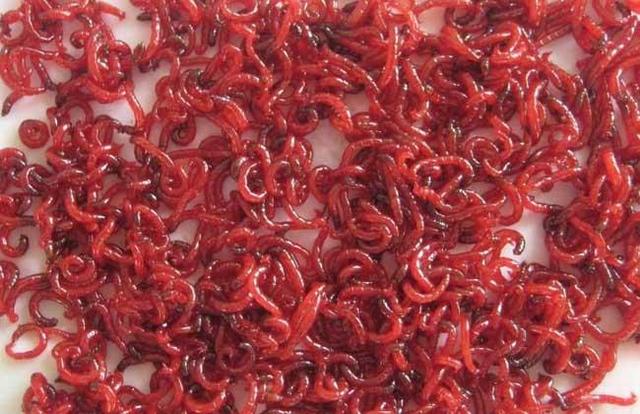
III. Seed Collection and Inoculation
The seed source of Tubifex worms can be obtained from drainage ditches, foul ditches, wastewater pits and other places. Note that when collecting the seed, the target Tubifex worms do not need to be washed very clean and can be transported back together with some mud and residue. The inoculation work is to evenly scatter the collected and transported worm seed on the culture medium surface of the worm pond.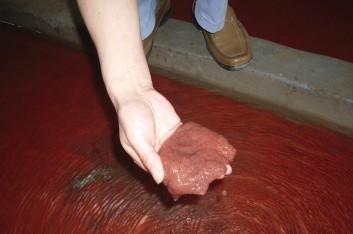 
IV. Feed and Feeding Management.
1. Feed and its feeding. Tubifex worms are particularly fond of feed with a sweet and sour taste. Practice shows that cow dung, chicken manure, pig manure, bran, wheat middlings, cornmeal, rice bran, sugar dregs and other feeds give better results. In order to improve the utilization rate of feed and fertilizer, the manure and feed to be fed should be fully decomposed and fermented. If they are allowed to ferment and decompose inside the worm pond, the heat generated is enough to "burn to death" the egg cocoons and young and juvenile worms, which is not conducive to stable and high yields. The feeding amount can be estimated from the feed conversion ratio and the monthly Tubifex worm yield to calculate the total feeding amount for that month. When feeding, scatter the feed evenly on the culture medium surface by hand, and do not forget to close the water inlet before feeding.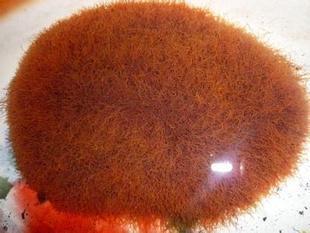
2. Pond raking. This is an indispensable routine production step in feeding management work. The method is to use a "T"-shaped wooden rake to rake the culture medium thoroughly pond by pond, so as to improve the living environment of the Tubifex worms. In the peak production season, the pond should be raked once every 3-4 days, and in other seasons this can be extended to once every 7-15 days. Pond raking can, first, prevent the culture medium from hardening; second, effectively inhibit the growth of blue-green algae, duckweed and so on; and third, regularly keep the base surface level, which is conducive to stable and unobstructed water flow.
3. Prevention and elimination of enemies. Fish (loach, rice field eel), frogs, birds, domestic ducks and others like to eat Tubifex worms, while snails, mussels and others also compete with Tubifex worms for feed and fertilizer; duckweed, blue-green algae, weeds and so on will consume large amounts of nutrients in the culture medium. These are all enemies of artificial Tubifex worm culture and are all within the scope of prevention and elimination.
The high-yield culture techniques for Tubifex worms have been introduced here. Tubifex worm culture is very simple. As long as we master the key techniques, we can use rural resources to culture Tubifex worms and thus obtain good income.