Frog Farming Techniques to Help You Start a Business and Get Rich
How are frogs raised? As for the value of raising frogs, everyone knows that frogs are a delicacy on the dining table. Because catching wild frogs is prohibited and market demand is growing, farming frogs artificially is profitable, and with good farming techniques the economic benefits are considerable. So how are frogs raised? As for the artificial farming techniques for frogs, many people still do not understand them - after all, isn't this an emerging special breeding project?
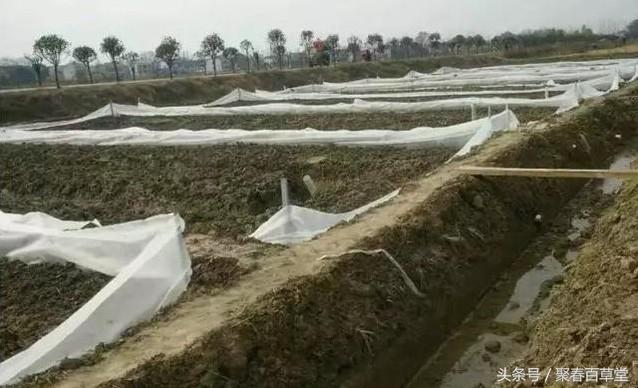
I. Construction of the Frog Pond
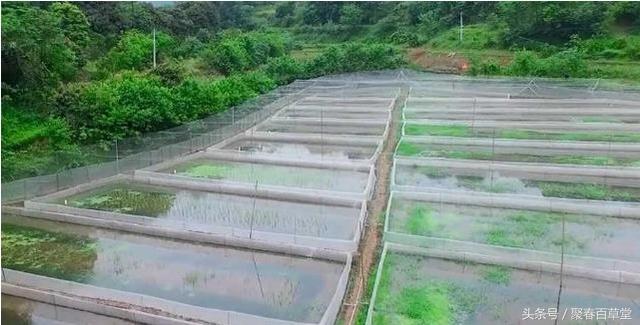
The size of the frog pond can be flexibly determined according to actual conditions. A brick wall fence should be built around the frog pond, with a wall height above 1.5 m, to prevent frogs from escaping or snakes from entering to prey on the frogs. It is best to build the frog pond near your residence for easy management. A water inlet and a water outlet should be set at each end of the frog pond respectively, and sealed with iron rods and fine-mesh nylon netting to prevent escape. Aquatic plants and small shrubs should be planted around the inside of the frog pond to make it convenient for adult frogs to rest.
Frog breeding ponds are divided into spawning ponds, tadpole ponds and adult frog ponds. Generally, a damp, warm and shaded place should be chosen, and a long cement pond or earthen pond is preferable. A large outdoor pond of 4x6 m serves as a single pond; the pond walls are best coated with cement, while the pond bottom still retains soil; a small courtyard pond is generally 1x1.5 m to 2 m, with a depth of generally 1 m, equipped with a water inlet hole and a drainage channel, and a water depth of 20-50 cm. A shade board must be set over the pond surface. Generally, 40 adult frogs can be raised per sq m. Frog breeding ponds can be earthen ponds, brick ponds or rice fields; the key lies in preventing escape. If conditions permit, brick walls can be built, or netting can be used, generally 1-1.2 m high. The water depth in the pond is 30-60 cm, and a mound of soil is piled in the middle of the water or on the sunny side to serve as land habitat for the frogs, occupying about 1/3 of the whole pond. Grass or crops are planted on the mound. A small amount of floating aquatic plants is put into the pond water. For a pond used to raise tadpoles, only a small land area is left for the metamorphosed young frogs to come ashore. A cement pond is preferable for tadpoles, and the pond wall slope should be gentle for the tadpoles to rest.
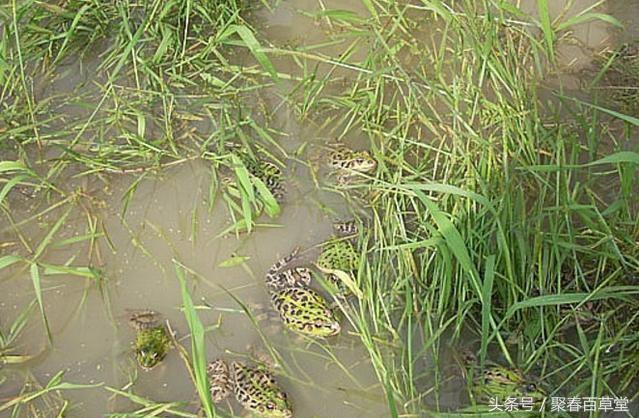
II. Care of Breeding Frogs
Before the severe cold of winter arrives each year, the pond water should be drained, but it should always be kept in a moist state, creating favorable conditions for the breeding frogs to burrow into mud holes for hibernation.
The key to frog breeding techniques is artificial propagation, because wild field frogs often harbor a parasite called diplostomulum in their muscles, and using the method of artificial egg-laying with isolation of adult frogs can effectively prevent this disease. Stock at a density of about 1 group of breeding frogs per 3 sq m (stocking before May is better). Breeding frogs should be plump, and parent frogs that have been spawning for 1-2 years are best. The mixed male-to-female stocking ratio is 3:1, and the stocking density is relatively lower than that of meat frogs. It takes about three years from young frog to sexual maturity.
Breeding frog management: Strengthen the feeding of protein feed, mainly earthworms, supplemented by moth larvae. Maintain the normal balance value of the pond water, which should be fertile and lively. When the water temperature stabilizes at around 22°C, prepare for spawning and hatching (at this time the male frogs croak incessantly). A female frog over 50 g can lay many eggs at one time. Generally, a male and female in amplexus lay eggs on aquatic plants. The frog eggs are light yellow, round, attached in sheets to a gelatinous egg membrane floating on the aquatic plants, and are very easy to identify.
III. Breeding Frogs Reproduce Tadpoles:
Each spring after the Awakening of Insects solar term, an appropriate amount of live water should be let into the frog pond to let the female frogs reproduce tadpoles. After the tadpoles are reproduced, the breeding frogs should be isolated to prevent them from swallowing the tadpoles.
1. Spawning: The artificial spawning ground needs a still-water area. Generally, the cage spawning method is used, that is, forcing the frogs to spawn in baskets or cages. With a male-to-female ratio of 1:1, 5 spawning baskets or cages can also be placed in a 20 sq m spawning area. The pond water depth should be kept at 10-15 cm, and the water temperature should be kept at 10°C-11°C. To increase the hatching rate, the egg sheets can be protected with a surrounding net, so as to prevent the parent frogs from disturbing them and causing them to sink.
2. Hatching: During the hatching period, the temperature for the fertilized frog eggs should be kept at 20°C-28°C, mainly natural hatching; the plastic film mulching hatching method and the waterless hatching method can also be used. Generally, all the tadpoles can be hatched after 3-5 days. Newly born tadpoles depend on the egg membrane for safe survival, so do not stir the pond water casually. After all the frogs have spawned, remove the frogs from the pond at once to avoid disturbing hatching and the tadpoles' living environment. Five days after the eggs hatch, fine feed can be supplied, such as soybean milk, egg yolk, water fleas and aquatic plankton, fed twice a day, but the amount of bait should not be too much, so as to avoid water quality deterioration causing tadpole death. After the tadpoles have been raised for 1 week, they can be moved into the rearing pond for rearing.
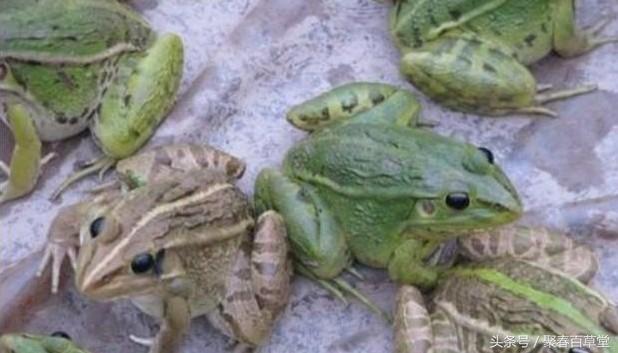
IV. Rearing and Management of Tadpoles
For artificial rearing of edible frogs, they must be raised and hatched after artificial egg collection. The tadpoles after hatching out of the membrane are cultured in the original hatching pond or net cage, at 600-800 tails per sq m of water surface. Artificial feeding starts on the 4th day after the tadpoles hatch, and the tadpoles need to be raised for one week before being moved into the rearing pond. After about 20-30 days, they gradually take red worms, water fleas and fly maggots as their main food, and can also take soybean milk, soybean residue, soybean cake powder and chlorella as their main food; adding a certain amount of fish meal can promote their growth. Generally, for every 10,000 tails, 15 cooked eggs are rubbed and crushed and sprinkled with water to feed 1-2 times. After the 5th day, switch to soybean milk, wheat bran, tofu residue compound feed, or rice bran and fish meal and other feed, put in 1-2 times a day. The feed is placed on the feeding platform; powdered feed should first be mixed with water into a viscous state and then sprinkled to feed.
Management before tadpole metamorphosis: When bubbles are found in the pond water or the water quality has a rotten smell, replace it with new water immediately, generally once every 3 days; in dry weather for many days or during continuous high temperatures, replace the water once every 2 days.
Management during the tadpole metamorphosis period: About 70 days after the frog eggs hatch, they become young frogs. During the stage from the appearance of the forelimbs to complete metamorphosis, the tadpole mainly relies on absorbing the tail for supply, breathes air with its lungs, and begins to jump out of the water to come ashore and rest. When more than 90% of the tadpoles have become young frogs, they can be moved into the young frog pond for rearing.
Notes on tadpole bait: 1. Feed live feed. Since small tadpoles feed on small animals, some water fleas, mosquito larvae or the tadpoles of other small frogs should often be put in for them to eat. These small animals can generally be caught in rice fields, ponds, stagnant ditches and other waters. 2. Provide sufficient bait. Since small tadpoles will eat the small ones and kill each other when food is lacking, the bait should be put in abundantly so that the small tadpoles have bait to eat at any time.
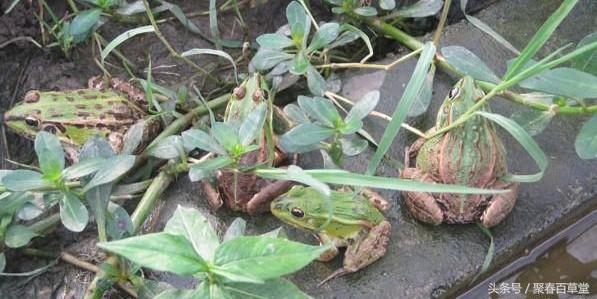
V. Rearing and Management of Young Frogs
1. Graded rearing, intensive taming: Since frogs are fierce in temperament, the phenomenon of the big eating the small and the strong preying on the weak is very common. To put an end to this phenomenon, graded rearing should be adopted, penning frogs of the same size together for rearing, and sufficient bait should be provided so that they can all eat their fill and will not prey on each other.
Screening, grading and separate rearing: When young frogs have been tamed for 20-30 days, the pond water should be drained, and the large-sized young frogs should be transferred to the adult frog pond at a density of 60-80 per sq m for rearing; the small-sized young frogs remain in the original pond for taming. Using feed and indoor three-dimensional, multi-layer box-cage intensive rearing is a new method of raising frogs. Raising frogs in plastic boxes and wooden boxes for small-scale rearing yields extremely high output, with several hundred frogs per sq m, and generally it takes only 5 months from hatching to adult frog.
Intensive taming: Using high-density concentrated pen rearing, frogs can be penned at a density of 100-150 per sq m in a cement pond with smooth inner walls and a height above 1 m; the pond water depth is about 20 cm, a feeding platform is placed on the water surface, and no land is set in the pond, forcing the young frogs to come onto the platform to gather for feeding and resting.
2. Bait sources: Frogs have very omnivorous feeding habits; earthworms, insects, small fish, small shrimp, small crabs, small snails, small mussels and so on are all their delicacies. To ensure the source of bait, you can contact the vendors near the town markets who sell water-basin chicken and duck, give them a small deposit as appropriate, and ask them to collect the chicken and duck crops and small intestines and lungs and so on that are discarded every day and provide them to you, then chop them up as bait. You can also boil some tea-seed cake water and pour it into fertile soil near banana roots, tree roots or garbage piles; before long, many earthworms will come out one after another for people to catch as bait.
3. Bait taming for feeding: Since frogs like to catch food in the water and do not like to catch food on land, the bait should be put on the pond water surface to make it convenient for the frogs to catch food. First feed with fresh live bait for 1-2 days, then on the 3rd day begin adding 20% artificial feed to the bait, and increase the proportion day by day afterward; after 10 days increase it to 80% "live bait" feed, mainly earthworms, fly maggots, small fish and shrimp, insects, snails and loaches, etc.; "dead bait" refers to dried silkworm pupae, animal offal and compound feed, etc. Using movement to lead stillness, the "dead bait" is activated, and finally it transitions to completely feeding on artificial bait. At the same time, feeding is required to be at fixed times, in fixed amounts and at fixed locations. Feeding time: in spring and autumn around noon, in summer in the evening or morning, feeding 1-2 times a day, and each feeding should be finished by the young frogs in about 1 hour. For young frogs weighing below 50 g, the feeding amount should be 6-8% of body weight; for young frogs weighing above 100 g, the feeding amount should be 8-10% of body weight. The bait is required to be fresh, clean and nutritious.
4. Precautions: The bottom of the frog pond has fertile soil tens of cm thick as a base; strictly prevent water polluted by pesticides, chemical fertilizers or industrial wastewater from flowing into the frog pond.
VI. Rearing and Management of Adult Frogs
After the young frogs are transferred into the adult frog pond, the frogs have a large food intake and their growth speed accelerates. This is an important period for forming commercial output. In addition to supplying sufficient bait, when the tadpoles metamorphose into frogs, animal feed needs to be added to the feeding, mainly artificially cultured fly maggots, earthworms, red worms, chlorella water fleas and other live bait with high protein and high reproduction rate. When live bait is insufficient, mixed feed can be used as a supplement, such as 60% rapeseed cake (powdered), 30% rice bran (or wheat bran), 5% soybean powder and 5% fish meal, mixed evenly for a relatively good effect. Tadpoles are active in the water; after 5 days, fine feed can be supplied, namely soybean milk, egg yolk, water fleas, water spinach, tomatoes and aquatic plankton. In addition, raising earthworms on the soil mound - as long as some lime water at a concentration of 3-5% is sprinkled in sections on the soil mound every evening, the earthworms will come out in full force to serve as frog bait. Also feed an appropriate amount of compound feed, and carry out separate rearing in a timely manner to adjust the rearing density. After adult frogs have been raised for 1 month, when the frog body weight reaches 100 g, the rearing density is 30 per sq m, and after 2 months it is changed to 10-15 per sq m. After a short period of further rearing, they can become commercial frogs and go on the market.