Detailed Explanation of the High-Efficiency Ecological Organic Grass Carp Farming Model
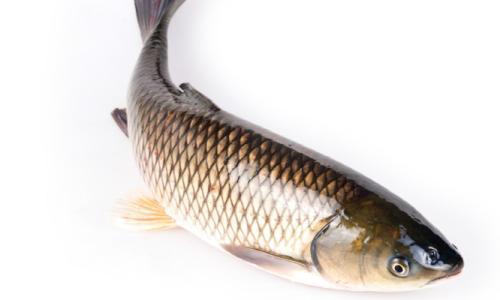
"Stocking fry in spring brings fish plague, stocking fry in winter adds three fen of growth." Practice has shown that the period from the Winter Solstice to the Start of Spring is the best time to stock organic grass carp fry, as it benefits both the fry and the environment, facilitates overwintering management, promotes rapid growth of organic grass carp fry in early spring, and increases the harvest. The following is an introduction to the high-efficiency ecological organic grass carp farming model:
Key technical points for holding and fattening organic grass carp:
1. Pond conditions: The pond location should be chosen where there is abundant water supply, good water quality, and convenient land and water transportation. High-density holding requires a somewhat larger pond area, generally 10-25 mu, with a water depth maintained at 2-2.5 m, and convenient water intake and drainage. The pond must be equipped with sufficient aeration equipment; using a combination of surface aeration and bottom aeration gives better results.
2. Stocking of market-size organic grass carp for holding: 10-15 days before stocking, complete pond clearing and disinfection, using 75-100 kg of quicklime per mu, dissolved in water and splashed over the entire pond. Stock about 750 kg of market-size grass carp per mu; each time fish are introduced, the fish bodies must be soaked in 2-3% salt water for 5 minutes. After the entire pond of grass carp has been purchased and held, external disinfectants such as medium-water double quaternary ammonium salt iodine should be splashed 1-2 times at a concentration of 0.5 PPM to ensure the survival rate of stocked fish.
3. Feeding management: Holding organic grass carp mainly involves feeding grass. Generally, when temperatures rise in early March, appropriate feeding can begin. Since wheat grass is abundant from March to June, the feed consists of wheat grass alone, fed 2-3 times daily, with a daily feeding amount of 30%-50% of the grass carp's body weight, judged by consumption within 2 hours. After June, gradually transition to feeding concentrated feed, preferably full-price compound feed for grass carp, with a daily feeding amount of about 3% of fish body weight, judged by consumption within 30 minutes. The specific feeding amount should be adjusted as appropriate based on weather, water temperature, water quality, and feeding conditions.
4. Water quality management: Because organic grass carp have a large appetite and produce abundant waste, the pond needs frequent water changes, maintaining pond water transparency above 30 cm. From March to April, change water once every 10-15 days, with a water change volume of 15-20 cm; from May to August, change water once every 7-10 days, with a water change volume of 20-40 cm. While flushing water, use biological water-conditioning agents such as strong-effect bottom purifier, using 1 kg per mu for high-water-level ponds. In addition, the aerators need to be run frequently to maintain sufficient dissolved oxygen in the pond water. For high-density holding of grass carp, it is necessary to be proficient in water-testing fish-farming techniques, use water quality monitoring instruments to regularly monitor water quality, and flush, drain, and purify water as appropriate based on water quality conditions, keeping harmful substance indicators in the water within a certain range.