How to grow spider plants? A helpless yet hopeful way of cultivation
The flower language of the spider plant is "helpless yet giving hope." People love spider plants because of their beauty and their emerald-green foliage. The leaves and branches of the spider plant are emerald green all year round, brimming with the breath of life at every moment, so that people who feel hopeless can, upon seeing a spider plant, be inspired with the vitality of life and fill their hearts with hope.
The leaves of the spider plant are thin and long, looking like a sharp sword. Many stems have quietly stretched out of the flower pot, cluster after cluster, reaching outward, proudly lowering their posture, as if searching for new life.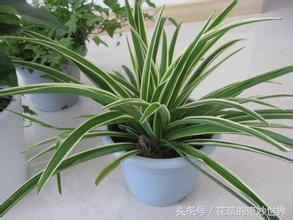
The flowers of the spider plant are very beautiful, small pure white blossoms one after another.BloomingAmid the clusters of green leaves, they are like stars in the blue sky. The spider plant is not as brilliantly colored as the peony, nor as fragrant as the rose, but it is verdant and has tenacious vitality.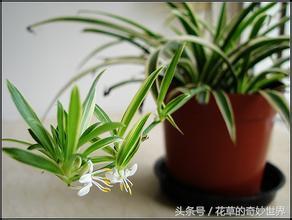
Care and Management
Soil
The soil is generally a mix of peat soil and perlite, but loose, fertile loam rich in organic matter, slightly acidic and with good drainage is more suitable.
Light
Spider plants prefer a semi-shaded, warm and humid environment. Avoid direct sunlight. They are not strict about light requirements and generally grow well under moderate light conditions, and also tolerate weak light.
Watering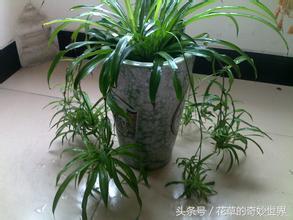
Spider plants like a humid environment, and the soil should be kept moist at all times. In summer, when the weather is hot, water frequently to ensure the spider plant has sufficient water, and use a flower pot and soil with good drainage to avoid excessive moisture, which would cause root rot.
Fertilizing
During the peak growing season, you can fertilize more frequently to meet the nutrients the spider plant needs for growth. Do not over-fertilize, so as not to affect the growth of the spider plant.
Pruning
Properly cut off the yellow leaves. Once a year in March, you can repot it, cutting off old roots, rotten roots and excess fibrous roots. In early to mid-May, cut off some of the old leaves of the spider plant, which will encourage more new leaves and small spider plantlets to sprout.
Follow the WeChat account 15617514001. Original content is not easy to produce.