How can feeding machines be promoted and applied in aquaculture?
I. The role of fish feeding machines in aquaculture role in
1. The application of feeding machines helps promote the use of complete compound feed
The application of both feeding machines and complete compound feed falls within the scope of scientific fish farming.One of the most important advantages of compound feedis that it combines various single feeds according to the nutritional needs of the cultured species to form a comprehensive and economical mixed feed, avoiding the imbalance of nutrients in single feeds.
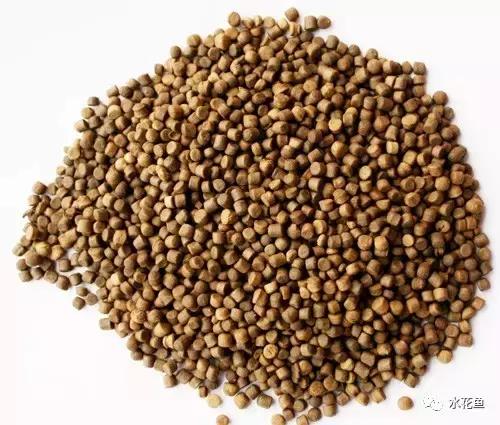
Some farmers recognize the importance of compound feed for scientific fish farming and have also chosen compound feed, but they do not use feeding machines and still traditionally dump the compound feed in a pile at the bottom of the water to feed the fish. Due to factors such as the small feeding area and high water solubility, this results in a loss of 15%-20% more feed compared with feeding by machine. Good feed cannot be used correctly, so the farming benefits cannot be realized.
2. Domesticating fish to feed at the water surface reduces the feed conversion ratio
Domesticating fish to feed at the water surface,one of its advantages is that it can reduce the feed conversion ratio(that is, save feed costs). At present, the largest-scale and highest-output-value freshwater aquaculture in China, eel and soft-shelled turtle farming, both adopt the method of feeding at the water surface. This is becausethe dissolved oxygen and water temperature at the water surface layer are greatly higher than those at the bottom layer, and within the suitable range, the higher the dissolved oxygen and temperature, the higher the feeding intensity and digestion and absorption rate of fish, among which the digestion and absorption rate is 20%-30% higher.
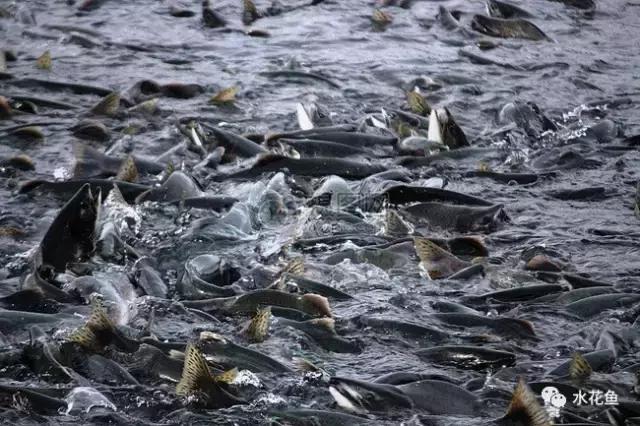
(Fish rushing for food at the water surface)
In addition, when fish feed at the water surface, thefeed stays in the water for a very short time, so very little feed dissolves into the water body, generally around 5%, while the loss rate of manual scattering or the traditional sinking feeding method is 15%-20%. This is precisely the most direct manifestation of the economic benefits that feeding machines can produce in aquaculture.
3. The use of feeding machines meets the requirement of multiple feedings per day in scientific fish farming
In order to ensure better and faster growth of fish, common freshwater cultured fish generally needmultiple feedings per day, while manual feeding can only be done 1-2 times a day. If feeding multiple times a day over a large farming area, a large amount of manpower is needed, whereas a feeding machine can feed 4-6 times a day, each time feeding until 80% full. In this way, without wasting feed, fish can consume more feed, thereby achieving better and faster growth.
4. The correct application of feeding machines can reduce the incidence of diseases and improve the quality of fish
In fish ponds where feeding machines are not used, due to the high feed loss rate,the feed that sinks to the bottom of the pond and dissolves into the water body has its organic matter rot and deteriorate, exceeding the pond's own purification capacity, which will cause the growth of harmful bacteria and the accumulation of toxic gases. Fish are prone to infection by bacteria and parasitic diseases, and the water body is very unsuitable for the physiological requirements of fish growth, affecting the growth rate, and may even lead to malignant pond turnover and catastrophic death such as explosive diseases.
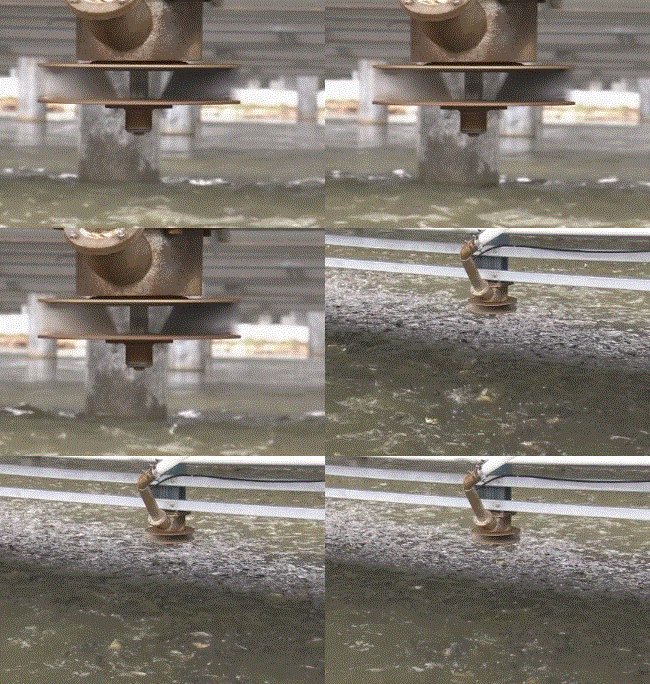
(Air-blown feeding machine. The illustration shows the disc that delivers the feed)
In ponds where feeding machines are correctly used to feed compound feed,there is basically no residual feed at the bottom of the pond, and the small amount of fish manure and feed powder dissolved in the water body can be self-purified by pond water of good quality. The pond can always maintain a good ecological system, so fish diseases are few, the use of drugs is reduced, and mild, non-irritating drugs can also be selected, so that the fish produced can meet green and pollution-free standards, improving fish quality.
5. The correct application of feeding machines can greatly improve the farming skills of farmers
Becauseusing a feeding machine can domesticate fish to feed at the water surface, one can clearly see the size, growth rate, feeding intensity, and quantity of the fish, and all these changes originate from factors such as weather changes, water quality changes, temperature changes, medication status, and feed quality. As long as farmers diligently observe, record, and analyze these causal relationships, it will not be difficult to find the entry point for manually controlling a series of problems such as fish growth and diseases, and rapidly improve their own farming skills.
II. Selection and use of feeding machines
1. Types of feeding machines
Currently sold on the market,feeding machines are mainly divided into 3 types according to different power sources:
The first is a feeding machine using a voltage of 220V, widely suitable for pond and reservoir aquaculture. It is currently the most commonly used type, with large, medium, and small specifications.
The second is a small feeding machine that does not use power, suitable for smaller cages and factory farming.
The third is powered by direct current from a battery, suitable for remote scattered fish ponds where power supply is inconvenient.
2. Structure and working principle of the feeding machine
The feeding machine is composed of a motor, a throwing disc, a feeding hopper, an agitator, a falling feed control plate, and a casing. When working, the motor drives the throwing disc and agitator to rotate after speed reduction through a belt pulley. Through the agitator,the feed falls through the falling feed control plate and the feeding hopper into the feed disc, and is thrown out of the machine by the blades, and directed into the pond.
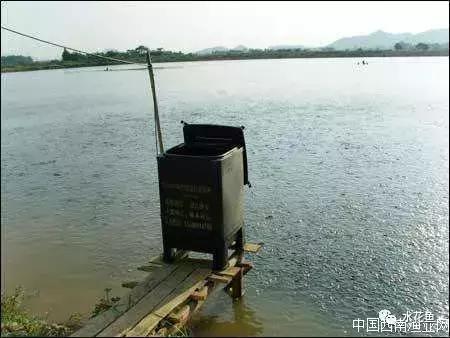
The feed falls into the fish pond in a fan shape, and can also be fed in a 360° all-round manner. The feeding machine can control the number of feedings, duration, and feeding amount, with a relatively high degree of automation. The main motor power is generally 30-100 watts, the feeding distance is 2-18 m, the feed box volume is 60-120 kg, and the usable area of each feeding machine is 0.33-1.33 HM.
3. Use of the feeding machine
(1) Choose an appropriate position. The feeding machine mustface the open side of the fish pond, and should be placed on a springboard 3-4 m from the shore, with the springboard 20-30 cm above the highest water level of the pond.
(2) During production management, pay attention to observing changes in weather, water temperature, water color, and fish feeding conditions,and adjust in a timely mannerthe feeding amount, frequency, and duration of the feeding machine, so as toensure that the fish get relatively sufficient feed without causing feed waste。
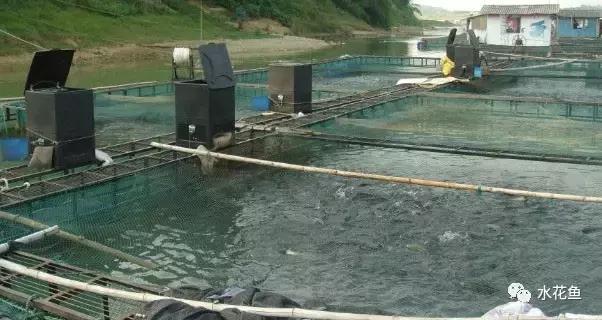
(3) Domesticate the fish school to form the habit of rising to the surface to compete for food. During the domestication stage, feed should be given less and slowly, the interval can be adjusted to more than 10 seconds, and each feeding time can be extended to 3-4 H.
The fish schoolthe length of the domestication periodis not only related to water temperature, but also closely related to whether the water quality is rich or lean and the stocking model.If the water quality is leanthe domestication period is short; otherwise, it is long.The big bullying the small and the strong bullying the weak, this is the survival rule of fish schools, and generally it takes only 10-15 days for fish schools to rise to the surface to compete for food when main fish of uniform size are stocked.
(4) Read the manual carefully before using the feeding machine. Feeding machines are relatively close to the water surface when in use, so attention must be paid to electrical safety. If the feeding machine malfunctions, contact the manufacturer (or dealer) in a timely manner. Do not disassemble it yourself, so as to avoid danger and worsening the fault.
Appendix:
Scientific use of automatic feeding machines for fish ponds
