How to grow Umbrella Plant (Cyperus alternifolius)? Detailed guide to cultivation methods and precautions
It is a perennial herb of the genus Cyperus in the family Cyperaceae. Its stems are upright, and its slender leaf-like involucral bracts cluster on the stem in a radial pattern, with an elegant and unrestrained posture, possessing no shortage of the charm of green bamboo, which is why it is very popular and often used for potted ornamental display or as cut foliage in flower arrangements.
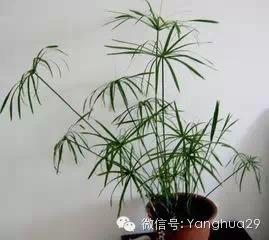
Humidity
It likes a highly humid climate environment and requires the relative air humidity of the growing environment to be 75-85%. When the relative air humidity is too low, the lower leaves turn yellow and the tips of the upper leaves dry out.
Temperature
Umbrella Plant is distributed in evergreen broad-leaved forests of Jiangxi, Zhejiang, Fujian, Hunan, Guangxi, Guangdong and other provinces between longitude 105-120°E and latitude 21-29°N. The most suitable annual average temperature is 18-26°C; its cold resistance is weak, and the extreme minimum temperature is -7°C, otherwise it is prone to low-temperature damage.
The optimum growth temperature is 18°C-30°C. It is averse to cold and frost, and the overwintering temperature needs to be kept above 10°C. In winter, when the temperature drops below 4°C, it enters a dormant state. If the ambient temperature approaches 0°C, it will die from frostbite.
In summer
1. Strengthen air convection so that the heat inside the plant can be released;
2. Place it in semi-shade, or provide it with 50% shade;
3. Give it appropriate misting, 2-4 times a day.
In winter
1. Move it indoors to a place with bright light for care;
2. Outdoors, it can be wrapped in plastic film to overwinter, but every two days at noon when the temperature is relatively high, the film should be uncovered to let it breathe;
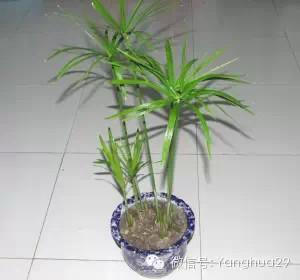
Light
Umbrella Plant is a shade-tolerant tree species, often scattered in evergreen broad-leaved forests of the hills and low mountains of subtropical southeastern China. It grows 5-6 times faster on shady slopes than on sunny slopes. On sunny slopes with strong sunlight, the root collar may suffer sunscald or die. An annual light exposure of 500-800 hours is sufficient, and natural regeneration under the forest canopy is good.
It is afraid of direct strong light and needs to be kept in semi-shade for care, or given 70% shade. If kept indoors, place it in a bright spot as much as possible, and every one or two months move it outdoors to a semi-shaded place or provide shade for a month, so that it can accumulate nutrients and recover its growth vigor.
Fertilizer and water
It has high requirements for fertilizer and water, but it is most afraid of indiscriminate fertilization, concentrated fertilizer, and one-sided application of nitrogen, phosphorus, or potassium fertilizer. The fertilization (watering) principle of "light fertilizer applied frequently, small amounts with more frequent applications, and complete nutrition" should be followed:
Spring, summer, and autumn: These two seasons are its peak growth periods. Fertilizer and water management follows the cycle of "Hua Bao" - "Hua Bao" - clear water - "Hua Bao" - "Hua Bao" - clear water (at the very least, "Hua Bao" must be guaranteed twice a week). The interval period is approximately: for outdoor care, 1-3 days; the interval is shorter on sunny days or during high temperatures, and longer or no watering on rainy days or during low temperatures; for indoor care, 2-4 days; the interval is shorter on sunny days or during high temperatures, and longer or no watering on rainy days or during low temperatures. Watering should be scheduled as much as possible in the morning when the temperature is relatively low. In summer, water in the morning or evening when the temperature is low, and also mist the plant frequently.
Winter: During the winter dormant period, the main task is to control fertilizer and water well. Fertilizer and water management follows the cycle of "Hua Bao" - clear water - clear water - "Hua Bao" - clear water - clear water. The interval period is approximately 7-10 days; the interval is shorter on sunny days or during high temperatures, and longer or no watering on rainy days or during low temperatures. Watering should be scheduled as much as possible at noon on sunny days when the temperature is relatively high.
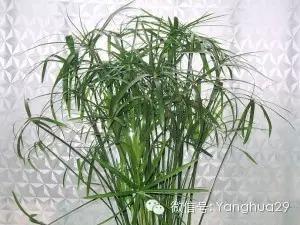
Soil
Umbrella Plant has strict soil requirements. Deep, loose, moist, humus-rich, acidic sandy loam to light clay developed from parent rocks such as sandstone and shale, granite, and metamorphic rock is more suitable. It prefers mountain yellow soil and brown forest soil, and grows especially rapidly in sandy loam. It grows extremely slowly on poor soil, is not suitable for cultivation in limestone areas, and also grows poorly when cultivated in low-lying waterlogged areas. Umbrella Plant grows slowly in the initial period, then gradually accelerates after 4-5 years. At 6-10 years old, the tree height is 5 m and the diameter at breast height is 8-10 cm. It begins to flower and bear fruit after about 10 years of growth. A 15-year-old plant can produce about 5-15 kg of fruit per plant, and at 40 years it can reach as much as 500-650 kg.
Rainfall
Umbrella Plant grows well in areas with an average rainfall of 1200-1800 mm. Below 800 mm of rainfall, it grows poorly. It naturally prefers moist areas without standing water.
--------------------------------
Flower-growing knowledge
WeChat: yanghua29
Flower-growing knowledge exchange, providing the most comprehensive flower knowledge, professional flower-growing tips, and comprehensive solutions to flower-growing problems!