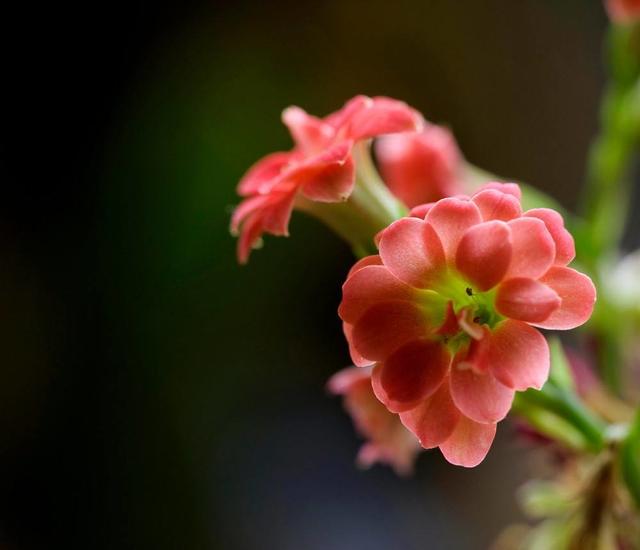
Water orchids and kalanchoes with this water, and you can skip fertilizing altogether
Walking into a friend's home, he was busy in his own "small garden," loosening the soil, watering, carrying flower pots up and down without even getting out of breath.
The friend's home is in Nanyuan Community, on the second floor, and outside the balcony there is a naturally advantaged platform, which has become a greenhouse.
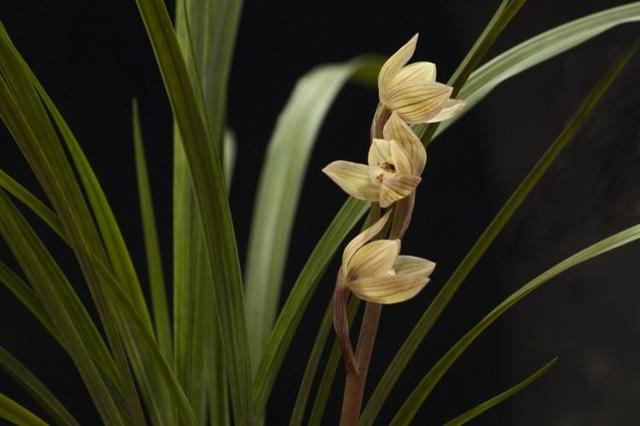
The friend grows many plants. The tulips have already grown flower buds, the variegated spider plants (Chlorophytum comosum 'Variegatum') are lush and green, the honeysuckle branches are bursting with tender buds, and there are also sago palms, spider ivy, Chinese roses, goji berries and other varieties. But what he grows most is kalanchoe (Kalanchoe blossfeldiana) - five varieties, large and small, totaling more than one hundred pots.
The vast majority of these kalanchoes were propagated from cuttings. "I just buy one pot of each variety, then figure out on my own how to propagate them from cuttings and keep them alive. I never expected one pot after another - now I've cultivated so many pots."
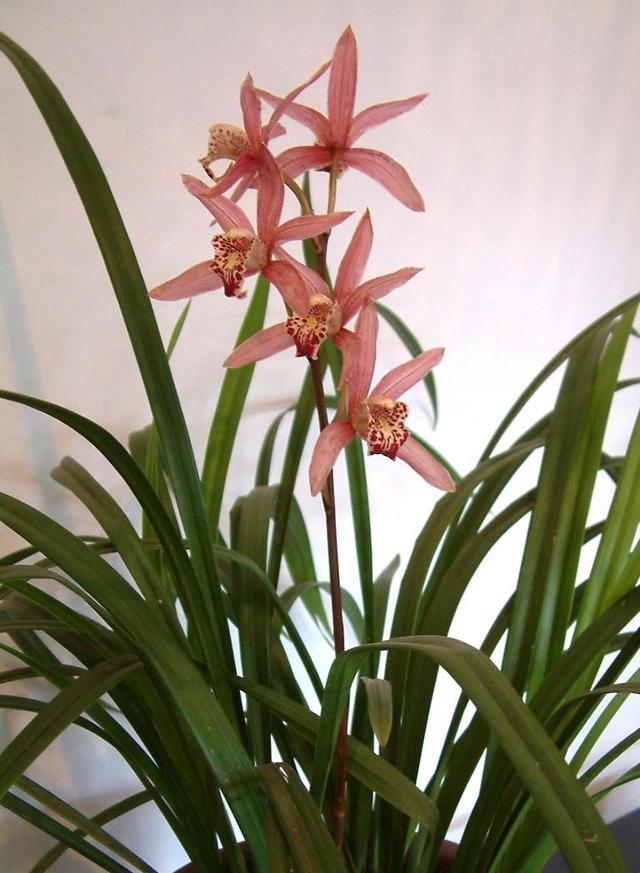
The friend says kalanchoe is best propagated by cuttings in March and April. Just cut off the branch tips of the kalanchoe, stick them into soil, wait for roots to grow, then transplant them into larger pots. However, the survival rate of cuttings taken the first year after buying a kalanchoe is very low - it suffers from not adapting to the new environment. The survival rate of cuttings in the second year is higher, with over 90% able to take root. At the scene, the reporter saw many small kalanchoe seedlings propagated in paper cups. These are all Old Jia's little treasures. "The more I grow, the more there are, but I can't bear to throw them away, so I just keep growing more and more."
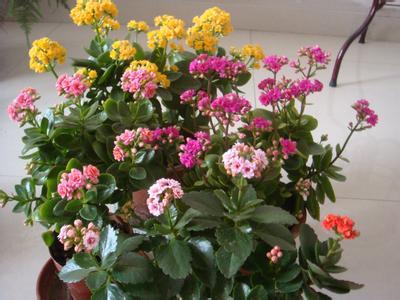
The friend has many particular ways of growing flowers, and the most crucial thing is the soil. The soil he uses is all dug up from outside by himself. "I go to wasteland outside to dig soil, put it in plastic bags and carry it home." This soil can't be used for growing flowers right away. It has to be dried in the sun, crushed fine, sifted through a sieve, and mixed with coal cinder before use. "Only with loose soil will the flowers grown come out well." But this soil is still not the best. The best soil has to be dug from the mountains. "The soil under trees is the best. This soil is actually formed from rotted leaves, very loose, and also contains fertilizer."
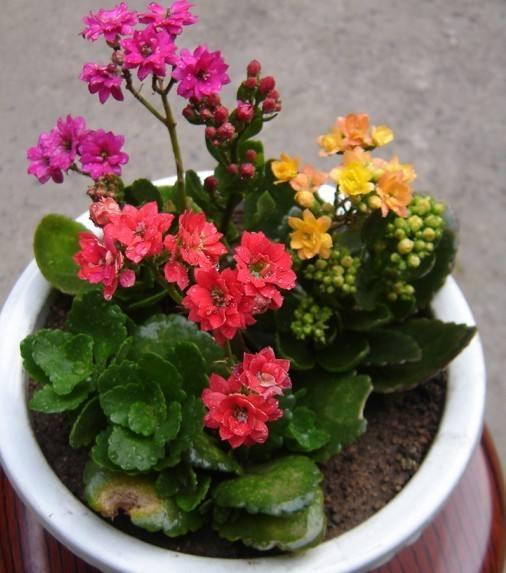
Flower-growing tips: It is best to water flowers with rainwater. If using tap water, you can first collect it in a basin and let it sit for a few days.
The soil for growing flowers should first be dried in the sun, then crushed. It is best to use soil from under trees on the mountains.