A Complete Analysis of Medication Program Management for White-Feathered Broiler Chicken Farming
If you are also a fellow chicken farmer and want to consult about chicken disease issues, you can click the article link below to get my contact information:
Winter is here, how should chickens be raised, the key lies in ventilation
As diseases continue to mutate every year, medication and immunization programs are constantly adjusted in practice, the staff of Dongdong Studio continuously conduct grassroots market research, and drug formulas are also constantly updated. The following is the latest adjusted program.
At 1 day of age, the temperature should be controlled at 33-35°C. As soon as the chicks arrive home, start them on glucose drinking water, start feeding, and do imported Newcastle disease eye-drop immunization. Eye-drop immunization at 1 day of age can be called occupancy immunization. Because it is impossible for there to be no ND virus in the chicken house, and by the time the chicks arrive home, based on hatching time and transport time, it may already be day 2 or day 3. Eye-drop immunization at 1 day of age is about racing against the virus to occupy the chicken's body first. As for maternal antibodies, there is not much point in considering them either. Now large chicken farms both domestically and abroad all do their first immunization at 1 day of age. It is best to use the newcastle-bronchitis 2-combined vaccine, with a nephropathogenic strain. For those with a history of infectious bronchitis nephropathogenic type, it is best to use the 491 vaccine.
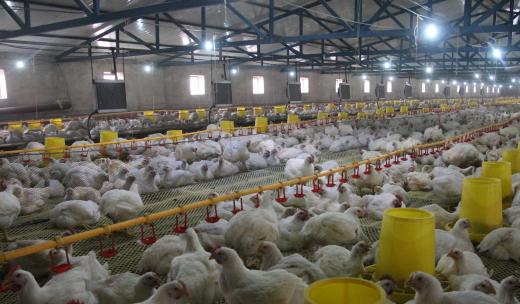
From 2 to 4 days of age, use Lin Gan Qing Generation Six in drinking water. Each bottle is mixed with 60 jin of water, used over 24 hours without needing to be concentrated. Lin Gan Qing Generation Six is specially designed for chick start-up and plays a good role in controlling Salmonella and preventing early-stage enteritis. During the first immunization at 1 day of age, it can be paired with ultra-concentrated Shuanghuanglian oral liquid in drinking water to prevent the appearance of respiratory symptoms after later vaccination.
At 6 days of age, use imported multivitamins in drinking water all day. In the afternoon, respiratory drugs such as Azithromycin can be added to repair the respiratory mucosa in advance, helping to increase vaccine efficacy. Control the temperature at 31-32°C.
At 7 days of age, the second Newcastle disease immunization. Everyone can use imported vaccines, ND, with nephropathogenic infectious bronchitis, and drinking water immunization is also acceptable. It is best to add an immune color protectant to the water, so that after the chicks drink, the immunization effect can be seen immediately from the crop. The appearance of the crop will turn blue. If there is no color, it means the chickens did not drink the vaccine water, and the flock needs to be driven to strengthen the effect. Immune color protectants have special agents on online platforms, and the price is cheap.
From 8 to 10 days of age, use Mycoplasma medication, Hu Shuang. Water mixing amount is 300 jin of water per packet. Respiratory medications generally contain a trace amount of dexamethasone, and chickens may have mild diarrhea after use. It stops once the medication is stopped.
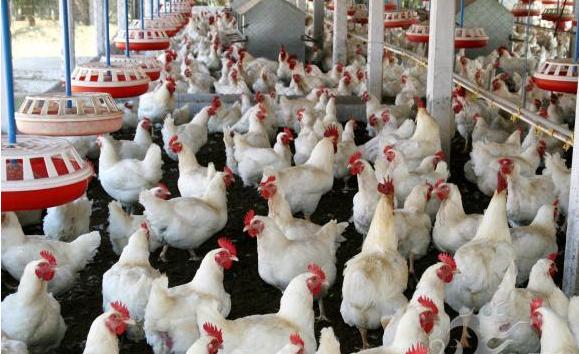
From 11 to 13 days of age, use anti-E. coli medication. Lin Gan Qing Generation Four can be used, with a water mixing amount of 350-400 jin of water. Control the temperature at 29-27°C. Do not increase the dosage-to-water ratio of the medication. For example, everyone says Lin Gan Qing Generation Four has first-class effects because ordinary cefpirome manufacturers are unwilling to add it due to the high raw material cost. Because my online platform has no salesperson or technician costs, the cefpirome we use is highly sensitive and the medicinal effect is very good, and it also contains colistin, and the best kind of raw material. Therefore, it is absolutely forbidden to increase the dosage of the medication without authorization.
From 7 to 12 days of age, oil-based vaccine must be injected. Dongdong Studio recommends directly injecting Newcastle disease. The injection dose is 0.4-0.5, because in market research the protection rate of oil-based avian influenza vaccines is not satisfactory, and they also have a certain triggering effect. Therefore, after discussion among Dongdong Studio staff, avian influenza oil vaccine was removed, because avian influenza oil vaccine needs repeated injections, once every 35 days, to have an obvious effect. Broiler chickens obviously do not have this condition. On the premise of doing a good job with ND and nephropathogenic infectious bronchitis immunization, even if H9 is contracted, as long as there is no mixed infection, it can still be treated calmly. Dongdong Studio's concept of avian influenza immunization -- absolute control of ND. Leave influenza to traditional Chinese medicine antiviral oral liquid No. 2. For treating influenza, antiviral oral liquid No. 2, use 100 jin of water on the first day, 200 jin of water on the second day, 300 jin of water on the third day, and 400 jin of water every day thereafter.
At 14 days of age, bursa of Fabricius immunization. Add immune color protectant. Ensure success.
From 15 to 18 days of age, prevent and treat Mycoplasma and enteritis, while also adding antiviral drugs. Fei Yu Qing + Qingwen Baidu oral liquid. It can be used at 300 to 400 jin of water.
If after bursa of Fabricius immunization, coccidiosis prevention is needed, diclazuril oral liquid can be selected. If coccidiosis is found, the first round of coccidiosis medication can use sulfaquinoxaline sodium, while also treating enteritis.
At 19 days of age, use imported multivitamins in drinking water. The temperature can be controlled between 27-26°C.
From 20 to 23 days of age is the peak period for coccidiosis and enteritis. Control the temperature between 26°C and 24°C. Everyone must distinguish between cecal coccidiosis and necrotic enteritis. If coccidiosis medication was used in the previous round, during this period the chickens are prone to feed passage and unformed feces. Chang Du Qing plus ultra-concentrated Shuanghuanglian oral liquid can be selected. When coccidiosis first occurs, the chicken feces appear like fish intestines. At the end of the feces, it appears unformed or there may be carrot-colored feces. Once the above symptoms are found, immediately use the first coccidiosis treatment.
Everyone likes to do ND booster freeze-dried vaccine immunization during this time period. In fact, according to the studio's research, the largest number of chickens in each flock die during this time period. Because ND oil vaccine antibodies are just being established during this period, re-immunization is very likely to neutralize antibodies, causing a sharp drop, and then immediately triggering respiratory disease and influenza. Therefore, this immunization program cancels booster immunization. Practice has proven the effect is very ideal.
If coccidiosis and enteritis medication was used in the previous round, this treatment course can choose Qingwen Baidu and Hu Shuang or Golden Partner, and the subsequent program is then shifted accordingly.
From 24 to 27 days of age, use E. coli medication plus antiviral medication. Lin Gan Qing Generation Seven plus New Huanglian oral liquid can be used at 300-350 jin of water. After 27 days of age, control the temperature at 20°C to 23°C. After 35 days, the temperature only needs to be 20°C to 21°C. If the temperature is too high, the chickens' feed intake will decrease.
Under normal flock conditions, carry out kidney maintenance around 30 days of age, and the later growth rate of the flock will be more ideal. New Shuanghuanglian can be selected, 400 jin of water per bottle. If bursa of Fabricius occurs, use 300 jin of water; for treating infectious bronchitis, 200 jin of water per bottle, with definite efficacy.
From 28 to 32 days of age, respiratory medication can use Azithromycin or tilmicosin. (This is the last batch of respiratory medication in a flock.) The water amount is 300 jin of water. At the same time, pair it with antiviral medication.
From 33 to 36 days of age, use enterotoxin medication, Chang An or Xian Wei Shu, with a water mixing amount of 350 jin of water. If necessary, use small intestinal coccidiosis medication, using sulfaquinoxaline sodium. Use separately in the morning and evening, also concentrated over about 6 hours.
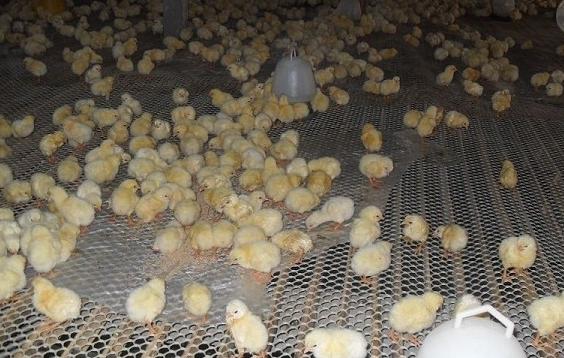
From 36 to 40 days of age, use E. coli plus antiviral medication once more, preferably the traditional Chinese medicine Kang Qi.
Recently, influenza has been very severe in many places. With mixed influenza infection, outbreaks of Newcastle disease, decreased feed intake in chickens, the emergence of complications, and deaths that can no longer be treated well by drinking water medication, inject treatment quickly, that is, based on a ratio of 5000 chickens. If daily deaths reach more than 25, injection should be considered. Calculated for 30-day-old adult chickens. For every 1000 chickens, you can use 200 ml of human-use Qingkailing, 10 boxes of ribavirin, 10 boxes of Chaihu, and 15 to 20 boxes of amikacin, all injection solutions, mixed together and injected at 0.5 per chicken. If Chuanxinlian is also available, use 10 boxes, and inject 0.7-0.8.
Medication prevention is very important, but everyone's management is even more important. Disinfection work at the site, the dosage size of medication, the timing of medication, temperature control, and ventilation in the middle and late stages are even more important. They must not be ignored.
Teacher Wang also has his own WeChat official account. Chicken farming friends can search for it themselves -- Network Poultry Raising and Poultry Disease Prevention and Control. Teacher Wang will continue to devote himself to helping chicken farmers solve more problems!
The calculation of daily water intake for large meat chickens is as follows.
Chicken age in days * number of chickens * 0.016 is the chicken's daily water intake.
This is only Dongdong Studio's latest medication program table, for reference only.
Appendix: Clinical symptoms and pathological changes of influenza and solutions:
Clinical symptoms: Some chickens in the flock are depressed, and feed intake does not increase or increases slowly. In affected flocks, respiratory symptoms appear after 3 days of illness; some stretch their necks and open their mouths to breathe, with strange cries; feces are yellow, white, and green mixed, and some show loose feces with green or black irregular hard feces about the size of mouse droppings in the middle. Some affected flocks show swollen heads, swollen eyes, and foamy eyes. Those not recovered 5-7 days after onset will show some triangular eyes or long eyelids; some chickens show scale bleeding; the mortality rate varies according to flock conditions.
Pathological changes: On necropsy, severe abdominal air sac inflammation can be seen; the pancreas has bleeding points or bleeding and necrosis at the edge of the pancreas; dead chickens have shedding of intestinal mucosa and thinning of the intestinal wall, critically ill chickens have thickening of part of the intestinal wall, and intestinal bloating with thinning of the intestinal wall can also be seen.
I am Wang Guoxing from Dongdong Group. Chicken farming friends who want to know more about chicken farming situations and chicken farming knowledge, the pinned article contains my WeChat which can be searched and added, for face-to-face communication. Consult more chicken farming knowledge!