The Complete Q&A Guide to Free-Range Chicken Farming Techniques
If you are also a chicken farmer and want to ask about chicken diseases, you can click the article link below to get Tang Bohu's contact information
Chicken Farming Secrets:Chicks Start Laying Eggs Early!
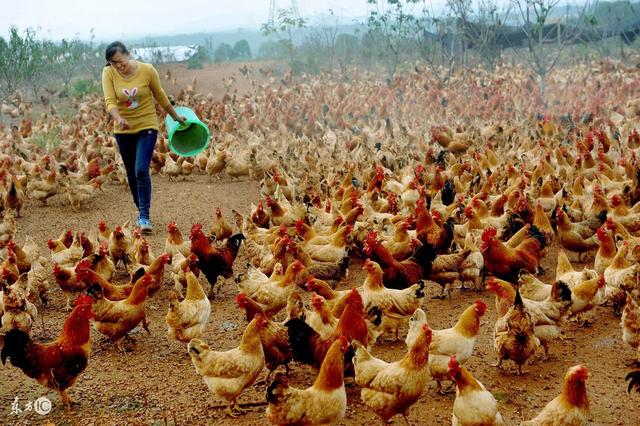
Title: Can Free-Range Chickens and Pheasants That Fight Often Wear Glasses?
A netizen asks: Free-range chickens and pheasants like to fight. Can they be given glasses?
Answer: Free-range chickens and pheasants are rather fond of fighting. Debeaking them affects their appearance, making them hard to sell or lowering their price. Such chickens can be fitted with glasses. The main purpose of wearing glasses is to reduce fighting and feather pecking among the flock and ensure the flock's market appearance. Under normal circumstances, choosing the right glasses will not cause deaths in the flock, nor will it affect the flock's feed intake or normal growth. It is just that at first, when the glasses are put on, there will be a bit of discomfort; after a few days, once they get used to it, they will be fine. When purchasing glasses, it is recommended to ask clearly about the glasses' size and how to wear them.
2. Title: Why Is the Egg Production Rate Increasing Slowly?
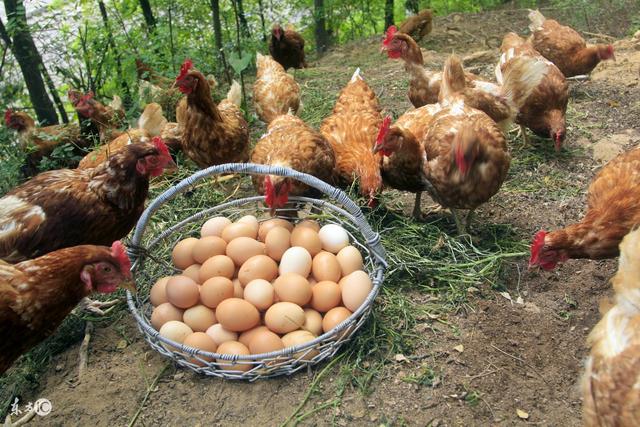
A netizen asks: The laying hens are over 120 days old, and some hens have still not started laying. Why is the egg production rate increasing slowly?
Answer: For laying hens around 120 days old, if the egg production rate is not increasing and some hens have still not started laying, and the chickens are thin, with no organ lesions found on necropsy, only the oviduct has not yet developed, then if they previously had reproductive-type infectious bronchitis, which caused severe damage to the reproductive system, that would be difficult to deal with. If it is due to immature development, thin chickens, but normal feed intake and no signs of illness, consider nutritional issues. Insufficient nutritional supply in the feed is one aspect. On the other hand, even if the feed nutrition is sufficient, if the combs and wattles are pale, there is self-pecking, and feather loss, consider external parasitic diseases such as chicken lice (because problems such as chicken lice torment the chickens and cause nutrient loss, then just treat the chicken lice).
3. Title: The Wonderful Uses of Cod Liver Oil.
A netizen asks: What benefits does cod liver oil have when used in chicken farming?
Answer: In clinical use, cod liver oil is mostly used to supplement vitamin A and vitamin D: for example, when laying hens show poor eggshell quality with many thin-shelled eggs, broken eggs, or soft-shelled eggs, or paralysis caused by poor calcium absorption, it is used; in broilers it is also often used to improve bone quality. Many veterinary experts have found in practice that cod liver oil used as an adjunct treatment for some diseases works very well. The following are listed: 1. When respiratory system diseases occur (infectious bronchitis, infectious laryngotracheitis, mycoplasma, Newcastle disease, influenza, etc.), using cod liver oil as an adjunct treatment can effectively repair the respiratory mucosa, protect the integrity of respiratory epithelial cells, prevent viral and bacterial invasion, enhance the favorable condition of respiratory immune hosts, and increase antibody production. 2. When intestinal diseases occur (enteritis, intestinal toxin syndrome, coccidiosis, etc.), when the flock shows diarrhea, watery diarrhea, yellow-white droppings, and massive shedding of intestinal mucosa, using antibiotics combined with cod liver oil as an adjunct treatment can quickly repair intestinal damage and intestinal mucosal shedding caused by pathogenic and non-pathogenic factors, enhance intestinal function, shorten the course of disease, and speed up the flock's recovery.
4. Title: How Should a Flock Be Disinfected With the Chickens Present?
A netizen asks: What should be noted when disinfecting a flock with the chickens present?
Answer: For disinfecting with the chickens present, it is best to choose a safe, efficient, non-irritating, and non-corrosive disinfectant. Disinfection with the chickens present should be carried out at noon when the temperature is high or in windless weather. The disinfectant should be prepared fresh for immediate use, and the finer the mist droplets the better. The prepared disinfectant should be used up in one go. The disinfectant is best diluted with warm water, and should not be sprayed onto the chickens, which could cause them to catch a chill and cold. Also, on the day before vaccination, the day of vaccination, and the day after vaccination, do not disinfect, so as not to affect the vaccine's effect.
Teacher Tang Bohu has his own official account. Chicken farmers can search for it themselves: Chicken Farming Weather Vane. Teacher Tang Bohu will continue to help chicken farmers solve more problems.
This article is original by Tang Bohu. Please indicate the source and author when reprinting. Follow Chicken Farming Weather Vane to get more chicken farming knowledge.