China Broiler Chicken Farming Industry Market Prospect Analysis and Forecast
I. Basic Overview of the Broiler Chicken Farming Industry
The broiler chicken industry is a diversified, multi-generational livestock
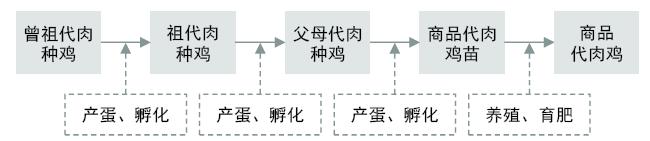
and poultry industry linked by vertical bloodline relationships, encompassing a complete and systematic generational breeding process from great-grandparent broiler breeders, grandparent broiler breeders, parent-stock broiler breeders, and commercial broilers to chicken meat products. The specific details of the broiler chicken generational breeding process are as follows:
In China, broiler chickens mainly fall into two major categories: yellow-feathered broilers and white-feathered broilers. Yellow-feathered broilers are native breeds containing local chicken bloodlines, typically with strong regional characteristics, and their prices are relatively higher than white-feathered broilers. Yellow-feathered broiler farming enterprises mainly face regional competition. White-feathered broilers, on the other hand, are entirely imported breeds with lower prices, and farming enterprises face competition from the international market.
1. White-Feathered Broilers
As imported breeds, white-feathered broilers are fast-growing large broilers, mostly white in feather color. Compared with yellow-feathered broilers, they are characterized by fast growth, high feed conversion rates, and high meat yield, making them suitable for industrial-scale production, but their taste is relatively poor. The main white-feathered broiler breeds introduced into China include Arbor Acres (AA+), Ross 308, Cobb Avian, and Hubbard. According to the "China Poultry Industry Development Report (2016)," in 2016, 193,300 sets of AA+ were introduced, accounting for 29.80% of total introductions; 234,800 sets of Ross 308 were introduced, accounting for 36.20% of total introductions; 131,500 sets of Cobb Avian were introduced, accounting for 20.27% of total introductions; and 89,000 sets of Hubbard were introduced, accounting for 13.72% of total introductions. White-feathered broilers are an important component of China's broiler chicken products and also the primary raw material for broiler slaughtering and processing enterprises.
China's white-feathered broiler grandparent breeder farming enterprises mainly introduce grandparent broiler breeder chicks from abroad, breed parent-stock broiler breeder chicks for sale to parent-stock broiler breeder farming enterprises, and the parent-stock broiler breeders lay eggs that hatch into commercial day-old chicks sold to contract farmers; commercial broilers are slaughtered and processed into chicken meat products. The target customers for white-feathered broilers are mainly fast-food consumers such as KFC and McDonald's, as well as exporters of cut-up products.
2. Yellow-Feathered Broilers
Yellow-feathered broilers are high-quality broiler categories developed through crossbreeding of China's superior local breeds, with a domestic rate of nearly 100%. Yellow-feathered broilers mainly include yellow-feathered, partridge-feathered, and other colored-feather broilers. Guangdong and Guangxi regions developed yellow-feathered broilers relatively early and have distinctive regional representation in the industry. Compared with white-feathered broilers, yellow-feathered broilers are characterized by smaller body weight, longer growth cycles, stronger disease resistance, and delicious meat, and their body shape and appearance conform to the preferences and consumption habits of Chinese consumers, making them more suitable for live chicken sales, especially for Chinese-style cooking. Due to their inherent characteristics, yellow-feathered broilers are not suitable for sale to fast-food chain enterprises such as KFC and McDonald's. The main market for yellow-feathered broilers is concentrated in southern China and the Hong Kong, China and Macao, China regions, with target customers mainly being household consumers, institutional canteens, and hotels. Although the production and consumption of yellow-feathered broilers in China have obvious regional characteristics, with the rapid development of e-commerce and logistics industries, the momentum of their market extending and expanding northward has now emerged.
II. Global Chicken Meat Production and Consumption
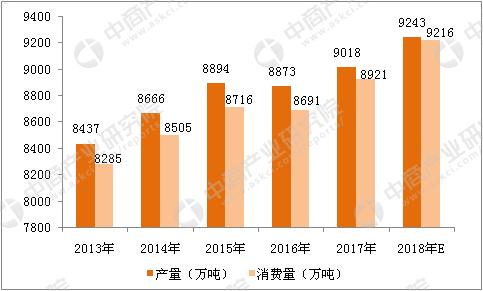
In recent years, chicken meat production and sales have shown a rapid upward trend. According to statistics from the United States Department of Agriculture, global chicken meat production has maintained steady growth, increasing from 65.55 million tons in 2006 to 90.18 million tons in 2017, with a compound annual growth rate of 3.24%. Global chicken meat consumption increased from 71.95 million tons in 2006 to 89.21 million tons in 2017, with a compound annual growth rate of 1.5%.
Global Chicken Meat Production and Consumption Trend Chart
Data Source: USDA, China Business Industry Research Institute
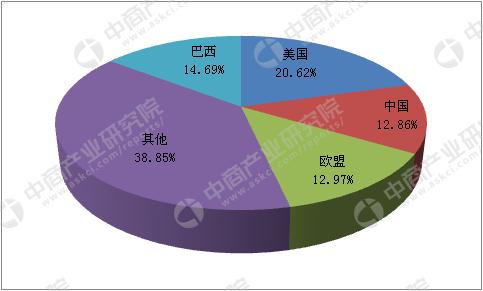
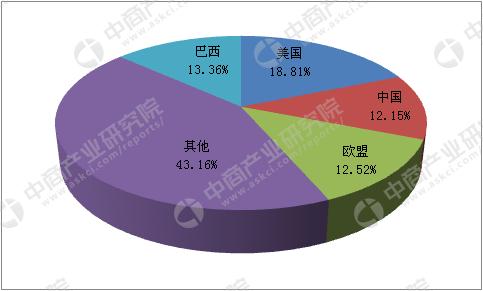
In terms of regional distribution, the world's top three chicken meat producing and consuming countries are the United States, China, and Brazil. The United States is the world's largest chicken meat producer. According to USDA statistics, in 2017, U.S. chicken meat production reached 18.596 million tons, accounting for 20.62% of global chicken meat production; China's chicken meat production reached 11.60 million tons, accounting for 12.86% of global chicken meat production; Brazil's chicken meat production reached 13.25 million tons, accounting for 14.69% of global chicken meat production. Brazil's chicken meat production surpassed China's in 2016, making it the second-largest chicken meat producer. In 2017, chicken meat consumption in the United States, China, and Brazil was 18.667 million tons, 12.05 million tons, and 13.252 million tons respectively, accounting for 18.81%, 12.15%, and 13.36% of total global chicken meat consumption.
Share of Chicken Meat Production of Major World Producers in 2017
Data Source: United States Department of Agriculture, China Business Industry Research Institute
Share of Chicken Meat Consumption of Major World Consumers in 2017
Data Source: USDA, China Business Industry Research Institute
Although global chicken meat production and consumption have generally shown an upward trend, the growth rate of chicken meat production and consumption has declined significantly in recent years. From 2009 to 2012, the average annual growth of chicken meat production and consumption was about 4%, but since 2013, the global growth rate of chicken meat production and consumption has dropped below 2%. Disease, especially the H7N9 epidemic, remains an important factor suppressing the growth of chicken meat production and consumption.
III. China's Chicken Meat Production and Consumption
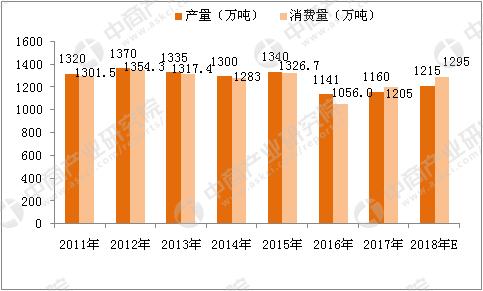
Starting from 2004, plagued by factors such as the H7N9 epidemic and rapidly rising costs, China's chicken meat production entered a period of steady development. Although the growth rate has slowed, the growth trend remains strong. From 2004 to 2012, China's annual chicken meat production and consumption continued to grow. Since 2013, affected by the epidemic, the Central Eight-Point Regulation, and other factors, annual chicken meat production and sales declined slightly but consistently remained above 11 million tons. Chicken meat production grew from 11.291 million tons in 2007 to 11.60 million tons in 2017; chicken meat consumption grew from 11.773 million tons in 2007 to 12.05 million tons in 2017. According to the "China Poultry Industry Development Report (2016)" published by the China Animal Agriculture Association, in 2016 the national commercial yellow-feathered broiler slaughter volume was approximately 3.907 billion birds. Based on an average slaughter weight of 1.5 kg per bird, approximately 3.81 million tons of yellow-feathered chicken meat could be produced (calculated at a 65% evisceration rate).
China's Chicken Meat Production and Consumption Trend Chart
Data Source: USDA, China Business Industry Research Institute
Due to the large number of dispersed participants in the farming industry, poultry prices exhibit obvious cyclical fluctuations with changes in supply and demand relationships: because of short rearing times, price increases drive up restocking enthusiasm, then small-scale farmers rapidly enter and engage in irrational restocking, uncontrolled slaughter volumes lead to oversupply, poultry prices fall, some small-scale farmers exit the industry at a loss, subsequent restocking enthusiasm is affected, supply decreases, thus forming a poultry price fluctuation cycle.
Taking broilers as an example, from 1999 to 2013 the broiler industry experienced approximately 4 cycles, each lasting about 2 to 3 years. From historical data, the growth rate of live yellow-feathered broiler slaughter volume experienced declines of varying degrees in 2001, 2004, 2006, and 2009. According to statistics from the China Animal Agriculture Association, chicken meat prices experienced increases of 23.33%, 35.21%, 72.22%, and 37.23% respectively during these periods; a reduction in chicken meat supply leads to an increase in chicken meat prices. Under the severe impact of the H7N9 epidemic, from April 2013 to early 2014, the yellow-feathered broiler industry suffered a major blow. Small and medium-sized farming enterprises with high farming costs and weak financial strength went bankrupt, and total yellow-feathered broiler production declined, prompting a market recovery from April to December 2014.
IV. Broad Prospects for the Domestic Chicken Meat Consumption Market
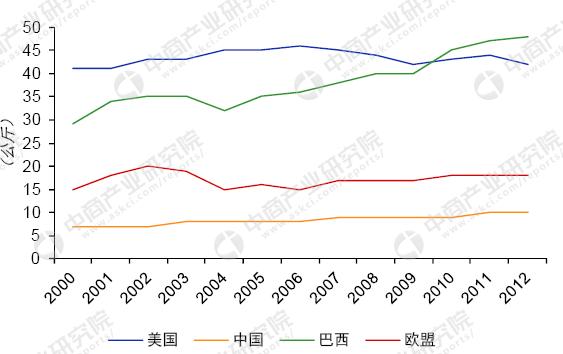
China ranks second in the world in total chicken meat consumption, but per capita consumption still lags considerably behind other major chicken meat consuming countries. China's per capita chicken meat consumption is only about 10 kg per year, while Taiwan, China, whose residents' dietary structure is closest to that of mainland residents, has reached about 28 kg per capita chicken meat consumption. Per capita chicken meat consumption in the United States and Brazil exceeds 40 kg per year. It is expected that China's future chicken meat market has significant growth potential.
Comparison Chart of Per Capita Chicken Meat Consumption in Major World Chicken Meat Producing and Consuming Countries
Data Source: USDA, China Business Industry Research Institute
V. Analysis of Key Enterprises in the Broiler Chicken Farming Industry
1. Guangdong Wens Foodstuff Group Co., Ltd.
Guangdong Wens Foodstuff Group Co., Ltd. (abbreviated as "Wens"), founded in 1983, has developed into a cross-regional modern agriculture and animal husbandry enterprise group with livestock and poultry farming as its main business and supporting related operations. On November 2, 2015, Wens was listed on the Shenzhen Stock Exchange.
As of December 31, 2016, Wens had 239 holding companies, 58,600 cooperative family farms, and more than 49,000 employees across more than 20 provinces (municipalities and autonomous regions) nationwide. In 2016, it marketed 17.13 million head of hogs, 819 million broiler chickens, and 26.26 million ducks, with total sales revenue of 59.4 billion yuan.
2012-2017 Revenue Statistics of Guangdong Wens Foodstuff Group Co., Ltd.
Data Source: China Business Industry Research Institute
2. Fujian Sunner Development Co., Ltd.
Fujian Sunner Development Co., Ltd. is a listed company on the Shenzhen Stock Exchange, with the stock abbreviation "Sunner Development." The company has focused on white-feathered broiler production for more than thirty years and is the most modernized, highest quality, and largest integrated enterprise in the domestic industry, combining feed processing, grandparent and parent-stock breeder farming, hatching of breeding eggs, broiler rearing, and broiler slaughtering and processing.
With a complete integrated full-industry chain, the company has achieved traceability of food safety, and relying on excellent quality and stable supply, it has become a long-term strategic partner of KFC, the only Chinese domestic chicken meat supplier for McDonald's, the designated chicken meat supplier for the 2008 Beijing Olympics, the 2010 Shanghai World Expo, the Guangzhou Asian Games, the 2011 Shenzhen Universiade, the 2015 First National Youth Games, and the 2016 G20 Summit, as well as an important chicken meat supplier for food processing enterprises and large supermarkets such as Shuanghui, Totole, Anjoy, Hi-Party, Walmart, Metro, China Resources Vanguard, Century Lianhua, and Yonghui.
In 2016, the company was the first in the industry to usher in the Agriculture 4.0 era, planning to invest 1 billion yuan over 3 years to implement the Agriculture 4.0 system, achieving intelligent management, automated production, systematic food safety, and standardized environmental protection and fire safety, making the company one of the world's most advanced broiler production enterprises in production and operations management. In 2016, the company achieved revenue of 8.340 billion yuan, a year-on-year increase of 20.19%; net profit of 679 million yuan, turning profitable from a loss year-on-year, compared with a loss of 388 million yuan in the same period of the previous year; basic earnings per share were 0.6115 yuan. Sunner Development stated in its announcement that the substantial improvement in operating performance in 2016 was mainly due to rising volumes and prices of chicken meat products, declining feed costs, improved production efficiency, and reduced financial expenses.
2012-2017 Revenue Statistics of Fujian Sunner Development Co., Ltd.
Data Source: China Business Industry Research Institute
3. Shandong Minhe Animal Husbandry Co., Ltd.
Shandong Minhe Animal Husbandry Co., Ltd. was formerly the Shandong Penglai Improved Breed Broiler Demonstration Farm of the Ministry of Agriculture. It was founded in 1985 and restructured in 1997. It has been successively recognized as a National Key Leading Enterprise in Agricultural Industrialization, a National Agricultural Standardization Demonstration Zone, a National Export Chicken Meat Standardization Demonstration Zone, a National Outstanding Animal Husbandry Enterprise, one of the first batch of National Broiler Chicken Highly Pathogenic Avian Influenza-Free Biosecurity Isolation Zones, Vice Chairman Unit of the China Animal Agriculture Association, Vice Chairman Unit of the White-Feathered Broiler Alliance, and Vice Chairman Unit of the National Livestock and Poultry Farming Waste Resource Utilization Technology Innovation Alliance. In May 2008, the company's stock was successfully listed on the Shenzhen Stock Exchange, and Minhe became the first listed company in China's white-feathered broiler industry.
Currently, the company has 54 production units including breeder farms, hatcheries, feed mills, commercial chicken bases, food companies, import and export companies, and biotechnology companies. It currently has 3.3 million sets of parent-stock broiler breeders, hatches more than 300 million commercial broiler chicks annually, annually slaughters more than 30 million self-raised commercial broilers, annually slaughters and cuts more than 60,000 tons of various chicken meat products, has a feed production capacity of 400,000 tons, generates more than 20 million kWh of biogas power annually from manure, annually purifies 15 million cubic meters of biogas into biomethane, and annually produces 50,000 tons of solid bio-organic fertilizer and 160,000 tons of organic water-soluble fertilizer. The company has initially established a relatively complete circular industry chain centered on parent-stock broiler breeder farming and commercial broiler chick production and sales, integrating broiler farming, slaughtering and processing, and resource development and utilization of organic waste, achieving automated, intelligent, factory-based production and intensive management, and advancing toward modern animal husbandry with ecological balance, safety and environmental protection, and high quality and high yield.
In 2016, the company achieved operating revenue of 1.409 billion yuan, an increase of 56.38% over the previous year; net profit attributable to shareholders of the listed company was 154 million yuan, an increase of 148.74% over the previous year. Basic earnings per share were 0.51 yuan, a year-on-year increase of 149.04%; weighted average return on equity was 16.13%, a year-on-year increase of 46.63 percentage points.
2012-2017 Revenue Statistics of Shandong Minhe Animal Husbandry Co., Ltd.
Data Source: China Business Industry Research Institute
VI. Development Trends of the Broiler Chicken Farming Industry
Over the past decade, China's broiler chicken industry has experienced multiple rounds of price cycles, with pronounced price volatility characteristics. The industry competition landscape is trending toward the following aspects:
1. Accelerated Resource Integration Among Large Enterprises in the Industry
In recent years, due to policies on large-scale farming and intensive land use as well as industrial development requirements, the concentration of the broiler farming segment has shown a trend of gradual increase. From the perspective of the entire industry chain, the higher up the broiler farming industry goes, the higher the concentration, i.e., the concentration of grandparent broiler breeder farming is greater than that of parent-stock broiler breeders, and the concentration of parent-stock broiler breeder farming is greater than that of commercial broilers. Specifically for the white-feathered broiler industry, grandparent broiler breeder farming enterprises, after more than a decade of fierce market competition, have consolidated from 40 in 1994 to 10 in 2015. According to the "China Poultry Industry Development Report (2015)," as of 2015, China had 10 enterprises that introduced grandparent white-feathered broiler chicks from abroad, among which the top 3 enterprises by introduction volume had a market share of 60.11%. The parent-stock broiler breeder farming industry, after experiencing the H7N9 epidemic, raw material price increases, load restrictions, and national macroeconomic regulation, is in a consolidation phase, shifting in scale from small enterprises to large and medium-sized enterprises, gradually achieving large-scale and intensive production. The proportion of large-scale commercial broiler farming has been continuously rising, from 67% in 2003 to over 90% in 2014 (according to China Animal Husbandry Yearbook data, large-scale is defined as annual slaughter of more than 2,000 birds), but the degree of market concentration is low, with the top ten enterprises accounting for less than 25% of production. For the yellow-feathered broiler industry, as the state gradually strengthens product quality and safety supervision of the food processing industry and increasingly strict requirements are imposed on animal epidemic prevention and product quality and hygiene, yellow-feathered broilers are shifting from live poultry sales to slaughtering and processing, also trending toward standardization and concentration. As large numbers of small and medium-sized enterprises or small farmers are forced to exit industry competition during profit fluctuations, and large enterprises expand through models such as "company + farmer (or family farm)" or "company + base + farmer (or family farm)," extend industry chains, and strengthen strong-strong alliances among large enterprises, the trend of increasing industry concentration is obvious, and the market share of regional leading enterprises is growing larger. Currently, the industry is in a stage of resource integration. The key competitive points for enterprises at this stage are reflected in capacity expansion speed, cost control capability, and food safety control capability, among which expansion speed will be the prerequisite basis for seizing the market in the future.
2. Integrated Operations Leading to Expanded Business Competition Areas
As market prospects continue to improve and the industry develops rapidly, domestically strong parent-stock yellow-feathered broiler breeder
and commercial yellow-feathered broiler farming enterprises are gradually extending downstream into slaughtering and processing operations, and large broiler slaughtering and processing enterprises have also begun extending upstream, with some enterprises also starting to engage in broiler farming operations. Compared with integrated operations, businesses concentrated in a single segment such as yellow-feathered broiler breeder farming, commercial yellow-feathered broiler farming, or slaughtering and processing are more susceptible to factors such as raw material prices, disease, market conditions, and consumer psychology, experiencing cyclical or sudden fluctuations. Especially when facing sudden events such as the H7N9 epidemic, large integrated enterprises, relying on strong financial strength and comprehensive disease prevention mechanisms, can effectively mitigate risks and achieve long-term stable development; whereas free-range farmers often choose to exit after severe losses, or join the "company + farmer (or family farm)" model, further promoting the improvement of industry scale. Integrated operations, while expanding enterprise scale, effectively integrate and eliminate risks within the industry chain, avoid fluctuations in enterprise performance, and enhance the stability and safety of enterprise operations. This expansion model has led to a shift in the competition faced by large yellow-feathered broiler farming and slaughtering and processing enterprises from single-segment competition to integrated operation competition.
3. Industry Leaders Adjusting Business Direction and Advancing Transformation and Upgrading
The yellow-feathered broiler industry is a distinctive industry in China's poultry farming and has become one of the fastest-growing industries in China's animal husbandry development in recent years. However, the processing proportion of yellow-feathered broiler products in China is relatively low. According to the "China Poultry Industry Development Report (2014)," live chicken products always occupy a dominant position, accounting for about 85%, chilled chicken products account for only about 5%, and the remaining 10% are frozen chicken, gift boxes, and deeply processed products. Because the operating performance of broiler farming enterprises is easily affected by factors such as the macroeconomic situation, cyclical supply and demand changes in the industry, animal epidemics, and industrial policies, showing significant fluctuations, especially from April 2013 to early 2014, when affected by the H7N9 epidemic, the yellow-feathered broiler industry, dominated by live chicken sales, fell into deep difficulties, and yellow-feathered broiler prices only recovered after the industry substantially reduced production. At this point, many enterprises in the industry have recognized that they need to transform in line with the national trend of vigorously promoting chilled fresh product marketing and the gradual shift in consumer attitudes. Therefore, some large-scale enterprises, taking advantage of the rapid development of e-commerce, are vigorously developing chilled fresh products, continuously improving quality, striving to build chilled fresh brands in the industry, expanding influence and visibility, hoping to add new profit growth points and enhance risk resistance through the development of chilled fresh products.