Why should the scale of bamboo rat farming be moderate?
Based on what I have learned over my 8 years of bamboo rat farming, during the process of buying back bamboo rats from farming households, during on-site technical services, and during visits to farming households, most of the farmers making money keep between 30 and 300 female rats, and only very few households can still make money at 500 breeding female rats. Companies are not discussed here; this is mainly about families, and these are all personal opinions.
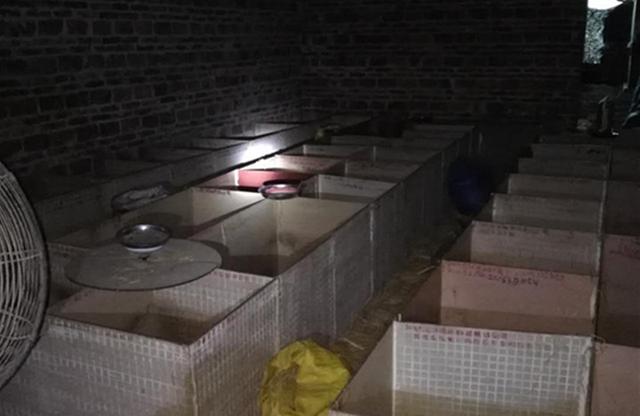
A farmer in Mashan used his newly built house, using all three floors for bamboo rat farming. The husband and wife keep 230 female rats, and adding more already feels quite tiring.
Many family farming households, when keeping 50 breeding female rats, have very high survival rates and breeding rates, so they expand to 200 breeding female rats. At that point the survival rate and breeding rate drop sharply, and they end up with only a little more than with 50 breeding female rats, far below what they expected at the time. After a year or two of adjustment, keeping 100 female rats is best and most moderate, and the benefits are also at their highest.
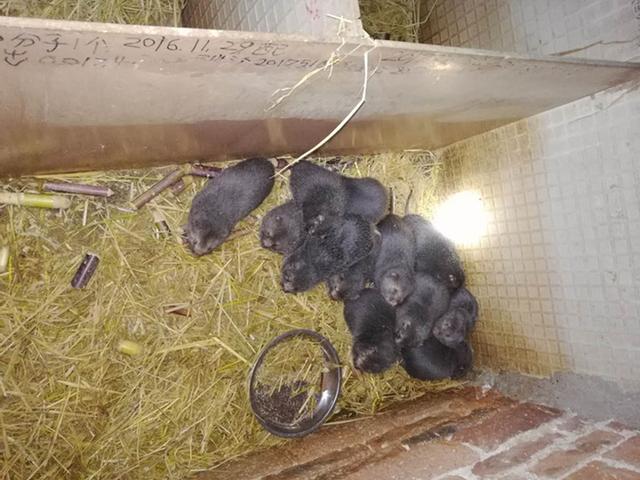
Boss Yang in Fujian once kept more than 1,000 bamboo rats at most, and now keeping around 500 gives the best benefits.
Therefore, for family farming households raising bamboo rats, the scale cannot be very large, and the pace of development should not be too fast. I believe family farming households must keep the scale "moderate." At present, the most profitable situation for family farming households is an average farming scale of around 80 female rats. (This is not very precise data, but the deviation will not be too large.)
Scale is a relative concept. Boss Huang, who is white, can keep 250 female rats by himself, with annual income of around 120,000 yuan. Boss Ou in Chongzuo, a husband and wife, keeps 150 female rats, with annual income of around 100,000 yuan. Boss Huang in Nanning keeps 80 female rats, with annual income of around 50,000 yuan. Of course, many families also keep 20 to 30 female rats, with annual income of around 20,000 yuan. I do not want to raise more; I just keep this many. I still have many other things and other leisure activities, and raising too many is too tiring. Family bamboo rat farming is not a case of the bigger the better; it should be limited to the range a family can manage. If the number of bamboo rats exceeds one's own management capacity, then both resource utilization and economic benefits may decline.

Boss Huang in Baise keeps 250 female rats by himself and feels it is still manageable.
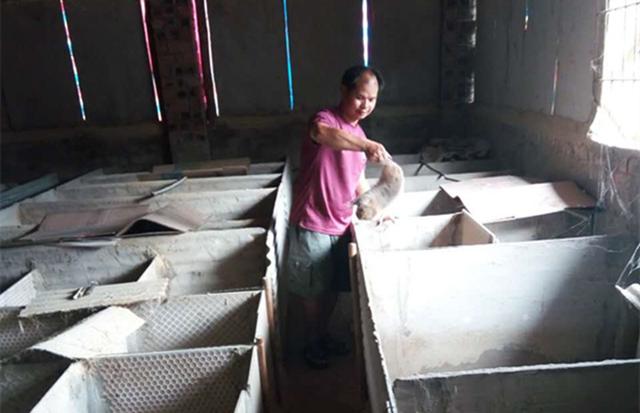
Boss Ou in Chongzuo, a husband and wife, keeps 150 female rats and does not want to add more.

Boss Huang in Nanning keeps 50 female rats and plans to expand.
Factors affecting the scale of family bamboo rat farming
1. How many laborers a single-person household has
2. How capable the laborers are
3. How easy it is to obtain resources (such as land resources, bamboo rat roughage resources, etc.)
4. The degree of standardization of the bamboo rat farm
Of course there are some other reasons, but these are the main ones.
Family farming must be at a "moderate" scale. It is crucial to clearly know how many your family can raise, and do not blindly pursue scale.
Editing: Xia Zhihua