A detailed explanation of the standardized crayfish farming process; anyone who wants to farm crayfish, come and learn
Recently many friends have asked about the standardized process for crayfish farming. Actually, I shared this quite a while ago. Today I have re-edited the previous article. If any friends are unclear about it, you can learn about it again.
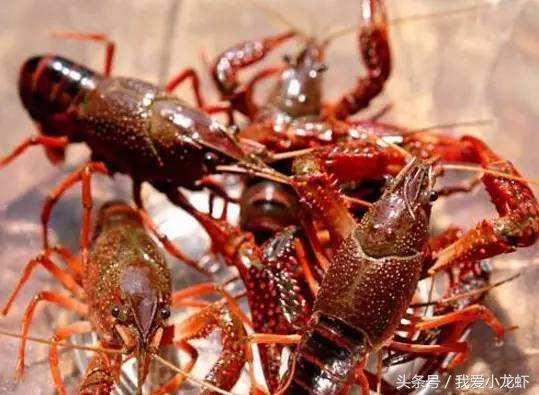
Crayfish farming process:
I. Choose a suitable pond site
For crayfish farming, you must carefully select the pond site. Generally, loam soil is best, as it makes it easy for crayfish to burrow and helps the pond retain water. Convenient water intake and drainage are the main considerations, and the surroundings should be kept as far away from pollution sources as possible.
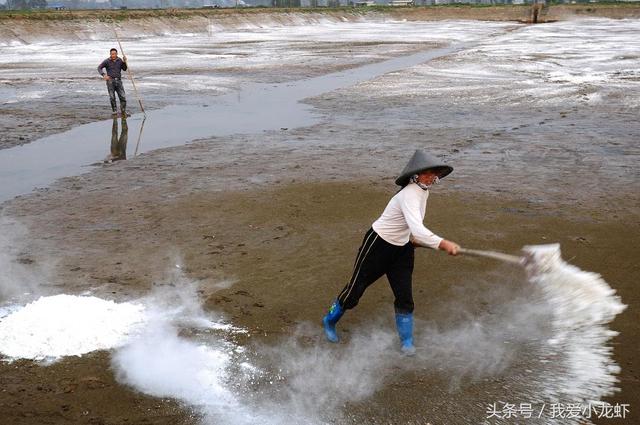
Disinfection with quicklime
II. Disinfection and fertilizing the water
A newly built crayfish pond must be thoroughly disinfected, otherwise it will be very troublesome later. We generally use quicklime for dry pond disinfection. In addition, newly dug crayfish ponds need water fertilizing and plankton cultivation. There are many related products on the market, with varying effects, so you need to pay attention when choosing them.
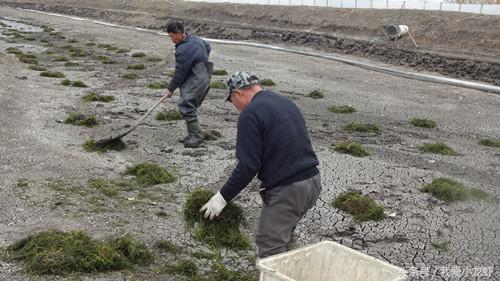
Aquatic plant planting
III. Plant the relevant aquatic plants for crayfish farming.
There are many aquatic plants suitable for crayfish farming, such as Elodea, Hydrilla verticillata, Vallisneria, and wild rice stem. You can choose one or several to plant in combination. The coverage of aquatic plants should be about 50% of the entire water surface.
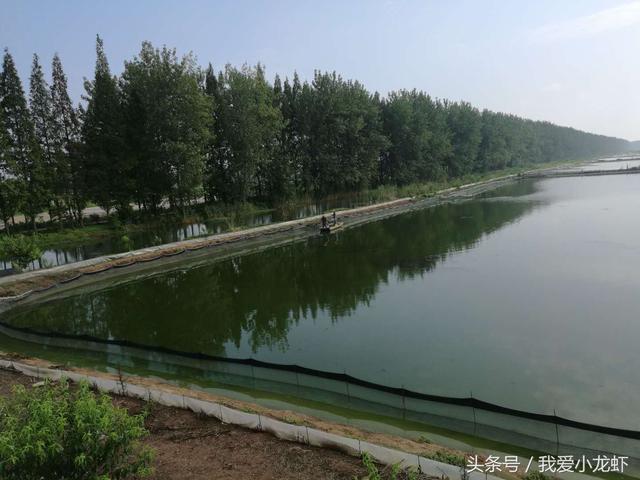
A corner of the Xueyuan crayfish farming base
IV. Prevent escape
Crayfish have the habit of escaping by swimming against the current and by climbing onto shore. Surrounding nets should be installed around the pond as escape-prevention facilities. At the same time, the embankment should be widened to prevent crayfish from burrowing through the embankment and escaping. Crayfish burrows range in depth from 30cm to 100cm, so it is best for the embankment to be about 1.5m wide.
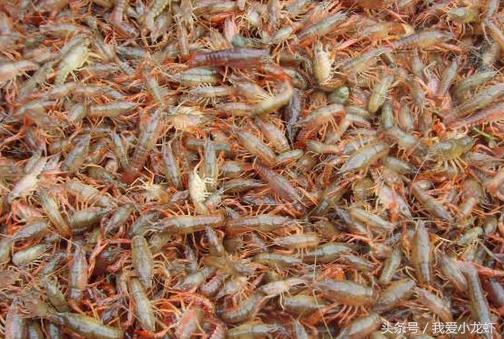
Premium crayfish fry
V. Fry selection and stocking
Choose suitable high-quality crayfish fry for stocking. This is because it affects the later survival rate of the fry, reproductive capacity, and the size of the adult crayfish. Everyone understands the principle that you reap what you sow. If the quality of the crayfish fry is poor, it can easily lead to failure in later farming. However, at present, no company on the market has bred a new variety. Some even claim that their per-mu yield can reach several thousand jin. At present, for the whole year, the total crayfish yield, for those who farm well, is only seven to eight hundred jin, generally five to six hundred, and for poor results, two to three hundred. So when purchasing fry, you must keep your eyes open.
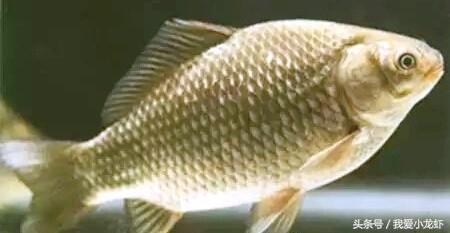
VI. Choose suitable products for polyculture
Carnivorous fish must not be farmed in polyculture ponds, and grass carp, bream, and other fish that feed on aquatic plants should not be stocked in excess. Species that can be polycultured include silver carp, bighead carp, allogynogenetic crucian carp, river crab, and freshwater shrimp. You can choose suitable polyculture species according to local conditions. Comprehensive farming can increase farming income, and it can also effectively improve water quality. When polyculturing, pay attention to the stocking time of crayfish fry and fish fry, as well as disease prevention during the farming process.
VII. Feed application
In the crayfish farming process, farmers increase feed application in order to obtain more harvest and farming profit. But when the amount applied exceeds the amount crayfish consume, the feed spoils in the pond, pollutes the water quality, and causes crayfish to become sick or grow slowly. For feed feeding, the amount applied is generally 6% of the weight of the crayfish present in the pond. During the growth process, crayfish molt 11 times, so calcium intake also has certain requirements. Mussel shells can be ground into powder, mixed into the feed, and applied together. Crayfish are omnivores. Among crayfish food, green grass accounts for 80%, so the amount of aquatic plants in the pond must be sufficient. This not only helps purify water quality, but is also the main source of food for crayfish.
VIII. Prevention of related diseases
Crayfish have few diseases and generally do not become sick. If disease occurs, treat it according to the symptoms. For disinfection and sterilization, use chlorine dioxide; for ciliates and similar organisms, use zinc sulfate. Polyester-based and organophosphorus drugs are prohibited. Common crayfish diseases also include gill rot disease, black gill disease, tail rot disease, and ciliate disease. Once a month, you can persist in applying quicklime once, at 20 kg per mu. This can both improve water quality and increase calcium in the water body, promoting crayfish molting.
IX. Water quality conditioning
Water level management should be managed according to the principle of "shallow-deep-shallow-deep" based on seasonal and temperature changes, that is, grasp the principle of "shallow in spring, full in summer." In addition, water should be changed and replenished in a timely manner. When conditions permit, machines can be added to promote the flow of upper and lower water layers and make full use of oxygen produced by aquatic plants to improve the oxygen content of the water body.
X. Timely sales
In our crayfish farming, purchases are generally made on site, and later logistics and transportation are rarely involved. But if some farming friends plan to develop crayfish farming into an industrial chain, they can also continue to follow and learn about crayfish transportation and preservation. Regardless of which aspect, we should all pay attention to when crayfish prices are high and when prices will decline, so that we can let crayfish leave the pond for sale at the appropriate time. According to a China crayfish research report, crayfish generally just come onto the market in March and April, when prices are relatively high. But as crayfish are listed one after another, prices generally fall back in July, August, and September. Entering October, as crayfish production declines, prices will rise further. Farming friends can appropriately adjust the time for crayfish to leave the pond to obtain the best sales price (note: the premise is mastering the relevant techniques, otherwise please proceed cautiously with off-season sales).