Raising peacocks in rural areas: this way you can make at least 200,000 a year
1. Site and housing
Peacocks are timid and easily startled. They require a quiet environment and a clean, dry site. Any noise or sudden high-frequency sound will cause the flock to panic and stampede, and they will utter frightened calls: if startled during the laying period, the laying rate and fertilization rate will immediately drop. The site for raising peacocks should be chosen on dry terrain in a quiet environment. The structure of the enclosure should mainly take into account good lighting, a dry enclosure and ample activity space. On average, each breeding peacock needs about 8 sq m of activity area, of which 1/3 is shaded from sun and rain, and 2/3 is open-air exercise yard. Fish netting is laid over the area at a height of 2.5 m above ground. The enclosure is surrounded with iron netting or dense bamboo strips as fencing; below 1 m above the ground it is best to use iron netting. The frame of the enclosure can be made of angle iron, water pipes, etc. according to the required specifications. In the exercise yard, about 1.3 m above ground, a horizontal perch bar (iron or bamboo/wood) is set up for the peacocks to roost on. To keep the enclosure dry and provide conditions for peacocks to take sand baths, the exercise yard should be covered with a 3-5 cm thick layer of coarse sand. Fruit trees can also be planted outside the exercise yard for shade.
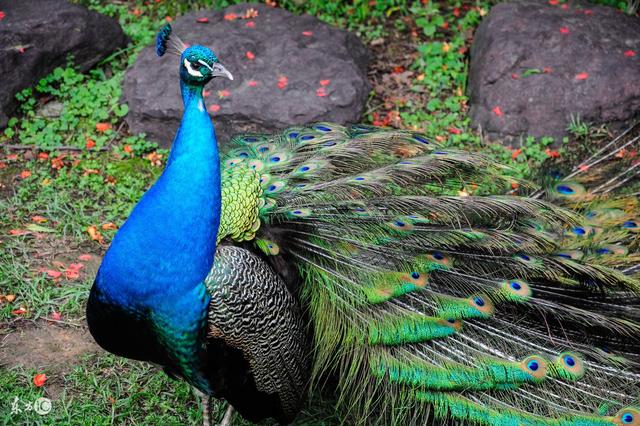
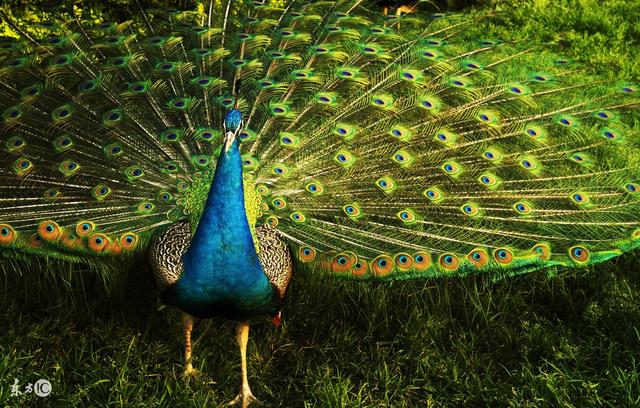
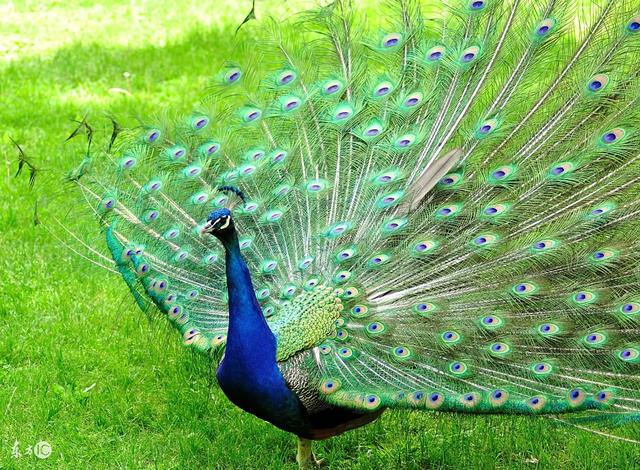
2. Feeding management
Peacocks are large in body size, have a vigorous metabolism, and full, colorful, gorgeous plumage. The tail coverts of the male peacock reach 1.1 m in length, and the main wing feathers reach 35 cm long and 6 cm wide. In feeding, we must satisfy these characteristics of theirs.
Peacocks are omnivorous and can be fed roughage. They widely eat legume seeds, poultry eggs, insects, etc. During the laying period, we mainly use breeder hen feed, supplemented with wheat, corn, sorghum, peas, mung beans, bamboo beans, etc., and also supplement a small amount of animal-based feed such as yellow mealworms and duck eggs (cooked). At the same time, the enclosure should be kept dry and clean at all times, with sufficient drinking water and health sand. In addition, a small amount of chopped green feed should be given every day, such as Chinese leek and elephant grass.
Adult male peacocks weigh about 4.5-5.5 kg, and female peacocks 4-4.5 kg. The average daily feed intake is about 250 g. The crude protein of the daily ration is about 18%-20%, and the energy per kg of feed is 2800-3000 kcal.
Peacocks are gentle in temperament, but beware that individual male peacocks may be fierce and often hostile to strangers or keepers. Special attention must be paid to such peacocks injuring people with their claws and beaks.
To make the breeding peacocks grow strong and healthy, deworming should be carried out once before winter each year, and early the following year select breeders and divide them into groups and inject Newcastle disease vaccine strain I.
3. Mating and reproduction Under normal conditions, breeding peacocks raised to 22-24 months of age can begin laying. The laying period is from March to August. Generally, laying begins around the lunar solar term "Awakening of Insects" each year, and each female peacock can lay 28-35 eggs. To ensure the fertilization rate, the male-to-female ratio should be kept at 1:2-3, that is, each enclosure can only keep one male peacock and 2-3 female peacocks. Two male peacocks cannot be kept in the same enclosure at the same time; otherwise, during the mating period, the males will fight each other over mating, affecting fertilization. The best service life of peacocks is 5-6 years. If the period is too long, the fertilization rate of breeding eggs decreases year by year.
Peacocks mainly mate at 8-9 a.m. and 4-5 p.m. each day. Before mating, the males compete in spreading their tails and displaying their splendor, while the females make clucking sounds as courtship signals. At this time, the environment should be kept quiet and onlookers should be prohibited. Egg laying mainly occurs between 17:00 and 21:00 each day, mostly in the sandy soil in the shaded corner of the enclosure, where they scratch a small nest with their claws to lay eggs, or old automobile tires with some straw placed in the middle can be used as artificial nests to train the peacocks to lay eggs. To reduce contamination of breeding eggs, eggs should be collected several times before 22:00 at night.
4. Incubation
Artificially raised peacocks have poor broodiness and low incubation ability. When the number raised is small and the number of eggs is not large, broody hens can be used for incubation. Because peacock eggs are relatively large (each weighing 100-110 g), each large hen can incubate 3-4 eggs. During incubation, manual help should be given to turn the eggs twice a day. They hatch after 27 days of incubation, and the hen can also be used to brood the chicks at the same time.
When a large number of peacocks are raised and there are many eggs, an incubator is used for incubation. Breeding eggs within 5 days after laying should be disinfected promptly and placed in the incubator. The incubator temperature is kept at 37.5°C and the relative humidity at 65%-70%. The general incubation time is 27 days.
Peacock eggs are large and thick-shelled. This is the result of peacocks' natural selection, which makes the egg temperature less likely to dissipate and the eggs less likely to break during natural incubation, helping them reproduce in the wild. When we raise them artificially using incubators, we must ensure that the incubated eggs are evenly heated. In the early stage of incubation, the eggs must be turned once every hour. This helps the eggs be heated evenly and the embryos develop normally, and is also an important practice to prevent the embryos from sticking to the eggshell. Embryonated eggs incubated to 25 days are transferred into the hatcher, with the temperature kept at 37°C and the humidity at 75%.
For chicks that have pipped at 27 days of incubation but are unable to break out of the shell, manual "assistance" should be given: carefully peel open the eggshell along the pipping line to help the chick emerge. After hatching, the chicks are left inside the machine until their down is slightly dry before being moved out.
Incubation requires people on duty in shifts, and various records should be kept well. The temperature and humidity should be adjusted appropriately according to changes in temperature and weather.
5. Brooding After hatching, the chicks are placed in a brooder box. Within 1-3 days, the temperature should be kept at 30-31°C. At one week of age, the temperature should be kept above 28°C. For first feeding, give 0.4% potassium permanganate water, then feed chick starter feed and yellow mealworms. Chicks very much like eating yellow mealworms. After 1 week of age, put them into tiered cages for brooding (three tiers), with brooding cages measuring 100 x 70 x 40 cm. At 1-2 weeks of age, raise 10 chicks per compartment; at 3-4 weeks of age, 6-8 per compartment; at 5-8 weeks of age, 5 per compartment; after 8 weeks of age, transfer them to growing peacock enclosures, raising 10-12 per enclosure.
During brooding, a disinfected burlap piece should be placed at the bottom of the cage and changed frequently to keep it clean and dry. Feed and water should be supplied all day in the troughs and waterers. Compound vitamin B liquid should be appropriately added to the drinking water. Yellow mealworms should be supplied regularly every day. After 8 weeks of age, green feed should gradually be supplied. At 5 weeks of age, drinking-water immunization with Newcastle disease vaccine strain IV should be carried out once.
6. Raising of young peacocks After chicks reach 8 weeks of age, they are placed in growing peacock houses for rearing, with each enclosure about 30 sq m, raising 10-12 young peacocks. The ground of the enclosure is covered with 3-5 cm of coarse sand to keep the enclosure dry and provide sand baths. Initially feed grower chicken feed, gradually add seeds and legumes, supplement a little cooked duck egg or yellow mealworms every day, provide chopped green feed once a day, and place health sand in the enclosure.
After young peacocks are raised until after autumn, at about 6 months of age, if used for meat, appropriate fattening can be carried out. After slaughter, the carcass is attractive, light yellow in color, with thick muscle layers and tender muscle fibers. The dressing percentage is 75%, and each peacock consumes about 15 kg of feed on average, with a meat-to-feed ratio of about 1:4. When young peacocks are raised to about one and a half years, they gradually mature. At this time, selection and matching work should be carried out, choosing individuals with normal growth and development, good health, strong legs, and moderate pubic bone spacing as reserve breeders, while also considering the arrangement of the crest feathers and the color condition of the neck feathers and chest feathers. The male-to-female ratio is 1:2-3 per group, kept in fixed enclosures until laying. At this time, energy feed should be appropriately controlled to avoid fat deposition, which would affect breeding.