A Guide to Buying Farmed Shrimp and Pangasius: How to Pick High-Quality Farmed Seafood
Science Corner (Part 2)
What Exactly Is the Difference Between White Shrimp from Different Origins?
Do You Know the World's Three Major Farmed Penaeid Shrimp?
Are Pangasius Fillets and Tilapia Fillets the Same Kind of Fillet?
What Do MSC Certification and BAP Certification Mean?
Why Is Australian Beef So Popular with Consumers?
1. White Shrimp from Different Origins
What Exactly Is the Difference?
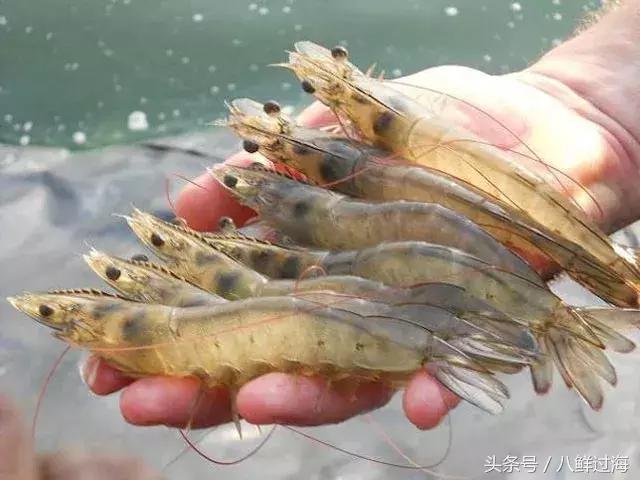
Don't underestimate that familiar white shrimp on your plate. For the sake of a single white shrimp's quality, not one step can go wrong, from seed stock, feed, water and management.
A: Ecuadorian Whiteleg Shrimp (Penaeus vannamei)
Keywords: Good water makes good shrimp
Ecuador is a representative of high-quality waters. Its environment, whether water quality or air, is of excellent quality.

The surrounding environment of Ecuador
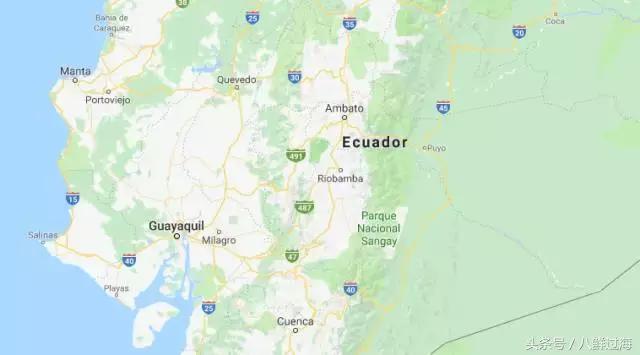
Ecuador is located in northwestern South America
Whiteleg shrimp (Penaeus vannamei) originated in the warm waters of the eastern Pacific, from Sonora in Mexico south to northern Peru. Wild whiteleg shrimp are mostly concentrated in the coastal waters of Central America, with a particularly high density along the coast of Ecuador! Ecuador is both an equatorial country and home to wild shrimp, which is the most direct and powerful proof that its water quality is good and suitable for farming whiteleg shrimp.
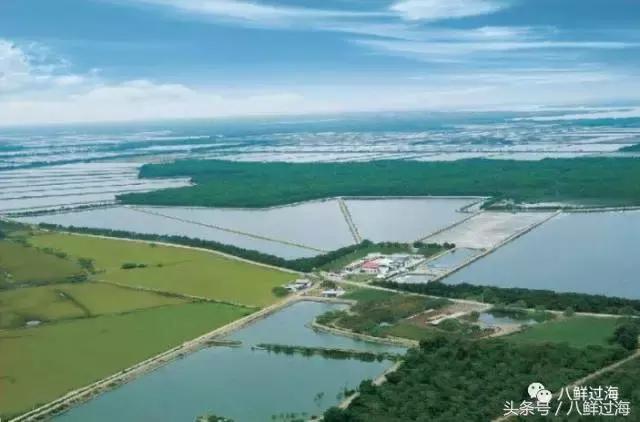
Aerial view of whiteleg shrimp farming waters in Ecuador
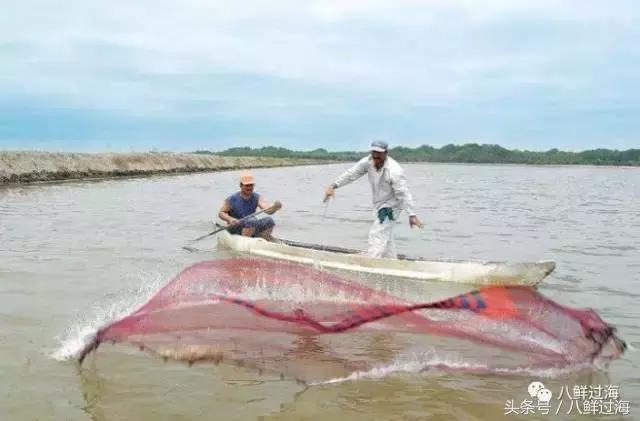
Farmers casting nets to harvest whiteleg shrimp

Workers washing the farmed whiteleg shrimp
Emperor Fresh suppliers go deep into the place of origin in Ecuador to inspect local white shrimp processing plants
Workers boxing and weighing the white shrimp
After processing, the white shrimp are frozen, boxed and stored in the warehouse awaiting export
B: Thai Whiteleg Shrimp (Penaeus vannamei)
Keywords: High management standards
Thai whiteleg shrimp farmers place great emphasis on disease prevention.
a. Regular environmental assessment of pond construction sites ✓
b. Thorough desilting and disinfection of shrimp ponds ✓
c. Strict water quality management, generally equipped with aerators ✓
d. Feeding high-quality compound feed ✓
e. Strict handling of disease-affected shrimp ponds ✓
f. And following the American SPF farming method ✓
Thailand's farming waters
Lab technicians regularly check water quality
C: Zhanjiang Whiteleg Shrimp (Penaeus vannamei)
Keywords: Good feed, everything tastes great
Zhanjiang is the shrimp capital of China! The shrimp feed industry is developing toward conglomeration, with fierce competition ensuring a certain level of quality and safety; feed product technology is at the international leading level.
Farming waters in Zhanjiang, Guangdong
When water temperature drops below 18°C, whiteleg shrimp reduce feeding and grow slowly; below 15°C they stop feeding, which is detrimental to farming growth. Whiteleg shrimp is the backbone species of China's shrimp farming industry, accounting for 73% of the country's total shrimp. The development of intensive farming. One in every 7 shrimp in the world comes from Zhanjiang.
2. White Shrimp, Blue Shrimp, Black Tiger Shrimp
Are They Different Only in Color?
Of course not! Whiteleg shrimp and black tiger shrimp are the world's most famous farmed penaeid shrimp, while Mexican blue shrimp is an emerging farmed variety that has risen in recent years.
A: Whiteleg Shrimp (Penaeus vannamei)
Whiteleg shrimp (Penaeus vannamei) (mentioned above) is Penaeus vannamei. Whiteleg shrimp (Penaeus Vanmamei), with the Latin scientific name Penaeus vannamei Boone, is also called Whiteleg Shrimp. It belongs to the phylum Arthropoda, order Decapoda, family Penaeidae, genus Penaeus. Whiteleg shrimp is divided into two parts, the cephalothorax and the abdomen. The body is translucent, and the chitinous shell forms the exoskeleton, which is pale bluish, with no obvious stripes. The large antennae are grayish-blue, the heart is dark black, and the walking legs are often deep white, hence the name Whiteleg Shrimp. The cephalothorax is short, with a ratio to the abdominal trunk of about 1:3. The body is long and laterally compressed, slightly spindle-shaped, with a maximum length of 23cm. It is a euryhaline and eurythermal shrimp species.
Research shows that whiteleg shrimp contains 18 amino acids, conforming to the FAO/WHO ideal pattern. Whiteleg shrimp is rich in polyunsaturated fatty acids (PUFA), accounting for 41.65% of total fatty acids. It is rich in VA, VD, VE and VB2, VB6, and among mineral elements, Ca, Fe, Zn and Se are also abundant. Whiteleg shrimp has good nutritional and health value.
Stir-fried noodles with whiteleg shrimp
B: Brunei Blue Shrimp
So Its Ancestor Was the "Mexican Blue Shrimp"
Brunei blue shrimp, scientific name Mexican blue shrimp, Latin scientific name: Penaeus vannamei Boone. Its wild original stock comes from the waters of Panama. After long-term domestication and selection by the Hawaii Institute of Marine Biology in the United States and Brunei's national laboratory, a Mexican blue shrimp suitable for artificial farming was bred. Because Brunei is located in the equatorial windless zone, with good weather year-round and waters free from industrial and agricultural pollution, it is very suitable for farming Mexican blue shrimp. In 1999, Brunei began large-scale farming of blue shrimp, and Brunei has now become one of the world's major countries for farming blue penaeid shrimp.
Brunei blue shrimp farming base
Brunei has very high requirements for blue shrimp farming. Blue shrimp live in 1.5-meter-deep farming ponds (in China, mostly 3 meters deep, high-density farming), with an average of only 10-15 blue shrimp per square meter of water. They enjoy a spacious, pollution-free living environment.
Workers catching blue shrimp in the water
What really attracts people to try blue shrimp is its outstanding credentials. Because it is the world's first aquatic product to pass the dual certification of ISO22000 and HACCP fresh shrimp product management safety. (Applause here)
Emperor Fresh suppliers inspect a blue shrimp farm in Brunei
Enterprises under the Brunei government have farmed blue shrimp for more than ten years, not only with no record of any virus outbreak, but also becoming the shrimp of choice for the oil-rich yet picky Bruneian royal family.
A corner of the magnificent Bruneian royal palace
Sorting into boxes
Brunei blue shrimp is a green organic certified ingredient, free from antibiotics, preservatives and heavy metal contamination, and is rich in nutrients. In addition to being rich in zinc, magnesium, calcium and phosphorus, every 100g of shrimp contains 20.22g of protein, while fat is only 0.22g, and total amino acid content is as high as 17.47g. (Writing this, Sister Eight Fresh could no longer resist and was about to place an order to try it)
Brunei blue shrimp in the Emperor Fresh series
Cooked blue shrimp turn purplish
C: Malaysian Black Tiger Shrimp
Big in size, high in appearance value, and there are wild stocks too
Black tiger shrimp refers to grass shrimp (Penaeus monodon), also called giant tiger prawn, commonly known as black tiger shrimp, ushi ebi (ウシエビ), English name Giant tiger prawn. It belongs to the genus Penaeus. It is distributed in the Indian Ocean and Pacific Ocean, east to the Sea of Japan, west to the west coast of Africa and the Arabian Peninsula, and south to Australia.
Malaysian black tiger shrimp includes some wild-caught products. Because wild black tiger shrimp are in short supply in many countries, Malaysia has also carried out artificial farming of black tiger shrimp. The superior local farming waters ensure the quality of its exported farmed black tiger shrimp, earning recognition from importing countries.
Cleaning and processing black tiger shrimp
Neatly sorted black tiger shrimp
Black tiger shrimp arriving at the market, hugely popular
Black tiger shrimp is named for its huge size and stripes. Its body is glossy brown, with rust-colored patterns on the back, and it has an elegant posture. It is valued and prized for its large size, known as the "king of shrimp," and is a prized shrimp category highly popular with consumers. It is currently the most widely farmed species in the world, and is the variety with an extremely high content of "astaxanthin" among shrimp, with astaxanthin content about 20% higher than ordinary shrimp.
As the "king of astaxanthin," its antioxidant power is naturally second to none! If you are an office worker who often works overtime and stays up late, if you have a child who is growing and needs supplemental nutrition, if you still have elderly parents at home... then astaxanthin is definitely your good helper! Because it is rich in protein, calcium, vitamin E, vitamin B2, magnesium, unsaturated acids and other nutrients, with tender, soft and delicious meat that is easy to digest, it is an excellent food for people who are weak and need recuperation after illness.
Such a big black tiger shrimp, truly the king of shrimp
3. Pangasius and Tilapia Fillets
What Exactly Is the Difference?
A: Vietnamese Pangasius
Raising a Fish Amid Mountains and Waters
Pangasius belongs to the order Siluriformes, family Pangasiidae, genus Pangasius haniltoa, species Haniltoa, and is a freshwater farmed species with excellent economic traits in the Mekong River. The fish body is spindle-shaped, scaleless, with a subterminal mouth, and adult fish have 3 relatively large pale-yellow oily fat blocks in the abdominal cavity. Pangasius farming requires frequent large water exchanges, and the farming temperature must not be lower than 13°C.
Pangasius seed stock is protected by the Vietnamese government, and it is difficult for other countries to obtain its fry, so they cannot develop large-scale pangasius farming. Therefore, Vietnam has become the world's most important pangasius farming country.
Pangasius has obvious advantages in meat yield, yield per mu and the international price of fillets. Its farming cost is lower than that of tilapia, its yield per mu is 15-27 times that of tilapia, its meat yield is higher than that of tilapia, and the international fillet price is only 61% of the price of tilapia fillets.
The environment where pangasius grows
Pangasius farming areas include Vietnam, Indonesia, Malaysia, Cambodia and others. Vietnam is the world's largest producer of farmed pangasius, truly the industry leader. Vietnam's pangasius fishery focuses on export markets, with markets in more than a hundred countries around the world.
Pangasius awaiting processing
Pangasius is not only large, it also has a wide diet, tolerates low oxygen, is not prone to illness, and has low water quality requirements, making it especially suitable for high-density farming. It also grows quickly and has high yield, with a meat yield as high as 40%-50%. It is a high-quality economic fish with no small intermuscular bones.
Laying out pangasius fillets
Selected pangasius fillets
Arranging pangasius fillets
Whole live pangasius is mostly sold within Vietnam, while exports to other countries are mostly in various product forms such as quick-frozen fillets, fish segments, fish steaks, fish chunks, breaded products and by-products; because its body contains more oil, it is suitable for sale after processing.
Emperor Fresh series pangasius fillets (especially smooth and tender when boiled)
Tilapia
White Salmon
Tilapia belongs to the order Perciformes, family Cichlidae, genus tilapia, with more than 100 species, and is a euryhaline tropical fish. It originated in Africa and has the characteristics of fast growth, omnivorous feeding, wide feed sources, strong stress resistance, fast reproduction, easy farming and high yield. Because of its thick white flesh, tender texture, few bones, delicate and delicious taste, and rich nutrition, it has been listed by the United Nations Food and Agriculture Organization (FAO) as one of the six major staple foods for humans. Tilapia is a major farmed aquatic product species in China, with the characteristics of fast growth, omnivorous feeding, wide feed sources, strong stress resistance, fast reproduction, easy farming and high yield. It is a freshwater farmed fish that is a key research and cultivation target of the world's aquaculture industry, and is hailed as one of the main sources of animal protein in the future.
Maoming City is the "Tilapia Capital of China." Global tilapia production is already second only to carp, ranking second. Internationally, tilapia has been regarded as "white salmon," able to replace cod and salmon to make up for their current shortage. In China, the main tilapia farming species is Nile tilapia. This includes 50% GIFT strain, 15% red tilapia, and some Nile tilapia, Wuguo fish and others. More than 60% of China's tilapia exports are concentrated in the US market, mainly frozen fillets.
4. MSC and BAP Certification
What Is the Difference?
MSC Certification: Marine Stewardship Council
MSC certification is organized and implemented by the international non-profit organization Marine Stewardship Council (MSC). MSC certification is currently the most widely accepted sustainable fisheries certification in the world. When consumers buy MSC-certified products, they are supporting sustainable fisheries and making a responsible choice for themselves, so that our children and grandchildren, for generations to come, will have fish to eat.
There are more and more MSC-certified products on the market, and they can also be easily bought in supermarkets in China
BAP Certification: Best Aquaculture Practices BAP (Best Aquaculture Practices)
BAP certification is the world's most well-known aquaculture standards certification. It mainly establishes various production standards in the processes of aquatic product seed production, grow-out, processing and distribution, comprehensively auditing from the perspective of the entire industry chain "from pond to table" the food safety and health, environmental protection, social responsibility and animal welfare involved in hatcheries, farms, feed mills and processing plants, as well as the full traceability of products, and provides the highest level of operational standards.
Any product that obtains BAP certification, especially products with BAP 4-star certification or above, is among the best products in terms of food safety. If consumers have concerns about the safety of aquaculture products, then buying BAP-certified products is the simplest and most worry-free choice.
The Emperor Fresh whiteleg shrimp series has all obtained BAP 4-star certification!
There are more and more BAP-certified products on the Chinese market, with quite a few for shrimp, pangasius and tilapia
5. Australian Beef
What Exactly Makes It So "Awesome"?
"Awesome": No mad cow disease for more than a century
Australian Angus cattle grow on Australia's verdant pastures, enjoying a uniquely favorable geographical environment, and are recognized as one of the regions for cultivating the highest-quality beef. At the same time, it has a reputation that most beef cattle-producing countries envy, namely that for more than 100 years there has been no mad cow disease (BSE) or foot-and-mouth disease (FMD), which to a certain extent represents the high-end quality of Australian beef.
The cattle grow up in such an environment
"Awesome": Treated gently from a young age
Second, during their growth they enjoy extraordinary treatment: every day they can move freely with clean water and food, dedicated staff regularly test the farm's water sources, and the average activity space for each cow is as high as 5600 square meters. When interacting with the cattle, Australian ranchers are absolutely gentle. To keep the cattle in a happy mood, the ranchers are extremely considerate, not only listening to music together, but occasionally even being brothers drinking beer together. When they notice a cow has been moving less recently, they personally give it a massage to ensure the cow's muscles remain stretched and relaxed. Even at the final moment of death, the cattle receive "humane" treatment.
Cattle being cleaned and massaged
"Awesome": Eats fresh grass, no hormones or additives
Another point is inevitably its feed. Grass-fed cattle are raised and fattened on natural pastures, containing large amounts of fatty acids and unsaturated fatty acids that are essential to the human body but cannot be synthesized automatically. Besides the pure natural living environment, their food is also extremely green, with no hormones or additives. If they can eat fresh grass, they absolutely will not eat hay; even hay is only wheat and alfalfa, because these two foods can effectively supplement energy and let them grow strong.
And the feeding method of grass in the first half of life and grain in the second half is conducive to the development of marbled fat patterns.
Emperor Fresh Angus Beef series
Freshippo private brand: Emperor Fresh
Emperor Fresh takes quality, excellence and freshness as its primary principles, selecting high-quality fresh foods from around the world, ensuring excellent freshness and integrity, and through an advanced logistics system bringing them to stores and to consumers' tables at super-fast speed, providing users with a fresh and healthy quality life.