Pig prices won't rise and breeding profits are being squeezed - what to do? This breeding model can cut costs by 180,000 yuan
According to the "Dongli Pig Price" statistics from Pig Farm Power Network, today's national average price of foreign three-way crossbred live pigs is 7.55 yuan/jin, down 0.01 yuan/jin from yesterday. At the current pig price, how much profit can one pig make now? According to the judgments of Muyuan and New Hope on 2018 pig prices, both show that pig prices in 2018 will show a slow downward trend. If pig farmers want to make more money, the only way is to control costs, but how should costs be controlled?
1、Each pig can still make a profit of more than 300
Let's do the math. From 30 jin to 250 jin, how much can a professional fattening household earn per pig at the current pig price?
Purchased piglets (30 jin):Based on this year's average piglet price of 37.1 yuan/kg, the piglet price is 37.1 x 15 = 556.5 yuan/pig;
Feed price:Calculated at a feed-to-meat ratio of 3.0, the expected feed consumption is 3 x (250-30) = 660 jin of feed. At an estimated 1.4 yuan/jin, the total is 924 yuan;
Routine management:Generally, vaccines cost 15 yuan/pig, medicines 10 yuan/pig, and management labor about 40 yuan/pig.
Cost of one pig:556.5+924+15+10+40=1545.5 yuan
For a 250 jin pig, at today's price of 7.55 yuan/jin, it can currently sell for: 250 x 7.55 = 1887.5 yuan
In summary, for professional fattening households, one pig can currently earn: 1887.5 - 1545.5 = 342 yuan
Including the culling rate, pig farms can generally control it at around 98%, which means the cost for 100 pigs will be about 10 yuan more than the above 1545.5 yuan/pig
A profit of more than 300 yuan/pig, although it is still earning for farmers, when environmental protection tax, disease and other factors are added, it is basically at the break-even point or even at a loss. As for the environmental protection tax, taking Guangdong as an example, assuming a pig farm with 500 pigs on hand, then the environmental protection tax payable for air pollutants and water pollutants for this pig farm is 500 pigs * 1 equivalent * (1.8+2.8) yuan = 2300 yuan. Adding the taxable amount for solid pollutants, based on today's average live pig price of 7.55 yuan/jin and a 250 jin slaughter weight, the money from selling one pig is not even enough to pay the tax.
Looking further at New Hope and Muyuan Shares' judgments on 2018 pig prices:
On January 4, Muyuan Shares also stated during a investor research reception that overall, pig prices in 2018 are in a downward phase. The company will comprehensively consider factors such as market conditions, raw material costs, and financial costs, and on the premise of financial prudence and ensuring cash flow safety, flexibly adjust the progress of new investment to maintain the company's healthy development level.
On January 12, New Hope officially stated in response to investor inquiries: In the pig farming sector, according to relevant national statistics, the number of live pigs and breeding sows on hand in most months of 2017 was still in a declining phase. However, considering that large enterprises have increased investment in pig farming in the past one or two years and the corresponding lag in investment and construction cycles, we expect that pig supply in 2018 will still begin to recover somewhat, while prices will also continue to maintain a slow decline.
In summary, all kinds of information show that pig prices in 2018 will maintain a slow downward trend, and farmers' profits will inevitably be squeezed. How can they gain more say over pig prices and obtain more profit from the same number of pigs slaughtered?
2. Forage grass breeding model - 500 sows can save 182,500 yuan in feed costs per year
Forage grass pig breeding model, forage grass - live pigs - biogas slurry forage grass selection and utilization. According to different seasons, interplant high-quality forage grasses with strong sewage absorption capacity and high yield. Mainly plant Zengrun grass, new imperial bamboo grass, Taiwan sweet elephant grass, and plant ryegrass in autumn and winter。
Forage grass species suitable for pig farming include perennial Zengrun grass, sweet elephant grass, imperial bamboo grass, annual ryegrass, etc. Winter fallow fields can be used to plant one season of Italian ryegrass. From March to May, during the vigorous growth period of Italian ryegrass, after feeding fresh grass to pigs, the remaining forage grass is ensiled in plastic bags for use in the off-season. From March to October, plant Zengrun grass, sweet elephant grass, and imperial bamboo grass, so that fresh grass is available for use all year round.
Forage grass pig breeding model
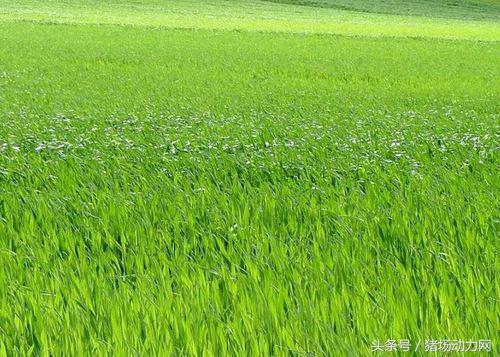
Supporting forage grass planting land. The farm strictly implements dry-wet separation of manure and urine. After pile fermentation, the manure is sold to planting enterprises. About 50 tons of sewage per day is absorbed by 50 mu of supporting forage grass land. Forage grass in the pig diet can reach 44%. Each pig needs to consume a total of 400 kg of fresh Italian ryegrass and 140 kg of concentrate, fed for 108 days, with body weight increasing from 33 kg to 85 kg, a gain of 52 kg. It will not have a negative impact on the growth and development of meat pigs or the conversion efficiency of ingested dry matter. The pig diet with added forage grass has a relatively high moisture content and insufficient ingested energy, so energy feed should be appropriately increased in the concentrate to bring it close to the nutritional standard.All harvested forage grass is fed fresh. Zengrun grass and ryegrass are fed directly. Imperial bamboo grass should be crushed with a forage grinder and mixed with a small amount of concentrate (cornmeal, etc.), then fed after absorbing the forage grass juice. In the forage grass pig breeding model, forage grass - live pigs - biogas slurry should be aired before feeding. Generally, pigs are fed 2 to 3 times a day. Boars (sows) and fattening pigs can be fed twice a day, while piglets and growing pigs can be fed 3 times a day. Feeding times should avoid the hottest midday weather and the periods when personnel activity is most frequent.
Forage grass - live pigs - biogas slurry process:
01. Install sewage transport pipelines, pumps, and sprinkler irrigation facilities from the biogas slurry tank to the forage grass land;
02. Install treated water collection pipelines from the forage grass land to the oxidation pond;
03. Install forage grass processing machinery and facilities to crush forage grass with high crude fiber content and hard stalks;
04. Equip other equipment, including tools for harvesting and transporting forage grass.
The method of feeding grass first and then concentrate can be adopted, that is, feed forage grass first, and only feed concentrate when the pigs are mostly full; the method of feeding concentrate first and then grass can also be adopted, that is, feed concentrate first, and only feed green feed after the concentrate is finished, with green feed allowed for free intake. When feeding forage grass, it can first be cut into 2 cm to 3 cm short sections, or fed whole.
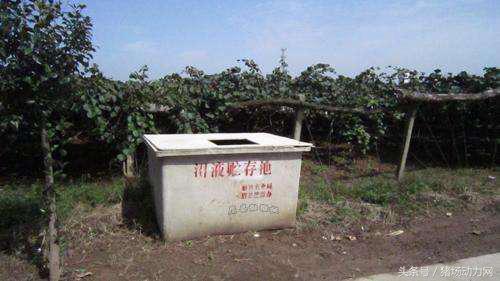
Biogas slurry water comprehensively treated by the biogas project needs to be stored in a sewage storage tank. Generally, the capacity of the storage tank should reach 30 days of sewage discharge, which is conducive to further sedimentation and fermentation of sewage, and also conducive to storing sewage in cold winters and rainy seasons. If the farm actually discharges about 50 tons of sewage per day, a 1500-ton sewage sedimentation tank needs to be built; the water after absorption by forage grass may still not fully meet discharge standards, and an oxidation pond needs to be provided for further absorption and consumption. The collected water is used for fish farming, duckweed cultivation, or washing pens, achieving the production goal of zero external discharge.
Always maintain sufficient and clean drinking water. Generally, drinking water is not restricted, allowing pigs to drink freely. Never replace drinking water with thin feed, otherwise unnecessary feed waste will be caused. Drinking equipment is best with automatic drinkers. If the pig farm is large in scale, or if fresh forage grass is lacking in winter in some areas, the method of forage grass ensiling can be used. It improves the reproductive performance of sows. All forage grass planted on the farm is used to feed boars and sows, maintaining a good health level.
Forage grass - live pigs - biogas slurry model, the average survival rate of suckling pigs is 95.50%, the survival rate of piglets during the nursery period is 98.12%, the survival rate of meat pigs during the fattening period is 98.80%, and the overall survival rate of live pigs is 92.58%. According to statistics for the first three months, the average survival rate of suckling pigs is 95.80%, the survival rate of piglets during the nursery period is 98.72%, the survival rate of meat pigs during the fattening period is 98.75%, the overall slaughter rate is 93.39%, the average slaughter weight of commercial pigs is 102.5 kg, and the feeding period is shortened to 165 days.
Feeding costs saved for sows. The annual average daily forage grass feeding amount per sow is about 5 kg. The replacement amount of concentrate and green feed is calculated at 10:1. In practice, each sow can save 0.5 kg of concentrate per day. The sow feed price is calculated at 2.0 yuan/kg. 500 sows can save 182,500 yuan in feed costs per year. Bagged silage: silage bags are made of non-toxic plastic film 0.2 mm thick. When making bagged silage, the silage raw material is aired, with moisture content controlled at about 60% to 80%, and the raw material is cut short to about 2 cm to 6 cm (ryegrass 4 cm to 6 cm). The chopped silage raw material is put into silage bags, compacted layer by layer while filling, and sealed tightly after filling to achieve airtightness and no ventilation.Be careful not to fill it too full, so as not to puncture the silage bag.After bagging, it cannot be moved, so as not to damage the plastic film. During storage, attention should be paid to preventing rats.
Adopting the "live pigs - biogas slurry - forage grass" model can not only efficiently absorb pig excrement and protect the ecological environment, but also improve the production level and health level of live pigs, reduce production costs, and produce significant ecological benefits and good economic benefits. As for how much economic benefit can be obtained, it is also related to the level of pig farm management. Generally, pig farms with lower production levels will produce greater benefits. The effect of forage grass replacing concentrate in feeding commercial pigs also remains to be practiced.
Forage grass pig breeding model, forage grass - live pigs - biogas slurry silage retrieval. After 40 to 50 days of storage, silage can begin to be taken out for use. For ground pile silage and silage trench silage, when taking material, start from one end and take it gradually. Never open it all at once, and seal and restore it promptly after use. Silage taken on the day should be fed up that same day. For tower silage, generally take material layer by layer from top to bottom. For bag silage, take it bag by bag and seal the bag after use. Whether pig farm sewage that has not undergone anaerobic (biogas) treatment can be absorbed by planting forage grass, or how much forage grass area is needed to absorb pig excrement (the ratio of pig raising quantity to forage grass planting area), still requires further practice and the test of time. The capacity of the supporting sedimentation tank can be determined according to the geographical location of the farm, production scale, and method of excrement disposal (the sedimentation tank on this farm is on the large side).
Ground pile silage. For ground pile silage, choose a higher and flat plot, use a cement floor, compact the ground with loess, or lay plastic film on the ground. Then chop the silage raw material and pile it layer by layer on top, compacting as it is piled (a tractor can be used for compaction). The pile should not be too high, generally not exceeding 3 m; cover it tightly with one complete plastic film, with 50 cm to 60 cm on all sides in contact with the ground and pressed tightly with fine sand to ensure that the silage is isolated from the outside air.
Forage grass pig breeding model, forage grass - live pigs - biogas slurry. In the severe cold of midwinter, when forage grass grows slowly or when forage grass is changing crops, excrement should be stored more and sprayed less, so as to reduce loss; if forage grass is insufficient in winter, try using ensiled forage grass to solve the forage grass difficulty for boars and sows.
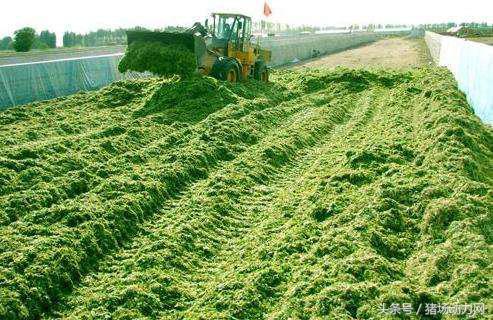
Before silage is used to feed livestock, it should be sensorially evaluated by smell, color, and other aspects to determine whether it can be fed. Forage grass pig breeding model, forage grass - live pigs - biogas slurry. If the silage has a slight sour smell and vinous aroma, is green or yellow-green in color, has no gray-black or brown mold, and feels loose, soft but not sticky to the hand, then it is high-quality silage and can be safely used to feed livestock. If the silage has a stale moldy odor, is black or brown in color, and feels clumped or sticky when grasped by hand, then the silage has deteriorated and cannot be used to feed livestock.
Forage grass pig breeding model, forage grass - live pigs - biogas slurry. By leasing land around the pig farm and using biogas slurry to plant forage grass, not only is the pollution source absorbed and the discharge standard met, but the environment around the pig farm is also greatly improved, with very prominent ecological benefits. In particular, in this ecological model, more than 50 mu of supporting land is used to absorb the sewage of 5,700 pigs, with an average of more than 100 pigs absorbed per mu, breaking the general framework that only 3-4 pigs' manure and urine can be absorbed per mu, and playing a demonstrative role for farms (households) lacking absorption land.
Topic of this issue: How much can you control your cost per pig, and what tips do you have for saving costs?