Real footage of oyster farming on a Fujian beach: this is how the most common seafood is actually raised
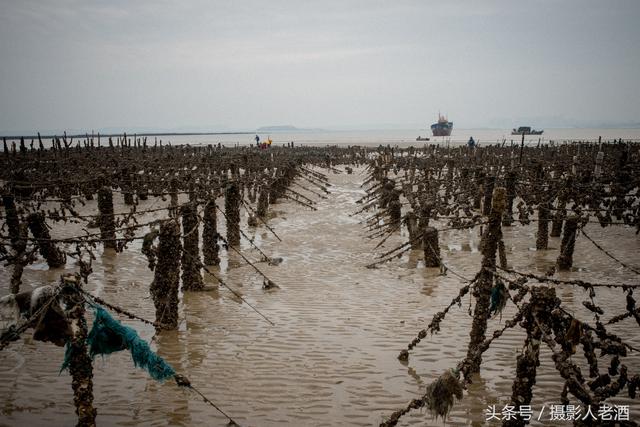
Oysters, one of the most common types of seafood, are produced in abundance along our country's long coastline. Compared with other kinds of seafood, oyster farming is probably fairly simple. On a beach in Fujian, stretches of oyster farming grounds can be seen.
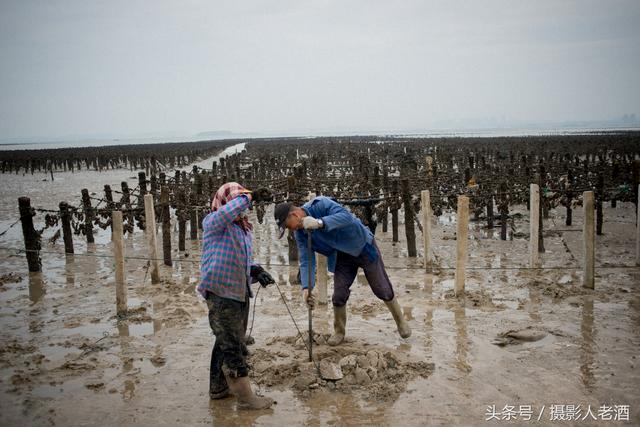
Oysters do not need to be fed, nor do they need much care. You only need to plant wooden or concrete stakes on the beach, hang ropes with special plastic discs attached on them, and that is basically enough; the rest is left to the sea. When the tide rises, the seawater completely submerges these stakes, and the oysters attach themselves to them and grow slowly, nourished by the seawater.

Densely packed special plastic discs newly hung on the stakes.
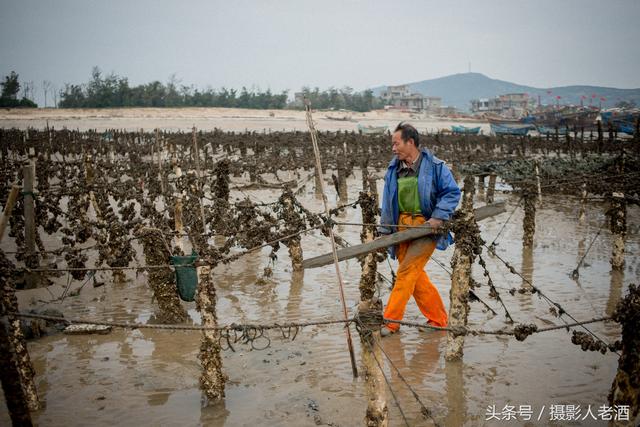
Although oyster farming is simple, it is by no means easy. The fishermen who farm oysters must come by often to watch over and tend to them.
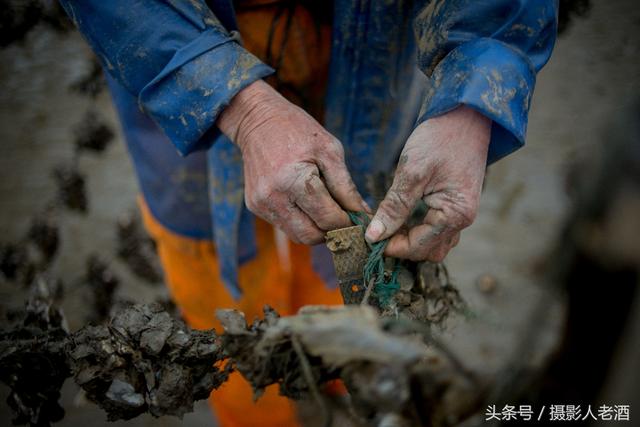
Under the impact of the seawater, the planted stakes often topple over, and the ropes holding the oysters often break, so they need to be replanted and retied. This is one of the most common tasks in the oyster farming process.
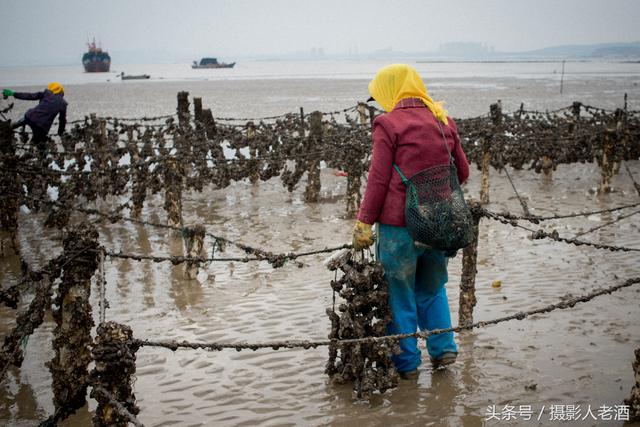
Oyster farming depends entirely on the sea for a living. As long as the seawater does not have problems, the oysters can grow normally. But once any problem arises with the seawater, such as a red tide or abnormal salinity, the oysters will die off in large numbers, and all the previous hard work is wasted.
Oyster farming is basically done outdoors in the open. In some places, it is also necessary to prevent nearly grown oysters from being stolen by others.
An aunt who farms oysters carries several strings of fallen oysters in her hand.
The oyster farming cycle is long, so the fishermen who farm them must provide continuous care.
An uncle stands at his oyster farming grounds, gazing at these oysters that are slowly growing, and also gazing at the sea in the distance where the tide is slowly rising.