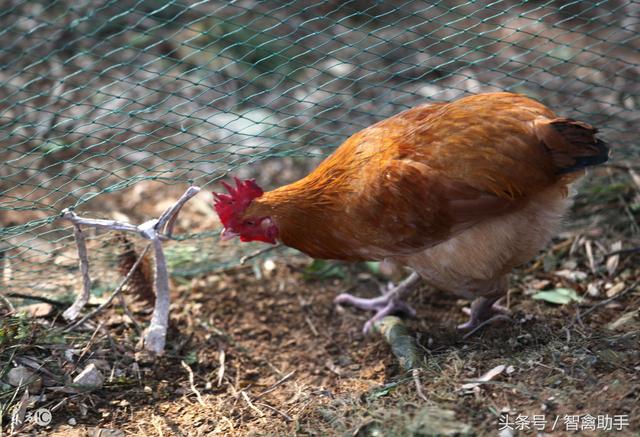
How do you raise ecologically farmed chickens? These six technical points you need to master
Ecologically farmed chickens have long been favored by consumers, and therefore have broad market prospects. Many farmers, seeing the considerable farming benefits of ecological chicken farming, have started entering the ecological chicken farming industry one after another. However, ecological chicken farming has its particular requirements, and not everyone can raise them well. So how should farmers raise chickens ecologically? It means mastering the corresponding farming technical knowledge. Below, the editor introduces a new interpretation of the six technical points of ecological chicken farming, which in fact are the key contents of ecological farming techniques.
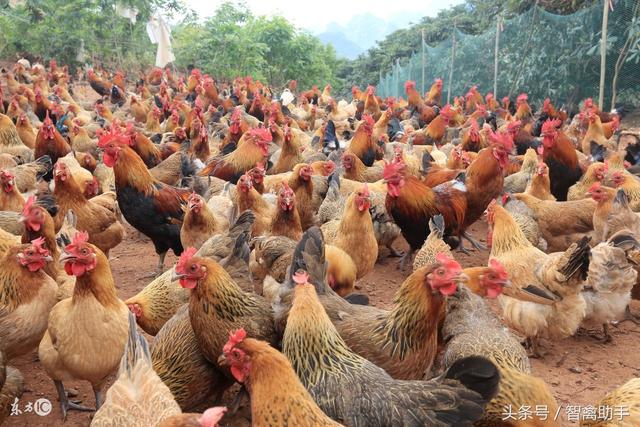
A new interpretation of the six technical points of ecological chicken farming
1. Choose the right breed
For ecological chicken farming, it is best to choose local native chicken breeds. Local breeds have the characteristics of a small body size, quick reactions, being lively and active, adapting to the local climate and environmental conditions, tolerating coarse feed, having strong disease resistance, and being suitable for free-range raising.
2. Build a good chicken shed
Ecological chicken farming also requires a chicken shed, which is an important space for the chickens to roost at night. The chicken shed should be located on high ground, sheltered from the wind and facing the sun, with an open view, no water accumulation, and enough open space in front of the door. The chicken shed can use a permanent brick-and-tile structure or a simple wooden structure. No matter which method is used, it must have a sturdy structure and good wind and rain protection. To prevent harm from beasts, the windows should be nailed with wire mesh, the doorway should be tightly closed, and the ground should be tamped solid. A three-soil mixture or cement structure can be used for the floor inside the shed, and 5-10 cm thick sawdust or bedding straw should be spread on it.
3. Improve the environment
For raising chickens in the wild, the ecological areas chosen, especially in barren hills and forests, have many wild beasts and wild birds. To prevent various disasters and attacks by enemies, the farming environment must be improved as necessary: along the boundary of the chickens' activity range, 1.5-2 m high wire mesh or nylon netting should be buried; dense branch fences can also be planted, combined with planting vine crops such as bottle gourd, hyacinth bean, chayote, and pumpkin for isolation and blocking; planting thorny black locust branches, wild sour jujube trees, or prickly ash trees gives the most ideal effect in blocking people and animals. The surrounding activity radius should preferably not exceed 50 m.
4. Proper training
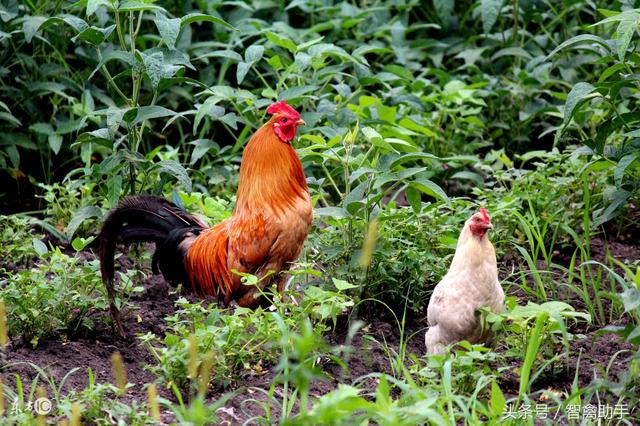
During the brooding period, an appropriate amount of chopped green vegetable leaves or wild vegetable leaves should be added to the feed to gradually train the chicks' ability to eat and digest coarse feed. After being taken off heat at 4 weeks of age, as long as the weather is suitable and the temperature difference between indoors and outdoors is not too great, the flock should be regularly released onto the open ground in front of the shed. Through controlled training, gradually expand the activity range and extend the activity time until the flock can move freely. The feeding amount should be gradually reduced, following the principle of "less in the morning and full in the evening," to stimulate the flock's enthusiasm for going out to forage.
In order to let the flock that moves freely in the wild return to the shed on time to supplement feed and water, necessary training should be carried out at the early stage of free-range raising. Experienced farmers often use methods such as striking a gong, blowing a whistle, or banging a washbasin, using suitable sounds together with tasty food to train the flock to come when called, so that the flock develops a conditioned reflex.
5. Prevent and treat diseases
Although wild ecological chicken farming has fresh air, a large amount of activity for the flock, and mainly feeds on unpolluted feed such as wild vegetables, tender grass, grass seeds, and insects, and the body is healthy, if prevention is not carried out on time, diseases will still attack the flock. The method of preventing infectious diseases is to inject the corresponding vaccines in a timely manner, requiring chickens of the same age and same breed to be raised in the same shed; such a flock generally does not need to be given medication.
In the wild ecological environment, parasitic diseases are most likely to occur, especially ascariasis and cestodiasis. Generally, after 1 month of free-range raising, the first deworming should be carried out, and after an interval of 2-4 weeks, a second deworming should be carried out.
6. Pay attention to management
To achieve as uniform body weight as possible, the flock should be managed in separate groups, with roosters sold at the appropriate time and hens used for laying eggs. To make it easier to collect eggs, after the flock reaches sexual maturity, the activity range should be appropriately reduced, and nest boxes should be set up in the shade shed, with "decoy eggs" placed inside, and the flock should be encouraged as much as possible to return to the chicken shed to lay eggs.
To improve chicken meat quality, give the meat a better taste and flavor, improve the visual quality of the carcass, increase the flock's body weight, and make it easier to obtain good benefits, flocks raised ecologically in the wild, especially roosters raised in separate groups, should be properly fattened. The time is generally chosen after 10 weeks of age. The main fattening methods are reducing the flock's activity range, increasing the energy content of the feed, and increasing the number of supplementary feedings and the feeding amount.
For wild ecological chicken farming, inspections should be carried out in a timely manner, with the purpose of checking the flock's condition, discovering and isolating sick and weak chickens, and preventing birds of prey and wild beasts from harming the flock.
The above is the relevant content compiled by the editor on the new interpretation of the six technical points of ecological chicken farming. Ecological chicken farming is not an easy task. Farmers must master the corresponding farming techniques in order to take fewer detours in the process of ecological chicken farming. The six technical points in the article are the key points of ecological farming techniques, and farmers can combine this knowledge to successfully carry out ecological chicken farming.