A Detailed Guide to Jasmine Cultivation Methods and Uses
Jasmine Cultivation Methods
Jasmine begins blooming in succession from early summer; with proper management, three peak bloom periods can appear.
In early June, jasmine gradually produces early flowers, but these flowers are generally small and few, and should be picked off promptly, otherwise they consume too many nutrients, which will affect the quality and quantity of later blooms and delay the flowering period, affecting the ornamental display. The method of picking flowers is to remove the tender leafy shoot together with the flower, prompting new shoots to grow again and making the branches and leaves luxuriant. At this time, apply diluted fertilizer water twice a week, and keep the potting soil moist.
From late June to early July is the first peak bloom period. At this time, fertilizer and water management needs to be strengthened: apply light fertilizer frequently, fertilizing once every 2 days with fully decomposed organic liquid fertilizer, with a fertilizer-to-water ratio of 1:4. Watering should be sufficient, generally once every 2 days. Generally, watering is best done in the morning, while fertilizing is best done in the evening. Continuing this way until late July, thanks to ample fertilizer and water, the flowers can be made to bloom large and numerous.
In early August, the second bloom period forms. At this time, fertilization should be slightly more concentrated than before, generally with equal parts fertilizer and water. To encourage jasmine to bloom better, a superphosphate solution can also be sprayed on the leaves. By late August, gradually reduce fertilization to once every 6 to 7 days; watering still needs to be more frequent, maintaining once every 2 days.
From early September to early October, the third bloom period forms. At this time, fertilization should be stopped, and the amount of watering should also be gradually reduced. As the weather has gradually turned cooler, it will affect the formation of flower buds, so this batch of flowers is fewer in number. After mid-October, flowering ends, and it is only necessary to keep the potting soil slightly moist.
1: Making flower fertilizer from kitchen waste
Put leftover vegetable leaves, fruit peels, peanuts, beans, chicken innards and fish innards into a bottle, add an appropriate amount of water, then spray in a little insecticide, and then tightly close the bottle cap. After about one or two months, when the contents of the bottle have completely fermented, it is ready to use. Before watering flowers, first dilute the fermented material with clean water, stir them and wait for the sediment to settle, then take the upper liquid to water the flowers; this way the effect is even better.
2. Making flower fertilizer from Chinese herbal medicine residue
The residue left after drinking Chinese herbal medicine is an excellent flower fertilizer. It contains many nutritional elements; the nitrogen, phosphorus and potassium needed for jasmine growth are all present in Chinese herbal medicine residue, and it contains not only nitrogen, phosphorus and potassium but also organic and inorganic substances. These substances are greatly beneficial for improving soil conditions, so that jasmine can grow better.
So how do you make Chinese herbal medicine residue into flower fertilizer? The method is very simple. First, put the Chinese herbal medicine residue into a bottle, then add some soil and a little water. Then wait one month, and once the contents have rotted, we can use it to water the flowers. We can mix it directly into the soil, but note that too much Chinese herbal medicine residue should not be added; too much will instead affect the growth of jasmine.
3. Making flower fertilizer from eggshells
Eggshells are a very good flower fertilizer. They contain the phosphorus needed for jasmine growth; flower fertilizer made from eggshells is a natural organic phosphorus fertilizer. First, wash the eggshells clean, dry them in the sun, and after drying, crush them into powder. The production process is very simple. In this way, we can sprinkle it on the soil, and through watering let the flowers absorb the components in the eggshells; the jasmine grown this way will have more brightly colored and fuller flowers.
4. Making flower fertilizer from okara (tofu dregs)
Okara is a superior flower fertilizer. It is rich in protein, minerals and vitamins. After manual processing, it is very suitable for jasmine growth. First put the okara into a vat, add 10 times its volume of clean water, and wait for fermentation. Generally, in summer it can be made in about 10 days; in spring and autumn it generally takes about 20 days for fermentation to complete. After production is complete, when watering jasmine we must dilute it with 10 times its volume of clean water, otherwise it will not only fail to help jasmine growth but on the contrary will affect jasmine growth.
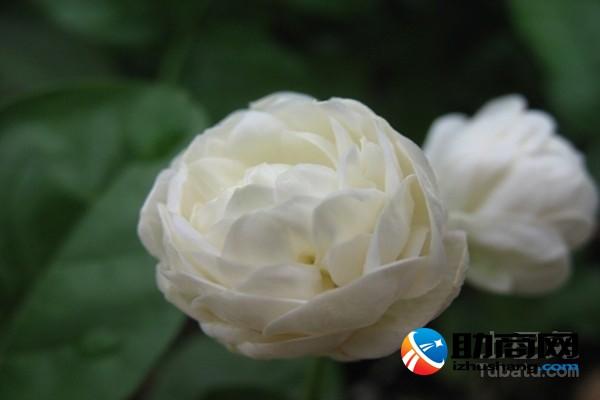
How to care for potted jasmine:
1. Plenty of water: Jasmine has shallow roots and well-developed fibrous roots, with luxuriant branches and leaves. In summer, temperatures are high and evaporation is great; moreover, it is itself not drought-tolerant, so the soil must not be too dry, but it should not be muddy either. It is best to use a clay pot; plastic pots and porcelain pots have poor air permeability and can be used as outer decorative pots. The prerequisite for plenty of water is good soil aggregate structure, loose and breathable. The principle of watering heavily is alternating dry and wet, watering thoroughly after drying out. Note that drying out absolutely does not mean parched and scorched.
2. Plenty of fertilizer: Jasmine has a long growth cycle, a large annual growth volume, and repeatedly sprouts branches and blooms, so nutrients are consumed quickly and energy demands are high. If fertilizer cannot keep up, it will grow thin and weak, with thin branches, thin leaves and few flowers. The prerequisite for plenty of fertilizer is to mainly use decomposed organic fertilizer; this point is extremely important, such as rapeseed cake water (top dressing), poultry and fish innards water (top dressing), supplemented with chemical fertilizers such as potassium dihydrogen phosphate. The fertilizing method is to apply in the evening of sunny days during the growing season, and return water the next morning (crucial), once a week during the growing season.
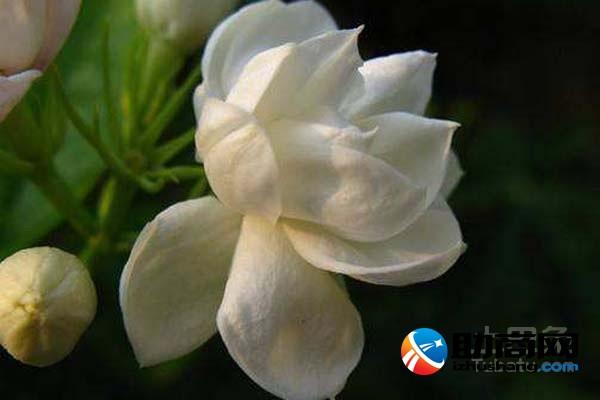
3. High temperature and full sun: Jasmine greatly loves sunlight, and must never be excessively shaded. On the premise of ensuring water, full sun is best; with ample sunlight, branches and leaves are luxuriant and flowers are numerous, while with low temperature and shading, leaves are thin, flowers are sparse and branches are thin. In addition, before sprouting in spring and after each batch of flowers, moderate pruning should be done, which can ensure that branches are properly spaced, nutrients are concentrated, and ineffective consumption is reduced.
Supplement: The issue of building vigor during care. After jasmine has grown for five years, the main branches will age, the upper branches will become thin and weak, and the flowers will be on the small side. During this period, special attention should be paid to cultivating more soil-borne shoots at the base; such shoots grow vigorously, and if properly guided to the old main branch that needs renewal, after one year of growth they can replace the old branch. Cut the old branch off flush with the soil surface, achieving the goal of renewing the main branch, strengthening the tree's vigor, and maintaining vitality.
Soil selection: For cultivating jasmine, fertile sandy and semi-sandy soil is best, planted in slightly acidic soil with a pH value of 6~6.5.
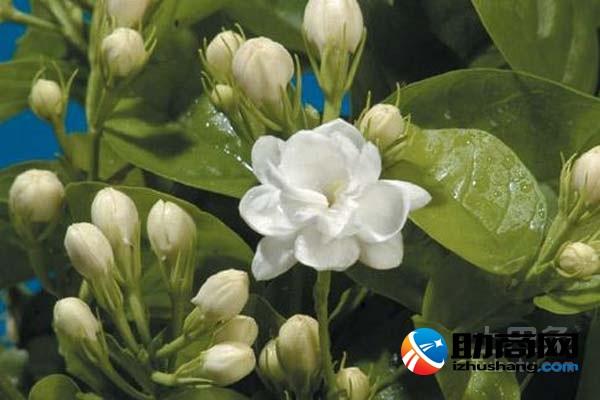
Key points for fertilizing jasmine:
1. Jasmine must not be fertilized indiscriminately in spring, because spring temperatures are on the low side and unstable. After fertilizing, jasmine finds it difficult to absorb it, and the fertilizer remaining in the potting soil will soak and corrode jasmine's root system, very easily causing jasmine root rot.
2. Entering summer, as temperatures continue to rise, the tips of jasmine's new branches will differentiate and develop flower buds. At this time, begin fertilizing jasmine. As jasmine flower buds grow, become visible and mature, gradually increase the amount of fertilizer, and only then will jasmine be floriferous and leafy. Note: never fertilize when the potting soil is not dry; fertilizing when the potting soil is moist makes jasmine extremely prone to root rot. This point is very important.
3. Entering autumn, fertilization of jasmine must be controlled. In Wuhan, after White Dew on the lunar calendar, my family strictly forbids fertilizing jasmine (I suggest gardening friends also stop fertilizing).
4. When jasmine overwinters, watering must all be controlled; if you fertilize, you are putting jasmine to death. Jasmine has the habit of natural dormancy in winter; it relies on branches and leaves to store nutrients for overwintering, so jasmine branches and leaves must not be pruned in autumn and winter. During this period, until jasmine sprouts new buds next year, jasmine must not be fertilized at all; fertilizing during this period brings a hundred harms and not one benefit! At low temperatures, jasmine's vital activity is weak and the root system's absorption function is low; the fertilizer applied simply cannot be absorbed and decomposed, and fertilizer retained in the potting soil will corrode the root system, while pathogens in the fertilizer will erode the root system, ultimately causing root rot and failure of the plant to overwinter. Many friends have come to grief over this fertilizing issue, and the reason jasmine cannot be kept long-term is also this problem of improper fertilizing.
Uses of jasmine
Fresh jasmine can not only be brewed as tea, but also has many other uses: jasmine is the parent spice for blending various edible cooking "chemical" and edible flavorings. The product formulas are diverse and the uses are wide. "Jasmine" is a very important basic raw and auxiliary material and seasoning among spices. Jasmine flower dew made from jasmine flowers and leaves can be used to make perfume, face cream and other high-grade cosmetics beneficial to the human body. Jasmine tea is a high-grade beverage with very high economic value.