Sharing experience in keeping Chinese honey bees to help you raise Chinese honey bees well
Before reading, click Follow first so you don't miss tomorrow's bee highlights!
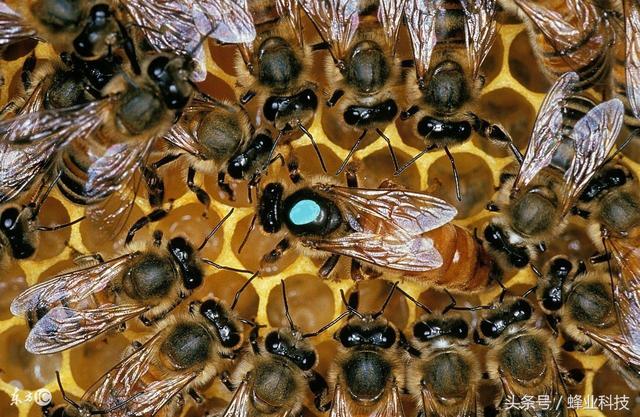
In the family of Chinese honey bees, the queen enjoys a lifetime of privilege and comfort, leaving the hive only for mating flights; a second exit from the hive is definitely not good news - it means either being startled into flight or absconding; the drones have the privilege of dominating all under heaven, passing freely into any hive, coming and going alone, cadging food and drink everywhere in search of pleasure; the worker bees are the ones with a life of toil, from birth to death constantly working, bearing hardship without complaint. Through rearing and observation, I have discovered many interesting things about worker bees -
Example 1:
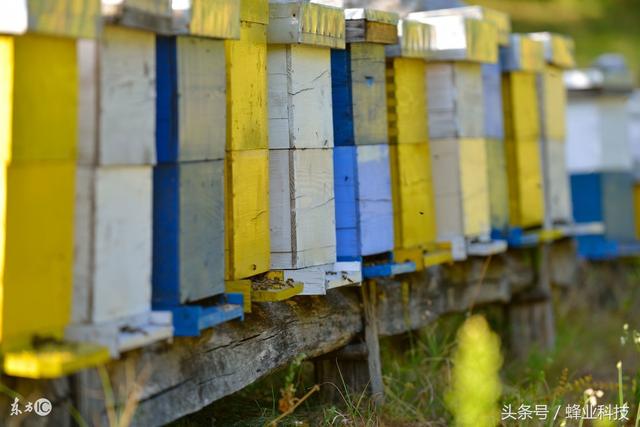
One early spring five years ago, my father's traditionally kept Chinese honey bees in a round barrel swarmed. To cultivate my interest in keeping Chinese honey bees, he deliberately had me collect that old-queen swarm that had just issued. By then, I already had a certain understanding of the theory of keeping Chinese honey bees. After collecting the old-queen swarm, I placed it only 50 m away from the original colony. Looking at the original colony and comparing it with the new one, the bee populations of the two colonies were about the same.
My father was unwilling to spend money on keeping bees, especially during this season when rapeseed flowers are shedding pollen and flowing with nectar; he was even more unwilling to buy sugar to feed the bees! Having obtained a colony of breeding bees, I fed them artificially regardless of cost. I unintentionally discovered that worker bees would move between the mother and daughter colonies, and they did not fight. The sugar syrup placed in the hive was consumed quite quickly, and seeing the lively scene at the hive entrance every day, I was overjoyed.
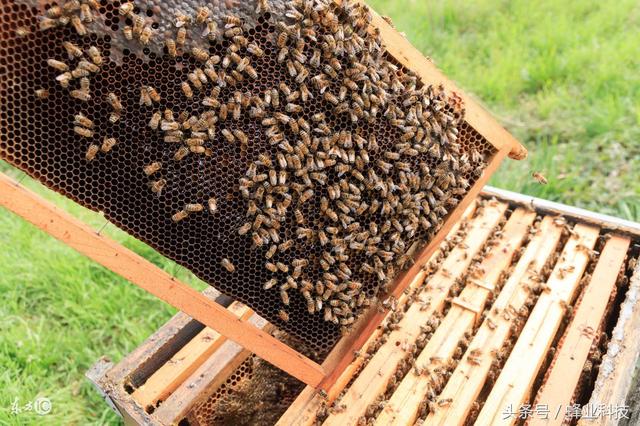
My wife joked that I was helping Dad feed bees; anyway, father and son are one family, and the good water did not flow into an outsider's field, so I pretended not to know. A week later, I found that the bee population in the colony had increased quite a bit across 3 combs, so I promptly inserted an empty comb; after continuing to feed for another week, I opened the hive to check, and the 4 combs were completely full, so I inserted another empty comb. At this point, my dad cried out: it turned out that his new-queen colony with 3 combs of bees had only a few hundred bees left.
I discovered that the worker bees that came to my hive every day to eat and drink their fill would go back for the first few days; after four or five days, they became accustomed to the queen's pheromone and blended in with the colony odor, and generally they did not go back. Therefore, raising the living standards of a bee colony is effective in attracting companions from weak colonies.
Example 2:
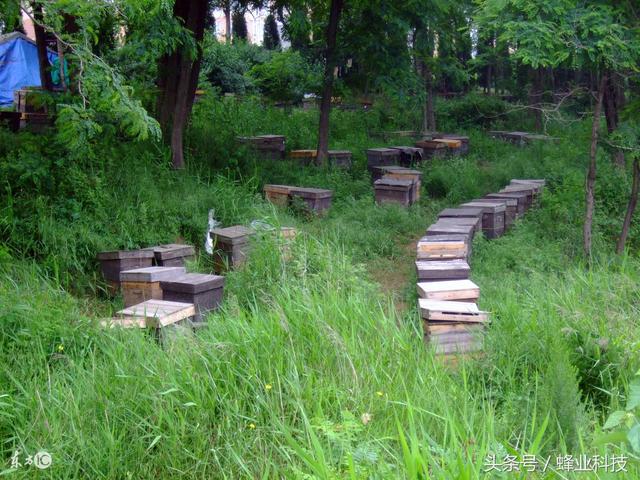
Just after midsummer this year, I, who mainly focus on propagating bee colonies, began reward feeding the colonies to achieve rapid propagation. A beekeeper in the same village moved 7 colonies of Chinese honey bees to a mountain hollow less than 200 m from my apiary. They say a thousand people going up the mountain carry a thousand loads of firewood, and I could not be bothered to offend him verbally. Since they were placed together, then let us compare techniques!
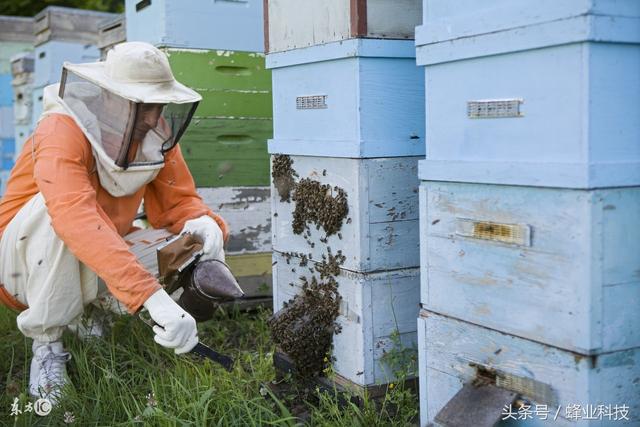
I merged all the small and weak colonies into medium-strong colonies of four or five combs and increased reward feeding. Within a few days, the worker bees from the other side's unfed colonies that often came to my apiary to steal honey could no longer enter my hives. Some impatient ones barged in headlong and got beaten, but some clever worker bees bribed my guard bees with the royal jelly on their mouths and then entered safely; I let them eat in quantity, and the bee populations in these hives increased rapidly.
Two months later, my apiary successfully divided colonies in the autumn propagation, while the other side's 7 colonies were moved back as 4 empty hives, and the remaining 3 colonies had a scale of only one or two combs, no longer able to make a comeback. He asked with a sigh: "How did you keep those bees?" I analyzed: bee colonies also know to covet wealth and disdain poverty. Where there is good food and drink, they naturally take pleasure in staying.
Example 3:
Recently, on the basis of successful autumn propagation of the colonies, and according to the actual situation that the tea flowers in my locality have a relatively long pollen-shedding period, I divided out 2 old-queen colonies and deliberately let the new-queen colonies and old-queen colonies form a bee population ratio of 3:2. I fed only the new-queen colonies and did not feed the old-queen colonies to observe the aftereffects. In only about 20 days, the old-queen colonies were as sparse as stars, while the new-queen colonies were thriving and full of vitality. For the old-queen colonies, with no brood combs available to supplement them, it seems that after the new queens successfully begin laying, caging the old queens and merging the colonies for winter is the best choice.
In summary, beekeeping is not only a matter of technique but also of tactics. Beekeeping can also use The Art of War by Sun Tzu. The core idea of the ancient Chinese military strategist Sun Bin was: "Whether one wins or not lies with the opponent; whether one is defeated or not lies with oneself." Applied to beekeeping, this means: whether I can keep bees is the bees' problem; whether the bees stay in my home is my problem. Feed bees richly and harvest honey sparingly; strengthen the strong to aid the weak; supplement the abundant to make up for the scarce.
You are welcome to savor this carefully and discuss it in the comments!
(Shangrao City Beekeeping Association, Cai Chenggui)