How to Grow Sempervivum: Master These 7 Key Care Points
Sempervivum is a succulent in the Crassulaceae family, genus Sempervivum, also known as houseleek, hens and chicks, and St. Patrick's cabbage. It originates from the mountainous regions of Spain, France, Italy and other European countries, and is an alpine succulent.
True to its name, Sempervivum has leaves arranged in a rosette, forming a lotus-like shape. The leaves are flat and slender with sharply pointed tips and tiny hairs along the edges. Under full sunlight, the leaf tips and margins develop a very beautiful coffee-brown or purplish-red color.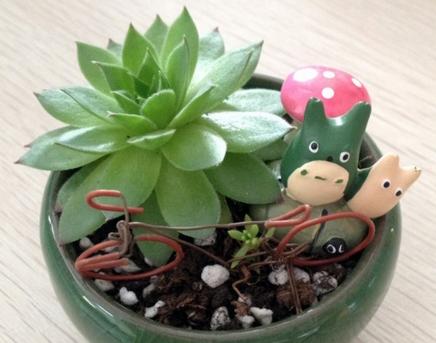
Niyang Green Plants
1. Soil
The potting soil should be loose and fertile with good drainage and aeration. You can use half leaf mold or peat soil and half coarse sand or vermiculite, mixed with a small amount of bone meal or other calcium-rich materials, and blend well before use.
2. Temperature
It prefers a warm, humid, semi-shaded growing environment. The optimal growing temperature is 20-30°C, and the overwintering temperature is 15°C. When the nighttime temperature in winter stays no lower than 5°C and the daytime temperature is above 15°C, the plant can continue to grow, and you can water it normally and fertilize appropriately.
3. Light
The plant goes dormant during both the high temperatures of summer and the cold of winter. Its main growing seasons are the cooler spring and autumn. During the growing season, it requires plenty of sunlight.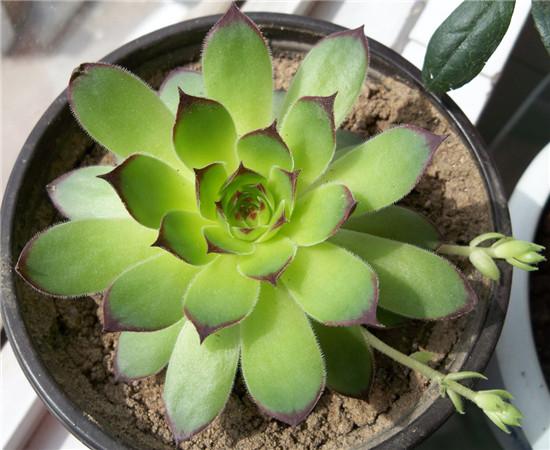
Niyang Green Plants
4. Watering
Follow the principle of "don't water until dry, and water thoroughly when you do." Avoid prolonged waterlogging to prevent root rot, but don't let it get too dry either. Otherwise, although the plant won't die, it will grow slowly, with dull leaf color and a lack of vitality.
5. Fertilizing
Apply diluted, well-rotted liquid fertilizer or a low-nitrogen, high-phosphorus-potassium compound fertilizer about once every 20 days. When fertilizing, don't splash the fertilizer solution onto the leaves. Fertilizing is generally done on a clear morning or evening. On the evening of the same day or the morning of the next day, water thoroughly once to dilute any residual fertilizer solution in the soil.
6. Propagation
Sempervivum can be propagated during the growing season by cutting off the small offsets (small rosette-shaped leaf clusters) that sprout from the base and rooting them in sandy soil. After planting, keep the soil slightly moist. Roots will form in 2-3 weeks. Some small rosettes already have roots underneath and can be potted directly.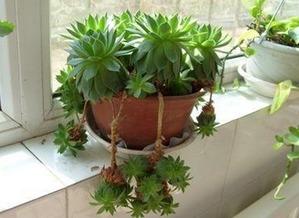
Niyang Green Plants
7. Repotting
Repot once every 1 to 2 years in spring or autumn. When repotting, prune the root system by cutting off dead roots or overly long old roots. The potting soil should be loose and fertile with good drainage and aeration. You can use half leaf mold or peat soil and half coarse sand or vermiculite, mixed with a small amount of bone meal or other calcium-rich materials, and blend well before use.