How to grow Clivia? Master these 8 key cultivation points
Summary
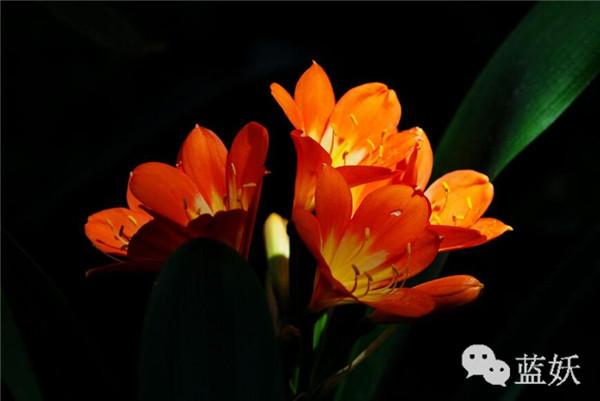
Clivia is native to southern South Africa and is a perennial herbaceous plant. Its flowering period lasts 30-50 days, mainly in winter and spring, and it also blooms around New Year's Day to the Spring Festival. It dislikes strong light and is a semi-shade plant. It likes cool conditions and dislikes high temperatures. The suitable growth temperature is 15-25°C, and growth stops below 5°C. It likes soil rich in humus and with good drainage, as well as moist soil, and dislikes dry environments. It has high ornamental value.
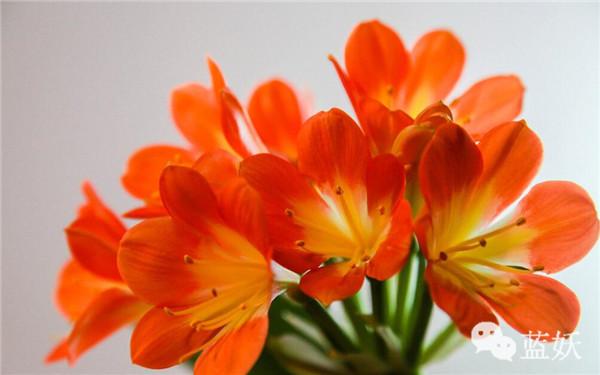
8 key points for growing Clivia
1. Soil
Clivia is suitable for soil rich in humus. This kind of soil has good air permeability, good water permeability, and is fertile and slightly acidic (pH6.5).
Cultivation soil formula: 1. Mix 65% humus soil, 20% clean sand, and 15% fine furnace ash. Relative humidity around 40%.
2. 6 parts leaf mold, 2 parts pine needles, 1 part river sand or furnace ash residue, 1 part base fertilizer (hemp seeds, etc.).
2. Light:
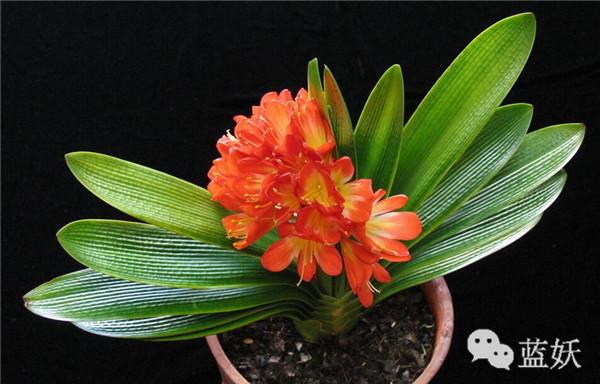
Clivia likes semi-shade, and its leaves are phototropic. If it is placed in one spot indoors for a long time, the leaves will definitely turn toward the direction of the sun, so the flower pot must be turned around every other week to ensure that the plant shape does not grow crooked.
3. Watering
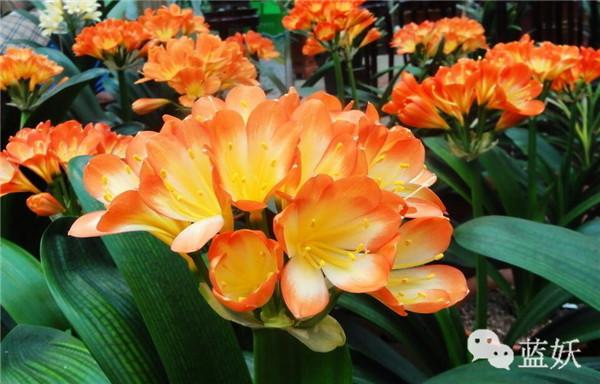
For watering Clivia, generally choose in the following order: living water, magnetized water, natural precipitation, well water, tap water.
Clivia has fleshy roots and is afraid of waterlogging. In addition, Clivia leaves have a waxy layer, and in winter when temperatures are low, transpiration and evaporation of water are low. Therefore, watering should not be excessive. Just water in combination with fertilizing and keep the potting soil moist. The soil should not be too dry or too wet. Each watering must soak through, and after flower buds appear, water a little more.
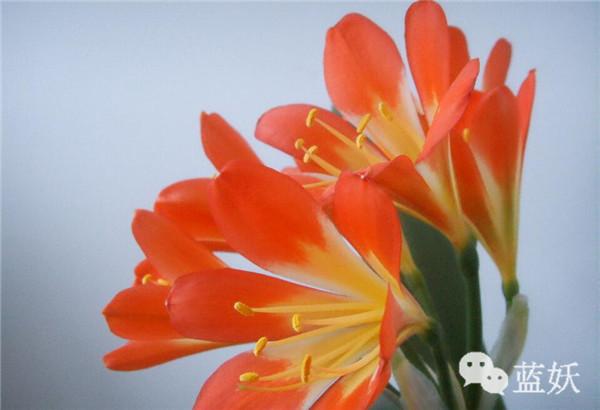
About every 20 days, apply fermented soybean cake water, diluted fishy water, or water from soaking water chestnuts once in combination with watering, combining watering and fertilizing. When room temperature is low, watering should be controlled to prevent the potting soil from becoming too wet. Too-wet potting soil can cause root rot and plant death, but the potting soil should also not be too dry.
4. Fertilizing
Clivia likes fertilizer, but too much fertilizer can cause root rot. In addition to applying base fertilizer, additional fertilizing should use the method of "light fertilizer applied frequently." Apply base fertilizer when repotting. In spring and autumn, apply fermented solid fertilizer once a month, and then apply liquid fertilizer once a week. In winter and summer, it is best not to apply additional fertilizer. The whole plant can rely on nutrients accumulated in spring and autumn to grow slowly.
When applying solid fertilizer, push aside the potting soil and bury it 2 cm deep into the soil. Do not let it directly touch the roots to avoid burning them;
When applying liquid fertilizer, for small seedlings, fertilizer:water = 1:40 is better; for large and medium seedlings, 1:20 is better. The best time to fertilize is early morning. Avoid splashing it onto the leaves. After applying liquid fertilizer, water once promptly, but the water does not need to be too much. On one hand, it dissolves the fertilizer; on the other hand, it can rinse the newly grown fleshy roots to prevent damage to the new roots.
Depending on the season, the types of fertilizer should be emphasized differently. In winter and spring, apply more phosphorus and potassium fertilizers, such as bone meal; in autumn, apply more nitrogen fertilizer, such as soybean cake water; in summer, foliar feeding is commonly used, spraying the leaf surface with 0.1% potassium dihydrogen phosphate or superphosphate, etc. Foliar feeding can be done in all four seasons.
5. Temperature
Temperature: The suitable growth temperature for Clivia in winter is 15-20°C, and it is best not to be lower than 10°C. After the flower stalk emerges, the temperature should be kept at around 18°C, and the day-night temperature difference is best around 10°C; otherwise, the flower stalk will bloom before reaching the proper height, and "stuck arrow" easily forms.
When the outdoor temperature at night is lower than 10°C, Clivia must be moved indoors. When the indoor temperature is lower than 10°C, in addition to covering the surface of the potting soil with a 1 cm thick layer of charcoal powder for insulation, the flower pot should also be placed in a sunny and warm spot indoors. When the indoor temperature is especially low, a plastic film can be placed over the flower pot to raise the temperature, but the temperature under the cover must not exceed 25°C. If it exceeds that, ventilate promptly to lower the temperature.
6. Repotting time
The time and frequency of repotting and changing soil for Clivia depend on the size of the seedling and the season.
Mature Clivia needs to have its soil changed once a year. The best time to change the soil is spring and autumn, because Clivia grows vigorously at this time and changing the soil will not affect plant growth.
Take the Clivia out of the pot, cut off rotten roots and old roots with no absorption capacity, and remove spent soil. Spray disinfectant fungicide inside and outside the leaves. After that, fill in 2-5 cm of nutrient soil, take a handful of soil and fill the inside of the roots firmly, then place the plant in the pot. When filling the pot with nutrient soil to half the pot's height, gently press downward along the pot edge with your hand, so that the roots all stand in the pot and are not easily bent.
The key point in changing the soil is to fill the roots firmly with soil. Otherwise, if there is no soil around the roots, water and nutrients cannot reach the roots, which can easily cause root rot and stuck arrow. After changing to nutrient soil, just water thoroughly.
7. Extending the flowering period
Extending the flowering period: The flowering period of Clivia is mostly from December to March of the following year. The way to extend the flowering period is to place it in a dark place when the flowers are about to open, appropriately control watering, and keep the temperature at 8-12°C. In this way, the flowering period can be extended by 10-20 days.
8. Protecting the leaves
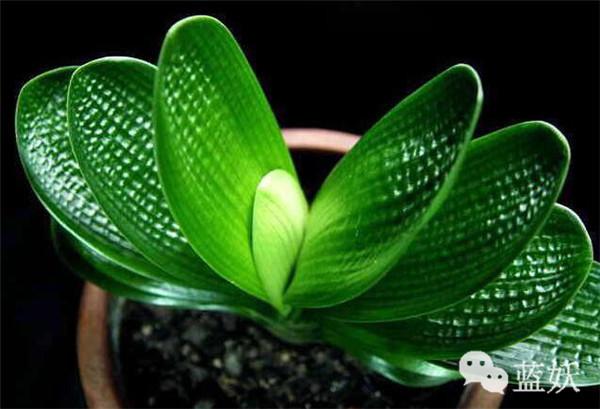
Short, broad, thick, green, shiny, and upright leaves are the characteristics of healthy Clivia. In addition to providing reasonable fertilizer and water, the leaf surface must be kept clean to improve photosynthetic efficiency. First, wash the leaves regularly, spraying and rinsing with clean water at the same temperature as the room or wiping away dust on the leaves; second, spray fungicide promptly to prevent leaf spot, leaf blight, and stem rot, ensuring the leaves remain green.
If this article is useful to you, please share it to your Moments or QQ Zone!
Welcome to follow the Lanyao WeChat official account and communicate one-on-one with Lanyao!
WeChat ID ilanyao (← long press to copy)
If you have any flower-growing questions, leave me a message on WeChat, and we can discuss them together!