Several Technical Points for Artificial Breeding of River Snails
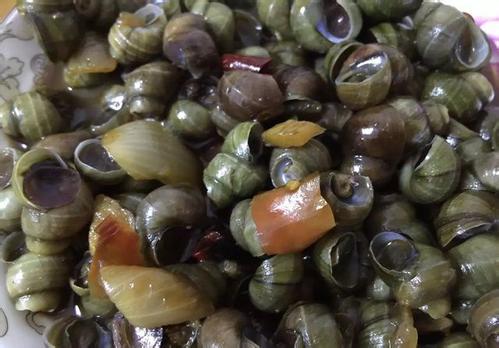
Wild river snails are becoming fewer and fewer now, and due to pollution from pesticides and chemical fertilizers, people are rather hesitant to eat them, so artificial breeding of river snails has gained market popularity. Here are several key points for artificial breeding of river snails, as follows:
1. Build solid infrastructure. Reinforce the field ridges, build anti-escape walls, dig soft-shelled turtle trenches, install anti-escape nets at the water inlet and outlet, stock duckweed, algae, alligator weed, etc. in the turtle trenches. The water quality should be fertile, lively, tender and refreshing, with a pH value of around 7.5.
2. Select good breeds. The turtle stock should be uniform in size and robust in constitution. It is best to collect snail and loach stock from natural water bodies such as ditches, canals and ponds. River snails kept for breeding should be large, round in shape, with thick meat and thin shells, grayish-black shell color, and few spiral whorls; loaches should have a deep yellow body color, be robust, and uniform in size; rice varieties should be resistant to lodging, resistant to pests and diseases, and high-yielding.
3. Stock early. In single-crop rice fields, stock loaches and snails right after transplanting the rice seedlings; in winter fallow fields, stock loaches and snails first, then transplant the rice seedlings. Double-crop stocking can also be adopted: the first season is stocked in early May; the second season is stocked in mid-August, stocking loaches and snails at the same time. In the first half of the year, stock overwintered loach stock with a body length of 5-7 cm; in the second half of the year, stock current-year loach stock of 3 cm, at 10,000-25,000 fish per 667 sq m, and at the same time stock 600-700 river snails per 667 sq m. Stock 100 young soft-shelled turtles weighing 100-200 g each per 667 sq m. Before stocking, disinfect the turtle, loach and snail stock by soaking them in 5% salt water.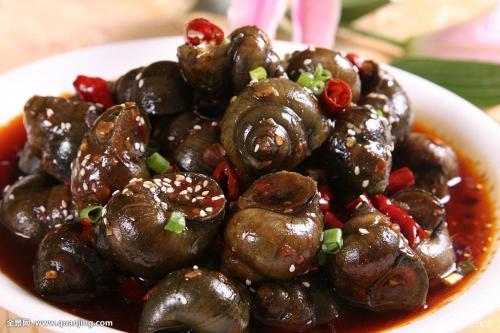
4. Feeding management
(1) Fertilize the water quality. In breeding snails and loaches, the key is to fertilize the water quality. Before transplanting the rice, apply 250 kg-500 kg of rotted plants per 667 sq m as base fertilizer. Afterward, according to the water quality, apply topdressing once every 30-40 days. Keep the water transparency at 15-20 cm, and the water color is best when it is yellow-green.
(2) Feed appropriate feed. The feed is composed of fish meal, soybean cake, rice bran, flour, blood meal, yeast powder, etc., which both loaches and snails can eat.
(3) After mixing the feed evenly, add water and knead it into balls for feeding. The daily feeding amount is 5% of the body weight of the loaches and snails, and should be adjusted appropriately according to water quality, weather, feeding conditions, etc. During the peak growth period from July to September, increase the daily feeding amount to 10%. With this breeding method, the rice field is rich in live bait, so generally there is no need to feed the soft-shelled turtles additional animal feed.
(4) Adhere to the principle of "comprehensive prevention, active treatment, prevention more important than treatment", strengthen feeding management, regularly disinfect the water body, and reduce the occurrence of diseases; adopt ecological pest control measures, try to avoid the application of pesticides, persist in early field patrols, and solve problems promptly when found.